Water Analyzer
Reliable water quality data is essential in laboratories, utilities, manufacturing plants, aquaculture systems, and field monitoring work. When the testing task involves parameters such as pH, conductivity, dissolved components, water color, or multiple chemistry values in one workflow, choosing the right Water Analyzer helps improve consistency, speed, and decision-making.
This category brings together portable and handheld instruments used for practical water analysis across routine inspection, troubleshooting, and spot checking. The range includes simple testers for pure water verification, handheld multiparameter meters, portable photometers, and broader water quality test solutions for users who need dependable results in both field and bench work.
Where water analyzers are commonly used
Water analysis is not limited to one industry. These instruments are widely used in drinking water checks, wastewater control, process water monitoring, pool and spa testing, environmental sampling, and laboratory support tasks where fast on-site verification is important.
Depending on the job, users may need to confirm a single value such as conductivity in purified water, or measure several parameters during one inspection round. In those cases, the analyzer becomes part of a larger testing workflow that may also include consumables and chemistry support such as reagents for water testing.
Typical analyzer types in this category
This category covers several practical instrument formats rather than one single device style. Handheld water quality meters are useful when operators need mobility, data logging, and support for one or more measurement channels in field work or plant inspection.
Examples include the HORIBA LAQUA Smart handheld series such as the WQ-310-K, WQ-320-K, and WQ-330-K, which are positioned for 1-channel, 2-channel, and 3-channel measurement needs. These are suitable when users want a more flexible platform for routine water quality checks without moving to a full benchtop setup.
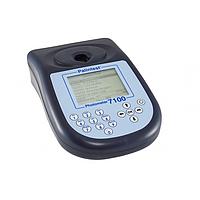
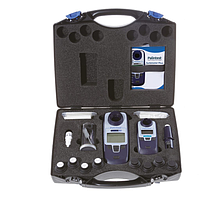
Portable photometers are another important group. They are often selected for colorimetric analysis where specific chemical parameters or visual water characteristics need to be measured with better repeatability than manual comparison methods.
Examples of measurement tasks covered
The products shown in this category illustrate a broad range of real measurement needs. For purified or low-conductivity water, compact testers such as the HANNA HI98309 and HI98308 are relevant for checking conductivity in applications where water quality must stay within a narrow range.
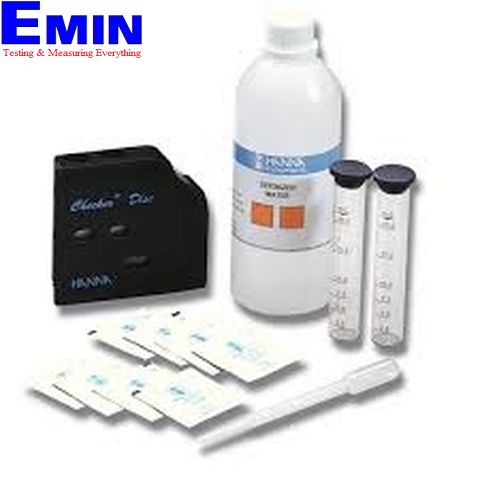
For color-based analysis, the HANNA HI97727 and HI97727C focus on color of water measurement in PCU, while the HI727-11 calibration check set supports verification for the corresponding checker workflow. In applications such as pools, service testing, or routine chemistry inspection, the HANNA HI97101 and HI97101C portable photometers support multi-parameter checks including chlorine, bromine, iron, iodine, cyanuric acid, and pH.
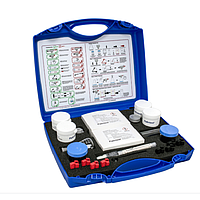
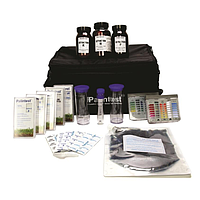
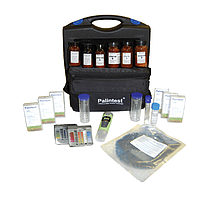
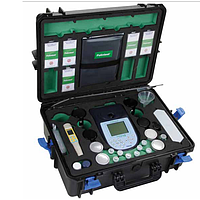
Users looking for a broader manual testing package may also consider the HANNA HI3823 Water Quality Test Kit, which fits situations where multiple wet-chemistry checks are needed in one portable case. For salinity-related checks, the Bellingham + Stanley Seawater PPT handheld water refractometer provides another route for water-related concentration measurement.
How to choose the right water analyzer
The best selection process usually starts with the target parameter. If the requirement is limited to conductivity in purified water, a dedicated tester is often more practical than a multiparameter meter. If the workflow includes several measurements during one sampling round, a multi-channel handheld unit can reduce the need for separate instruments.
Next, consider the testing environment. Field work may require rugged housing, battery operation, onboard memory, and easy data transfer. Laboratory or service applications may place more value on measurement method, accessory availability, and calibration or verification convenience.
It is also important to think about maintenance and consumables. Photometric and chemical testing workflows may depend on standards, cuvettes, or reagent availability, while electrochemical measurement often depends on sensor condition and calibration practice. In some applications, compatible ion measurement electrodes may also be part of the wider testing setup.
Portable versus multiparameter solutions
A compact tester is usually preferred when speed and simplicity matter most. Instruments in this class are easy to carry, quick to deploy, and well suited to repetitive checks at the same type of test point. This makes them practical for maintenance teams, service engineers, and operators who need straightforward pass/fail style monitoring.
A multiparameter analyzer, by contrast, is better suited to users who need broader visibility into water quality conditions. The HORIBA WQ series is a good example of a platform approach, where the number of channels helps determine how much testing flexibility is available in the field. This is useful in environmental monitoring, industrial utilities, and applications where pH, conductivity, and related values may need to be reviewed together.
For chemistry-specific work, portable photometers from HANNA represent another path. They are especially helpful when the application calls for repeatable optical measurement rather than visual interpretation, and when operators need a defined method for a parameter such as chlorine or water color.
Brands commonly considered for water analysis
This category includes products and brand options that are widely recognized in water measurement and environmental testing. Among the frequently considered manufacturers are HACH, HORIBA, YSI, HANNA, Palintest, Lovibond, and Bellingham, each relevant to different testing styles and user preferences.
Within the current product selection, HORIBA and HANNA stand out with clear examples of handheld meters, pure water testers, and portable photometers. Bellingham is also relevant where refractometric water concentration measurement is required. Brand choice should generally follow application fit, method preference, service needs, and the level of portability required rather than name recognition alone.
What matters in day-to-day use
In real operation, the value of a water analyzer goes beyond headline specifications. Users typically care about ease of calibration, screen readability, memory capacity, portability, and whether the instrument supports a repeatable workflow for different operators.
Features seen in the listed products, such as onboard data logging, multi-language interfaces, portable form factors, and IP-rated housings, are especially useful for field service and routine inspection. For photometric testing, accessories such as cuvettes, standards, and cleaning supplies can have a direct effect on measurement consistency. For quick preliminary checks, some users may also complement instrument-based testing with test paper in basic screening workflows.
Choosing with application in mind
Different water systems create different priorities. Pure water applications often focus on low conductivity verification. Pools and treated water systems may emphasize disinfectant chemistry and pH. Environmental monitoring often requires a more flexible meter platform that can adapt to varied sampling points and changing field conditions.
That is why this category is best viewed as a practical toolkit of solutions rather than one uniform product type. Whether the need is a dedicated tester, a portable photometer, or a multi-channel handheld meter, the right instrument depends on the parameter, operating environment, and expected testing routine.
By comparing the available measurement approach, portability, and workflow requirements, buyers can narrow the selection to instruments that genuinely match their process. A well-matched water analyzer supports more reliable monitoring, easier daily use, and better confidence in water quality decisions.
Get exclusive volume discounts, bulk pricing updates, and new product alerts delivered directly to your inbox.
By subscribing, you agree to our Terms of Service and Privacy Policy.
Direct access to our certified experts