
Water Samplers
Reliable sample collection is the starting point for any meaningful water or liquid analysis. Before a parameter can be measured in the lab or checked on site, the sample itself has to represent the actual process, storage tank, container, or environmental source as accurately as possible. That is why choosing the right water samplers matters just as much as selecting the analytical method that follows.
This category brings together sampling tools used for handling liquids, pourable materials, and chemically sensitive media in testing workflows. Whether the goal is routine quality control, field collection, ultrapure sampling, or single-use liquid transfer, the right design helps reduce contamination risk, improve repeatability, and support safer handling.
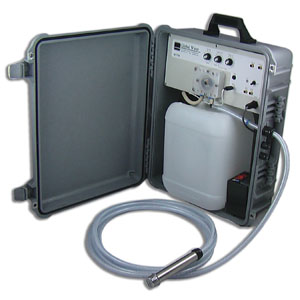
Where water samplers fit in a testing workflow
In many industrial, laboratory, and environmental settings, sampling is not a minor accessory step. It directly affects the quality of downstream results, especially when operators need to collect from bottles, narrow openings, tanks, drums, or vessels without altering the sample condition.
Sampling accuracy often depends on practical factors such as material compatibility, sampling depth, container geometry, and whether the tool is intended for single-use or repeated use. For applications involving follow-up chemical checks, users may also work alongside consumables such as other reagents or quick screening media, so sample cleanliness and handling discipline become even more important.
Common sampler types in this category
The range includes several formats suited to different collection tasks. Mini samplers are useful when working with small volumes, narrow bottles, or high-purity applications where controlled transfer is required. Disposable liquid samplers are practical for reducing cross-contamination between batches, especially in routine QA or when sampling multiple points in succession.
There are also tools designed for pourable bulk materials and plunging siphon-style sampling, which can help operators collect liquid from deeper containers or from locations that are not easy to access directly. A compact option such as the Cowie CW.037.010 Sampler-ladle 10ml may suit small-volume transfer tasks, while larger disposable formats support more general collection work.
Material selection and chemical compatibility
One of the most important selection criteria is the contact material of the sampler. In this category, examples include PE, PTFE, and PFA-based components. These materials are often chosen for their suitability in liquid handling, particularly when users need good chemical resistance or want to minimize interference with the sampled medium.
For chemically sensitive work, PTFE and PFA components can be especially relevant. Products such as the Burkle BK.5305.0110 PTFE Mini Sampler Set for chemical & ultrapure sampling, as well as matching PFA bottles like BK.6205.0090 and BK.6205.0180, illustrate how a sampling system may be built around material compatibility rather than volume alone. When selecting a tool, it is worth checking not only the sampler body but also accessories, bottle interfaces, and adapter connections.
Examples of products used for different sampling tasks
Within this category, Burkle is a notable manufacturer for manual liquid sampling accessories and sets. The Burkle BK.5305.0209 Mini Sampler and BK.5305.0010 version with pump and adapter are examples of compact tools intended to support controlled liquid collection, while the BK.5305.1020 adapter expands compatibility for specific thread arrangements.
For disposable use, products such as Burkle BK.5393.1130 for liquid sampling and BK.5393.2220 or BK.5393.2250 for pourable bulk provide options where single-use handling is preferable. The Burkle BK.5387.0100 disposable plunging siphon offers another approach for reaching into containers without relying on a permanent reusable device. In workflows linked to microbiological or general sample preparation, users may also encounter consumables from NEOGEN, such as the NEOGEN 3M.01.3001 Diluent, Saline, 9㎖, used later in the preparation stage rather than as the primary sampler itself.
How to choose the right water sampler
A good selection process starts with the sample medium and the sampling point. Consider whether the liquid is low viscosity or more difficult to transfer, whether the sample must remain free from trace contamination, and whether the operator is collecting from an open vessel, bottle neck, drum, or deeper container. Required sample volume and the number of sampling points also influence the best format.
Disposable sampling is often suitable when avoiding carryover is the top priority or when cleaning validation would be impractical. Reusable systems may be more appropriate when operators need repeatable collection from the same setup and can maintain proper cleaning procedures. Accessories such as pumps, adapters, and dedicated bottles become relevant when the process involves closed containers, thread matching, or clean transfer into a storage vessel.
Applications in laboratories, process control, and environmental work
Water samplers are used in a wide range of B2B settings, from laboratory intake and raw material inspection to environmental checks and in-process liquid control. They can support sample collection for later analysis of chemistry, contamination, concentration, or physical properties, depending on the wider testing workflow.
In some cases, the sampler is only the first step in a broader chain that may include indicator media, strips, or electrochemical measurement tools. For example, facilities performing rapid checks may also review categories such as test paper for simple field screening, while more specific ion-based analysis may involve a domestic ion measurement electrode. This broader context helps explain why proper sample collection remains essential even when the final measurement method differs.
Practical points for procurement and standardization
For purchasing teams and technical users, it is often useful to standardize around a small number of sampler formats that match recurring tasks. This can simplify operator training, reduce selection errors, and make it easier to manage accessories such as replacement bottles or thread adapters.
It is also worth checking whether the intended application calls for small-volume transfer, deep reach, ultrapure handling, or routine one-time collection. Looking at the combination of sampler type, contact material, and available accessories usually provides a clearer basis for selection than comparing item names alone.
Choosing with the application in mind
The most suitable sampler is the one that matches the liquid, the container, and the downstream test requirement without adding unnecessary handling steps. From compact ladles and disposable samplers to PTFE-based mini sampler systems for high-purity work, this category supports a broad range of water and liquid collection needs.
If you are comparing options, start with the sampling environment, contamination risk, and material compatibility, then narrow the range by volume and accessory needs. That approach will usually lead to a more reliable and practical choice for day-to-day testing operations.
Get exclusive volume discounts, bulk pricing updates, and new product alerts delivered directly to your inbox.
By subscribing, you agree to our Terms of Service and Privacy Policy.
Direct access to our certified experts
