With more than twenty years of experience working in the chemical and materials industry, one of the most familiar equipment to me is the furnace. Having gone through many generations of furnaces from major German and American brands to Asian product lines, I have realized one thing: choosing a furnace is not simply looking at technical specifications as many people often think. It is a process of in-depth research on stability, practical performance and economic efficiency.
In recent years, a brand from Korea has emerged in the Vietnamese market, which is SH Scientific. Many customers ask EMIN, is this a good choice or not? Is the advertisement true to reality? With my experience, today I will "dissect" this furnace with you, from its outstanding advantages to the problems we often encounter.
OPTIMIZE TIME AND ENERGY WITH IMPRESSIVE HEATING RATE
In the lab, time is money. A single firing cycle can last hours, even days, and the time it takes to reach the required temperature is a significant part of that. You’ve probably experienced the frustration of waiting for an old furnace to slowly heat up, wasting both time and energy.
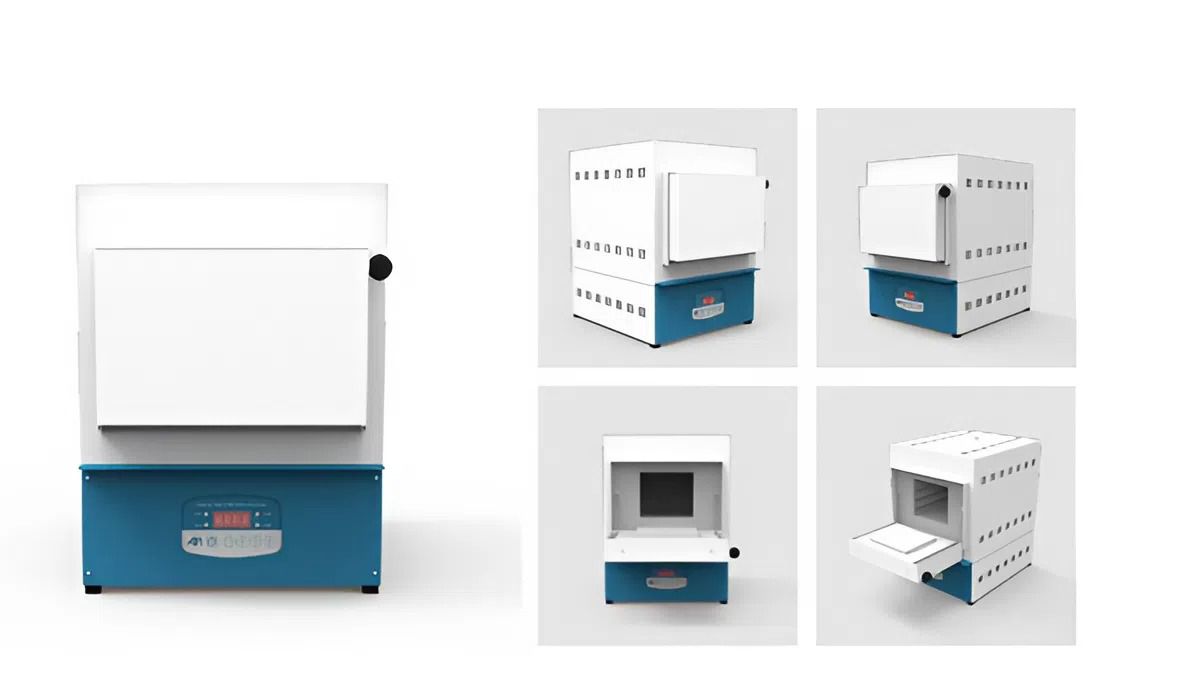
I have tested SH Scientific furnace models many times and was really impressed by the heating speed of this product line. Thanks to the use of advanced insulation materials and high-quality heating resistance systems, these furnaces can reach the desired temperature quickly. Typically, the SH-FU-5MGE series distributed by EMIN, thanks to advanced insulation materials and high-quality heating resistance systems, the furnace can reach 1000°C in just 30-40 minutes, which is quite ideal. This helps us to significantly shorten the testing time, increase working efficiency and save electricity costs in the long run.
In addition, the heat retention capacity of the combustion chamber is also a big plus. After reaching the target temperature, the SH Scientific furnace maintains a stable temperature without consuming too much energy.
WHEN IMPURITIES OR MATERIAL DEFORMATION ARE A NIGHTMARE: WHAT CAN SH SCIENTIFIC FURNACE DO?
One of the biggest nightmares for anyone working in a lab is when a sample fails during firing. It could be a cracked ceramic, an oxidized alloy, or an unwanted chemical breakdown. It usually stems from two main factors: temperature inconsistency and process control inaccuracies.
After a long period of testing, it can be said that SH Scientific furnace has solved these problems well. Their temperature control system uses an advanced PID controller, which helps the furnace maintain the temperature at the set point with high precision. EMIN technical department has conducted many experiments at different temperatures and found that the temperature difference in the combustion chamber space is very small, ensuring that all specimens in the same batch receive the same treatment conditions, resulting in more consistent results.
Additionally, many SH Scientific furnaces are equipped with ports to introduce inert gases such as nitrogen or argon into the combustion chamber. This feature is extremely important for experiments that require an oxygen-free environment, helping to prevent oxidation or material denaturation during heating. If you are working with sensitive materials such as precious metals, polymers or special chemical compounds, this is a plus worth considering.
WHEN DO YOU NEED A TUBE FURNACE OR VACUUM FURNACE?
This is also one of the questions that I receive a lot from newbies. Choosing the right furnace depends entirely on the purpose and nature of the experiment.
Tube furnaceTube furnace: If you need to heat a specimen in a controlled atmosphere, for example, you need to heat a specimen in a protective atmosphere or you want to pass gas through the specimen to perform a chemical reaction, a tube furnace is the perfect choice. It allows you to easily control the inlet and outlet gas flow, helping to optimize the treatment process. Tube furnaces are also very useful for experiments that require observing reactions at high temperatures.
Vacuum Furnace: When your sample cannot come into contact with any gas, including inert gas, you will need a vacuum furnace. This type of furnace is designed to create a vacuum inside the combustion chamber, completely preventing oxidation and unwanted reactions with the gas. Materials such as metals that are susceptible to oxidation, or compounds that are sensitive to air, are often treated in a vacuum furnace.
SH Scientific furnace distributed by EMIN provides both of these types.
AVOID THE FOLLOWING MISTAKES WHEN OPERATING AND MAINTAINING THE FURNACE
Some common mistakes made during furnace operation
Not following the heating process: Many people often want to increase the temperature very quickly to save time, but this can cause thermal shock, crack the combustion chamber and reduce the life of the resistor. Always follow the manufacturer's recommended heating rate.
Not performing regular maintenance: The furnace needs to be cleaned of the combustion chamber after each use to remove dirt, metal dust, and chemicals. This seems simple but is extremely important, helping to avoid damaging the resistor and temperature sensors.
Incorrect sample placement: Placing samples too close to the furnace wall or stacking them on top of each other can lead to uneven temperature distribution. Make sure that there is enough space between the samples to allow for even heat transfer.
Ignore minor abnormalities: If you notice strange noises, a burning smell, or unstable temperatures in the furnace, don't ignore them. Check them immediately to avoid bigger problems later.
Above are EMIN's shares about SH Scientific furnaces in the lab. If you have any questions about the furnace or related issues, don't hesitate to share. Emin is ready to help you answer them.