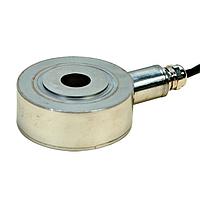
Load cell
Accurate force measurement is a core requirement in weighing systems, material testing, industrial automation, and machine monitoring. When the application needs a reliable electrical signal that reflects compression, tension, or applied load, load cell technology is often the starting point for building a stable measurement chain.
This category brings together load cells and force sensors used in industrial and technical environments where repeatable data matters. Whether you are designing a weighing station, integrating force feedback into equipment, or replacing an existing sensor, the selection here is intended to support practical sourcing for B2B projects.
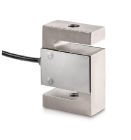
Where load cells fit in industrial measurement
A load cell converts mechanical force into a measurable electrical output, making it possible to monitor load, weight, pressing force, or structural stress within a machine or process. In real-world systems, the sensor itself is only one part of the measurement path, but it directly influences sensitivity, stability, and the overall quality of the result.
These devices are widely used in packaging machinery, dosing systems, assembly fixtures, laboratory instruments, and process equipment. They can also be part of broader force and strain setups that include load cell transmitters, indicators, and signal conditioning hardware depending on how the measurement will be read and controlled.
Typical product profiles in this category
The range includes compact force sensors and industrial load cell solutions suited to different mechanical layouts and force ranges. Some projects require a small-format sensor for embedded designs, while others need a more robust unit for structural integration or higher-capacity measurement tasks.
Representative examples in this category include models such as Honeywell 060-6027-03TJG, Honeywell 060-0828-05, TE Connectivity FX292X-040B-0200-L, TE Connectivity EFN24-50KN-C20001, and TE Connectivity EXFC-1KN-C20001. These references illustrate the variety of available form factors and force measurement approaches without forcing a one-size-fits-all selection.
How to choose the right load cell
The most important selection factor is the expected force range. A sensor should match the real operating load as closely as practical while still allowing a reasonable safety margin for overload or process variation. Choosing a unit that is too large for the application may reduce measurement resolution, while an undersized one can affect durability and long-term stability.
Mechanical installation is equally important. Engineers typically evaluate how the load will be applied, whether the measurement is in compression or tension, how the sensor will be mounted, and what off-axis forces may appear in operation. Electrical interface requirements also matter, especially when the sensor must connect to PLC-based systems, controllers, or a weighing indicator for local display and control.
Environmental conditions should not be overlooked. Temperature changes, vibration, cable routing, enclosure design, and electromagnetic noise can all influence the quality of force measurement. In many cases, a well-matched sensor combined with proper installation practices delivers better results than simply choosing a higher-rated device.
Honeywell and TE Connectivity options for force sensing
Among the featured brands in this category, Honeywell and TE Connectivity stand out through the product references available here. Their sensor lines are often considered when buyers need established components for OEM integration, equipment maintenance, or new machine development.
Examples from Honeywell such as 060-5628-02TJG, 060-0826-05, and 060-5513-05 highlight compact force sensing options for systems where installation space and repeatable response are important. TE Connectivity models including FX292X-100A-0200-L, 20030942-00, and EXFC-500N-C20002 show another path for projects that require scalable force measurement across different mechanical designs and operating ranges.
Rather than focusing on brand alone, it is usually more effective to compare sensor geometry, mounting concept, measurement range, and signal integration needs. That approach helps narrow the shortlist faster and reduces the risk of selecting a device that fits electrically but not mechanically.
Integration with the broader force and strain measurement chain
A load cell rarely works in isolation in industrial systems. Once the sensor is installed, the output often needs amplification, conditioning, display, logging, or transmission to a controller. That is why many buyers also review related products such as strain meters or peripheral devices when planning a complete measurement setup.
For applications that involve structural testing or custom sensing assemblies, the conversation may also extend to strain gauges. While strain gauges and load cells are not the same product type, they are closely connected in force and deformation measurement workflows, especially when a standard sensor does not fully match the application geometry.
Common B2B use cases
In manufacturing, load cells are often integrated into machines that need controlled force application, overload protection, or feedback for automated adjustment. This can include pressing operations, fixture monitoring, material handling systems, and weight-based dosing processes where signal consistency directly affects throughput and quality.
In laboratory and test environments, they are used to capture repeatable force values for validation, assembly verification, and experimental setups. In OEM development, the priority is often long-term component availability, predictable integration behavior, and compatibility with the rest of the control architecture.
For maintenance and retrofit projects, buyers typically look for a replacement that matches the existing installation envelope and system expectations with minimal redesign. In these cases, comparing reference models already used in the equipment can simplify sourcing and reduce downtime.
What to review before placing an order
Before selecting a specific part, it is useful to confirm the required measurement range, mounting method, available space, and the intended readout or controller interface. If the project involves a new machine design, the mechanical team and controls team should ideally review the sensor together so the electrical and structural constraints are aligned from the start.
It is also worth checking whether the application needs only the sensing element or a more complete measurement solution with indicator, transmitter, or supporting accessories. Taking that broader view usually leads to a smoother integration process and fewer changes later in commissioning.
Finding a suitable load cell for your application
This category is designed to support buyers looking for practical force measurement components rather than generic catalog browsing. With examples from Honeywell and TE Connectivity, the selection covers compact force sensors and load cell options relevant to industrial equipment, testing systems, and OEM design work.
If you are comparing models for a new build or a replacement task, start with the mechanical load case, then confirm signal handling and system compatibility. A well-chosen load cell becomes a dependable foundation for accurate, stable measurement across the wider force and strain measurement system.
Get exclusive volume discounts, bulk pricing updates, and new product alerts delivered directly to your inbox.
By subscribing, you agree to our Terms of Service and Privacy Policy.
Direct access to our certified experts