Wire and cable tension gauges
Accurate tension control matters wherever wire, filament, cord, or structural cable performance affects product quality or operational safety. In production lines, maintenance work, and field installation, the right instrument helps technicians verify whether a cable is too loose, too tight, or operating within the intended range. This is especially important for delicate materials as well as for larger utility and support cables that must maintain stable mechanical load.
Wire and cable tension gauges are used across a broad range of force measurement tasks, from light-force checking on fine materials to practical field measurement on larger cables. This category brings together instruments suited to different measuring ranges, display styles, and applications, helping engineers and buyers compare options according to force range, readability, and working environment.
Where wire and cable tension gauges are used
Tension measurement is common in electronics, textile-related handling, wire processing, packaging, cable assembly, telecom infrastructure, and utility maintenance. In these environments, checking tension helps reduce wire deformation, improve repeatability, and prevent issues caused by uneven mechanical load. Even small deviations can affect winding quality, feed stability, or long-term cable reliability.
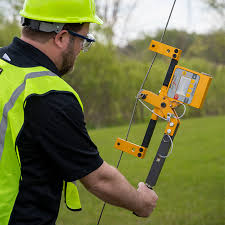
These instruments may be used during setup, periodic inspection, troubleshooting, or quality control. For very light materials, a compact dial gauge can be useful for quick manual checks. For heavier-duty field work, such as guy wire or support cable verification, users often need a larger-capacity device with a wider measuring range and practical handling for on-site measurement.
Typical instrument types in this category
A common format is the dial tension gauge, which provides direct visual indication and is well suited to routine shop-floor or bench measurement. Several examples in this category come from TECLOCK, including compact models designed for low-force measurement in gram-force and Newton ranges. These are useful when operators need a straightforward mechanical reading and a compact handheld form factor.
For example, the TECLOCK DT-10G, DT-30G, DT-50G, and DT-100G cover progressively higher low-force ranges, making them suitable for finer materials or lighter tension checks. Higher-capacity dial models such as the DT-150G, DT-300G, DT-500G, and Newton-based DTN series support applications where the force level is greater or where users prefer SI unit interpretation. Peak pointer versions can also help when capturing the highest applied reading during manual measurement.
Examples for light-duty and heavy-duty tension measurement
When the task involves fine wire, thread-like material, or low-force process control, small-range instruments are often the practical choice. A model such as the TECLOCK DT-10G is intended for very light measurements, while the DT-150G or DT-500G better fits moderate force levels within the same dial-gauge approach. Selection should always start with the expected operating range, because using a gauge too close to its limit can reduce readability and confidence in the result.
For larger structural or installation-related cables, this category also includes the DILLON QUICK CHECK tension meter AWT05-508111. This model is positioned for substantially higher loads, including applications such as anchor cables, telecom pole support cables, guy wires, and similar field-use cases. Compared with smaller handheld dial gauges, this type of instrument is more appropriate when cable diameter, applied force, and installation conditions require a rugged, higher-capacity measuring solution.
How to choose the right tension gauge
The first point to review is measuring range. The ideal gauge should place your normal working tension comfortably within the middle portion of the scale, rather than at the extreme low or high end. This improves readability and helps users distinguish small variations more effectively. It is also important to confirm whether the application is better expressed in gf, kg, lb, kN, or N.
The second point is the material and geometry being measured. Fine wire, narrow filament, and delicate components call for a different instrument choice than stranded cable or utility support wire. Cable diameter compatibility, contact method, and portability all matter in real use. In many buying situations, the practical question is not only “what force must be measured?” but also “what kind of cable is being handled, and where will the measurement take place?”
A third consideration is how the reading will be used. If the goal is quick operator checking, a simple analog dial may be enough. If the measured force needs to be incorporated into a broader signal chain, users may also evaluate related products such as load cell transmitters or strain meters for more integrated force and strain measurement workflows.
Understanding low-force versus cable-installation applications
Not all tension measurement tasks are alike, and this category spans distinctly different use cases. Low-force gauges are typically chosen for process consistency, sample checking, or careful handling of thin materials. Here, the focus is often on fine resolution, low measuring range, and easy manual operation. These tools are helpful where the product itself can be affected by relatively small tension changes.
By contrast, cable-installation and infrastructure work usually demands a gauge that can cope with larger loads and practical field conditions. In those cases, the operator may be validating mechanical condition rather than controlling a sensitive production process. Understanding this difference helps narrow the selection quickly and prevents overbuying or under-specifying the instrument.
Related measurement context in force and strain systems
Tension gauges are often part of a wider measurement ecosystem. In some applications, handheld checking is only the first step, followed by continuous monitoring, signal conversion, or data interpretation through other force-related instruments. Buyers working on broader projects may also compare adjacent technologies such as strain gauges when direct material deformation measurement is relevant.
That broader context is useful for engineering teams that manage both spot inspection and system-level measurement. A portable tension gauge supports quick verification in the field or on the line, while other instruments may be used when the requirement shifts toward monitoring, control integration, or permanent installation.
What to review before purchasing
Before ordering, it is worth checking the expected force range, preferred unit system, cable or wire type, and whether a peak reading function is useful for the application. Buyers should also consider who will use the instrument, how often it will be used, and whether the environment is closer to a controlled workbench or an outdoor service location. These factors influence not only model choice but also long-term usability.
In many cases, a compact dial gauge is the right answer for fast, repeatable manual checks, while a higher-capacity cable tension meter is better for infrastructure and installation work. Reviewing these fundamentals early makes it easier to shortlist the appropriate products without being distracted by unnecessary complexity.
Choosing the right wire and cable tension gauge starts with understanding the force level, cable characteristics, and measurement context. With options in this category ranging from compact TECLOCK dial gauges to higher-capacity DILLON field instruments, users can match the tool to the real demands of inspection, maintenance, or production control more effectively.
Get exclusive volume discounts, bulk pricing updates, and new product alerts delivered directly to your inbox.
By subscribing, you agree to our Terms of Service and Privacy Policy.
Direct access to our certified experts