
Pipeline Blockage Detector
When drainage lines, conduits, or concealed pipes become difficult to trace, the challenge is not only finding the route but also identifying where flow may be restricted. In maintenance, renovation, and utility work, a reliable Pipeline Blockage Detector helps technicians investigate pipe paths and potential blockage points with less guesswork and less unnecessary dismantling.
This category is intended for users who need practical tools for locating pipe runs in plastic or metal lines, checking concealed routing, and narrowing down suspected obstruction areas. It is especially relevant in building maintenance, plumbing inspection, facility management, and field troubleshooting where access is limited and speed matters.
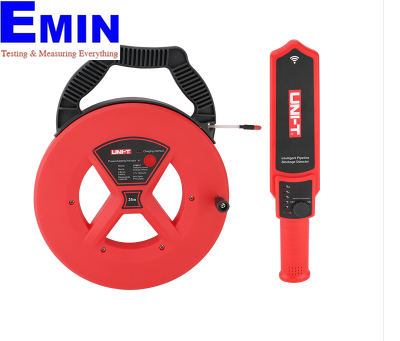
Where pipeline blockage detectors are commonly used
These instruments are typically used when a pipe is hidden behind walls, under floors, or below shallow surfaces and the exact route is unclear. Instead of opening multiple access points, technicians can use a transmitter and receiver setup to follow the signal path and focus inspection work on the most likely problem area.
Typical use cases include drain line troubleshooting, plumbing maintenance, retrofit work, and inspection of utility paths before repair. In many projects, this type of tool sits alongside broader pipe and cable locating equipment when teams need to distinguish between routing issues and actual blockage or flow restrictions.
How this type of detection system works
A pipeline blockage detector generally uses a transmitter-receiver method. The transmitter sends a signal through a probe or signal wire inserted into the pipe, while the receiver is used above the surface to track the signal location and estimate where the route changes, stops, or becomes difficult to continue.
This approach is useful because it gives the operator a way to trace concealed lines in a more controlled manner. Audible and visual prompts can support field work in noisy or low-visibility environments, helping users follow the signal without relying only on manual assumptions about the pipe layout.
Representative models in this category
This category includes practical handheld solutions from UNI-T, a manufacturer known for measurement and diagnostic tools. Two representative examples are the UNI-T UT661C Pipeline Blockage Detector and the UNI-T UT661D Pipeline Blockage Detector, both designed around a transmitter and receiver concept for concealed pipe tracing.
The UT661C is configured with a 25 m signal wire, while the UT661D extends that reach with a 35 m signal wire as indicated in the product name. Both are suitable for tracing plastic and metal pipes, and both are built for field use with features such as low-battery indication, buzzer and flash alerts, rechargeable internal batteries, and an IP67 waterproof probe for probe-side working conditions.
What to consider when selecting a pipeline blockage detector
The first point is working range. Signal wire length affects how far the probe can be inserted through the line, which directly influences suitability for short indoor runs versus longer sections in maintenance or inspection tasks. If your work regularly involves extended pipe paths, comparing the 25 m and 35 m configurations may be more important than comparing minor accessory differences.
The second point is the type of material being inspected. In this category, the available models are intended for both plastic and metal pipes, which is useful in mixed infrastructure environments. You should also consider operating conditions such as moisture exposure, portability, battery duration, and how clearly the receiver communicates signal changes during tracing.
Another practical factor is whether the tool is being used primarily for blockage investigation or for route confirmation before drilling, cutting, or repair. If the main goal is to identify concealed service paths in structures, users may also want to review detectors for metal and wires in walls for related inspection tasks in buildings.
Why signal feedback and probe protection matter in field work
In real operating environments, the usefulness of a detector is shaped by how quickly the operator can interpret the signal. Audible and visual indication helps reduce missed readings, especially when working in cramped mechanical rooms, basements, or outdoor service areas where ambient noise and access constraints make inspection more difficult.
Probe durability also matters. A waterproof probe design can improve suitability for wet service conditions and reduce concerns when working in lines that are not completely dry. For maintenance teams that perform repeated diagnostic checks, these details can affect efficiency just as much as headline specs such as nominal detection depth.
How this category fits into a broader inspection workflow
Pipeline blockage detection is usually one step in a larger troubleshooting process. A technician may begin by confirming the utility route, then use signal tracing to narrow down where the line becomes obstructed, and finally move to mechanical cleaning, targeted opening, or repair. This makes the category especially useful in workflows where reducing unnecessary excavation or wall opening is a priority.
For outdoor utility tracing or different search tasks, the right tool may belong to another category entirely. For example, applications involving buried conductive paths or general subsurface search may overlap more with an underground metal detector rather than a dedicated pipeline blockage tracing solution.
Choosing between the available UNI-T options
If the application is routine building maintenance, short-to-medium runs, or confined service routes, a model such as the UNI-T UT661C may be sufficient. If the inspection path is longer or you want more flexibility in navigating extended pipe sections, the UNI-T UT661D may be the more practical choice due to its longer signal wire.
In both cases, the decision should be based on pipe length, jobsite access, expected operating conditions, and how often the detector will be used in the field. Looking at these factors usually leads to a better match than choosing only by model name or by isolated specification values.
Conclusion
A well-chosen pipeline blockage detector can make concealed pipe troubleshooting more efficient, more targeted, and less disruptive. For maintenance teams, contractors, and technical buyers, this category offers a focused solution for tracing pipe routes and investigating likely obstruction points without turning the job into unnecessary exploratory work.
If you are comparing options, start with the expected tracing distance, pipe material, and site conditions, then review whether a transmitter-receiver setup with the right signal wire length fits your workflow. That practical approach will help you select a tool that supports real inspection work rather than simply adding another device to the toolbox.
Get exclusive volume discounts, bulk pricing updates, and new product alerts delivered directly to your inbox.
By subscribing, you agree to our Terms of Service and Privacy Policy.
Direct access to our certified experts
