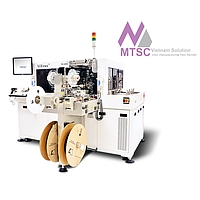
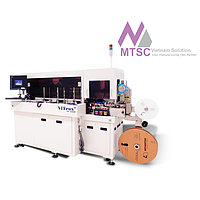
Automation system
Modern production and warehouse environments depend on more than machine control alone. Companies also need efficient material flow, reliable item access, safer handling, and better use of available floor space. In that broader context, an automation system often includes storage automation as a practical way to support productivity, traceability, and day-to-day operational consistency.
This category brings together automation-oriented solutions that help streamline picking, retrieval, buffering, and storage of materials in industrial settings. For businesses managing components, long items, tools, semi-finished goods, or high-frequency picking operations, these systems can play an important role in improving layout efficiency while reducing unnecessary movement and handling time.
Where automated storage fits into industrial automation
When people evaluate automation projects, the focus is often placed on conveyors, robotics, production cells, or software integration. However, storage and retrieval can be just as critical. If materials are difficult to locate, slow to access, or awkward to handle, the overall process loses efficiency even when the production line itself is highly optimized.
That is why vertical and modular storage technologies are increasingly considered part of the automation landscape. They support structured inventory handling, faster picking, and more ergonomic operator interaction. In many facilities, they also complement broader initiatives related to inspection and monitoring systems, especially where stock visibility and controlled workflows matter.
Typical applications for automation-oriented storage systems
Automated storage solutions are used across a wide range of industrial applications. Common scenarios include storage of small parts, spare parts, components, kits, tools, moulds, dies, rolled goods, and long materials such as tubes, bars, profiles, or sheet metal. They are also relevant for buffer storage between operations and for order fulfillment areas that require quick, repeatable picking.
In practice, the right solution depends on load profile, product dimensions, picking frequency, and available building space. Some systems are better suited for light-load, high-throughput environments, while others are designed for bulky or heavy materials. Facilities with unusual layouts, multi-level access requirements, or limited footprint can also benefit from vertical designs that maximize space usage without expanding horizontally.
ICAM solutions highlighted in this category
This category features solutions from ICAM, with several configurations designed for different storage and handling needs. Rather than treating automated storage as a one-size-fits-all concept, these systems address specific operational priorities such as rapid picking, long-item management, modular expansion, or intensive storage.
For example, the ICAM Silo Plus is oriented toward rapid picking and light-load applications, making it suitable for order fulfillment, order consolidation, and line feeding activities. The ICAM Silo 2 uses a multi-column vertical storage system concept that supports broader adaptability in facilities where capacity and configuration flexibility are important. For long and bulky items, ICAM Silo L and ICAM Silo XL provide single-column vertical storage approaches tailored to intensive handling of extended or heavier materials.
How to choose the right automation system for storage and retrieval
A practical selection process starts with the material itself. Weight, length, tray organization needs, and handling frequency will influence whether a compact rapid-picking unit or a heavier-duty long-item solution makes more sense. If your operation handles mixed inventories, tray flexibility and modular configuration become especially important.
Space constraints are another major factor. In many industrial sites, vertical systems are selected because they improve storage density within a limited footprint. For buildings with several levels, irregular floor plans, or the need to place access points in different positions, modular solutions can help align the storage system with the actual workflow rather than forcing workflow changes around the equipment.
It is also useful to evaluate the operator interface and handling ergonomics. Features such as controlled access openings, easier tray presentation, and weight monitoring support safer daily use and more consistent picking performance. In broader projects, these considerations may be part of a larger assembly and inspection line strategy where storage must feed upstream or downstream processes efficiently.
Key operational benefits businesses often look for
One of the clearest benefits of this type of automation is space optimization. Vertical storage systems are designed to exploit building height and reduce the footprint required for organized inventory. That can free up valuable floor area for production, packing, staging, or additional process equipment.
Another advantage is improved speed and accuracy in picking and retrieval. When items are stored in a controlled system and presented more efficiently to the operator, access times can be reduced and handling errors may be easier to control. This is particularly relevant in environments with frequent order preparation, internal replenishment, or repeated movement of semi-finished goods.
Security and material protection are also important. Automated systems can help protect stored items from dust, damage, and unauthorized access while supporting better stock visibility. In facilities moving toward digital operations and connected workflows, these capabilities can align naturally with smart factory initiatives focused on traceability, material flow, and operational data.
Comparing the featured ICAM system types
The ICAM Silo Plus is best understood as a solution for faster handling of lighter materials. Its tray concept is designed to work with standard containers and support high-frequency picking, making it well suited to logistics-intensive environments where throughput is a priority.
The ICAM Silo 2 emphasizes modularity and adaptability. Its multi-column architecture is useful when a business needs to scale storage capacity or fit the system into a more complex building layout. This makes it a strong option for organizations managing a diverse mix of parts, tools, and operational stock.
For long items, the ICAM Silo L addresses intensive storage needs across a range of shapes and sizes, while the ICAM Silo XL is oriented toward long and heavy items with higher tray load capability and handling features that support safe access. These distinctions matter because the most effective automation investment is usually the one that matches the real physical behavior of the stored materials.
Supporting workflow improvement beyond storage alone
Automated storage systems do not operate in isolation. Their value increases when they are planned as part of a broader production or warehouse flow, including replenishment logic, workstation proximity, picking routes, and inventory control. For example, placing storage close to machine tools or process areas can shorten retrieval time and help reduce non-value-added movement.
In many B2B environments, this creates a bridge between storage automation and larger solution design. Businesses that are comparing options across integrated industrial projects may also want to explore related solution areas such as other industrial solutions depending on the complexity of the site and the intended level of process integration.
Final thoughts
Choosing an automation system for storage and retrieval is ultimately about matching equipment architecture to material flow, available space, and operational priorities. Whether the need is rapid picking for light loads, flexible multi-column storage, or secure handling of long and heavy goods, the right system should support productivity without adding unnecessary complexity.
The solutions in this category provide a useful starting point for evaluating how automated storage can contribute to safer handling, better space utilization, and more consistent industrial operations. By comparing application fit, storage profile, and workflow requirements, buyers can identify a system that supports both current needs and future process development.
Get exclusive volume discounts, bulk pricing updates, and new product alerts delivered directly to your inbox.
By subscribing, you agree to our Terms of Service and Privacy Policy.
Direct access to our certified experts