Raw sugar syrup concentration monitoring is an important process consideration in sugar mills, especially where crystallization depends on a stable feed condition. When concentration changes are not recognized quickly, operators may have less time to adjust process parameters. This can affect production continuity and may contribute to higher raw-material use or energy loss during crystallization.
Raw sugar syrup is not always an easy medium to assess. It can contain impurities and bubbles, while turbidity and color variation can complicate conventional measurement practices. Manual samples and offline testing can provide useful checks, but the result may arrive after process conditions have already changed. Frequent sampling can also interrupt routine operations and introduces variation associated with sampling and manual handling.
Why raw sugar syrup concentration can become unstable
Concentration in a sugar process may change as operating conditions vary. In crystallization-related stages, even relatively small changes can matter because the concentration value is used alongside other process information when adjustments are made. If an abnormal condition is detected only after a delay, operators have less opportunity to respond before the effect moves further through the process.
For this reason, sugar mills may seek a measurement approach that makes concentration changes visible directly at the pipeline or tank. Continuous measurement is intended to provide current process data rather than depending solely on periodic, manually collected samples. The objective is not simply to record a value, but to support timely process decisions.
Online monitoring for sugar process control
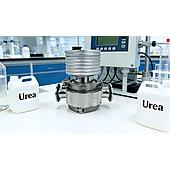
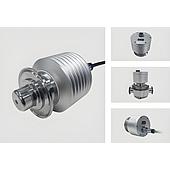
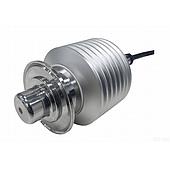
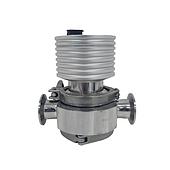
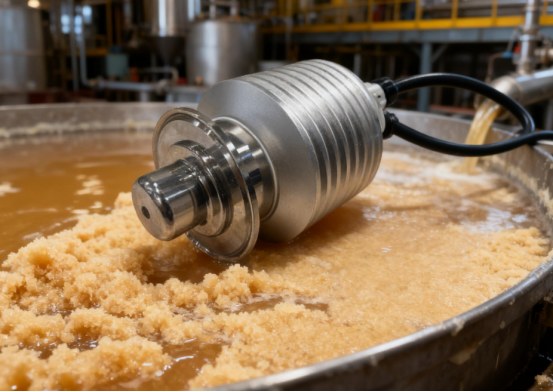
The CHN SPEC online liquid concentration detector range, identified as CRN50/52/56, is presented for continuous liquid concentration measurement. It can be installed on production pipelines or tanks to monitor raw sugar syrup as it moves through the process. The available measurements include refractive index, concentration, Brix value, and temperature.
According to the supplied product information, the detector is designed to address interference associated with bubbles, turbidity, and color in the medium. It lists concentration measurement accuracy of ±0.1%, refractive index resolution of 0.00001, and temperature resolution of 0.1°C. These stated capabilities are relevant where operators need to observe small concentration changes and use consistent data to guide crystallization adjustments.
Temperature is also a practical consideration in liquid concentration measurement. The product information describes multi-point temperature compensation and a process temperature range of -20–70°C. This is intended to help maintain measurement consistency when the temperature of the sugar process changes.
Installation considerations in sugar mills
Installation requirements can differ between pipelines, tanks, and process sections with limited space. The CRN50/52/56 range is described with compact clamp options and flange specifications including DN25 and DN50. Small-pipe-diameter adapters and sanitary adapters are also listed, allowing the configuration to be considered against the physical layout and hygienic requirements of the installation.
The standard cable length is stated as 2 meters, with extension up to 200 meters. This can support monitoring arrangements in which the sensing point and the observation location are separated. Before selecting an installation method, the process team should review the actual pipe size, connection type, medium conditions, required signal integration, and maintenance access.
Data handling and operational support
Continuous concentration data becomes more useful when it can be incorporated into the wider production control workflow. The supplied information lists 4-20mA and RS485 signal outputs for the detector. It also states that the device can work with multi-channel data acquisition and control systems, as well as wireless data transmission modules, for centralized data management and remote monitoring.
For a sugar mill, this type of integration can help operators compare concentration readings with process conditions and respond when a trend moves outside the expected operating range. It does not replace process expertise; rather, it gives personnel a more current basis for evaluating adjustments to crystallization conditions.
Maintenance and material considerations
The detector is described as calibrated before delivery and includes probe status self-diagnosis, RI calibration, and adjustment functions. On-site custom data models are also listed to help adapt measurement processing to a specific medium such as raw sugar syrup. These features may be relevant where long-term measurement stability and diagnostic visibility are part of the operating requirement.
The source information states that the probe uses no reagents or consumables and lists a probe light-source life of 100,000 hours. For wetted components, SS316L stainless steel and sapphire are specified, with PTFE and Hastelloy listed as options for CRN52/56. The stated protection rating is IP68, pressure resistance is ≤1.5MPa, and CIP and SIP compatibility are included. An ExiaIICT6Ga explosion-proof rating is also listed.
Selecting an approach for raw sugar syrup concentration monitoring
A practical selection begins with the sugar mill’s own process conditions. Teams should identify where concentration needs to be observed, whether the measurement point is a pipeline or tank, and how readings will be used by operators or a control system. They should also consider temperature range, pressure, connection requirements, cleaning practices, and the characteristics of the syrup at that point in production.
By bringing concentration, refractive index, Brix, and temperature data closer to the process, online monitoring can support a more responsive crystallization workflow. For raw sugar syrup concentration monitoring, the key value is timely visibility: operators can identify changes sooner and make decisions using process data that reflects current conditions.