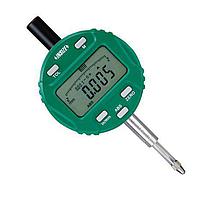
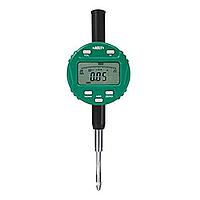
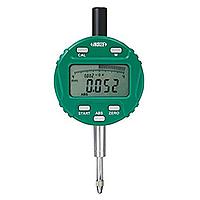
Digital Indicator
Reliable comparative measurement depends on more than resolution alone. In inspection benches, machine setup, fixture alignment, and repetitive dimensional checks, a Digital Indicator helps operators read displacement quickly, switch units when needed, and reduce interpretation errors compared with purely analog reading methods.
This category brings together electronic indicators used for precise linear measurement in workshop, quality control, and production environments. Whether you need a compact model for short travel checking or a higher-range unit with data output for traceability, the right indicator should match the task, mounting method, and required accuracy.
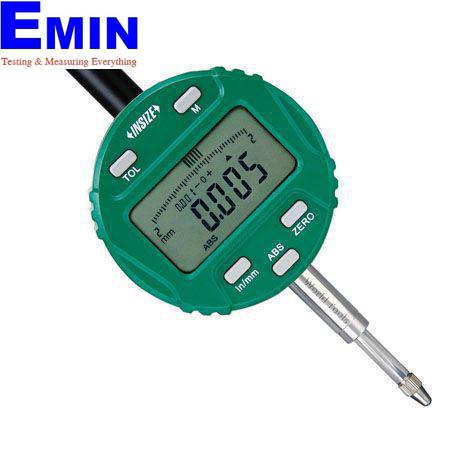
Where digital indicators are commonly used
Digital indicators are widely applied where small movement needs to be measured or compared against a reference. Typical use cases include runout checking, flatness inspection, fixture positioning, height variation checks, and part-to-part comparison on the shop floor. Their display makes them especially practical in environments where quick reading and repeatable setup matter.
They are also useful when measurement data must be handled more efficiently. Some models support functions such as zero-setting, presetting, tolerance evaluation, or direct data transfer, making them a practical choice for users who want a smoother inspection workflow than a conventional pointer-only gauge can provide.
Why choose a digital indicator instead of a standard dial type
The main advantage is readability. A digital display helps operators avoid parallax error and makes unit conversion simpler when both metric and inch values are used in the same workflow. On many models, functions such as ABS/INC switching, zero reset, and preset values improve usability during repetitive measurement tasks.
For buyers comparing options, it is often helpful to review both standard dial indicators and electronic versions side by side. Mechanical types remain popular for straightforward comparative checks, while digital versions are often preferred when users need easier reading, additional functions, or compatibility with digital data collection.
Key selection criteria for this category
Before choosing a model, start with the required measuring range. Short-travel applications may only need around 12.7 mm, while more versatile inspection tasks may benefit from 25.4 mm or even 50.8 mm travel. The selected range should cover the application without forcing the indicator to operate too close to its limit in routine use.
Next, consider resolution, permissible error, repeatability, and measuring force. A fine resolution such as 0.001 mm is useful for precision checks, but it should be evaluated together with the instrument’s overall accuracy and application conditions. In addition, protection rating can matter in practical environments; an IP54 or IP65 design may be more suitable where dust, coolant mist, or daily handling are part of the job.
Mounting compatibility is another essential point. Many indicators use a standard stem or clamping diameter and are paired with fixtures or magnetic stands for indicator setups. Stable mounting directly affects repeatability, so the support system should be chosen with as much care as the indicator itself.
Representative products in this range
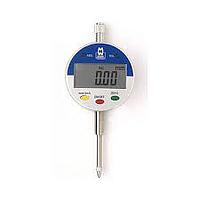
Several listed models illustrate the breadth of this category. The MOORE & WRIGHT MW405-04DB Digital Indicator is aimed at routine measurement where direct mm/inch conversion and zero-setting are useful in daily operation. The MOORE & WRIGHT MW405-06DB Digitronic Indicator extends the concept with a larger measuring range and practical mounting options for flexible integration into inspection setups.
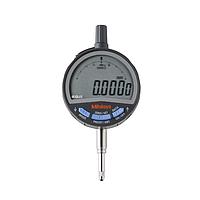
For users looking for higher-resolution digital measurement, the MITUTOYO 543-700B Digimatic Indicator is a strong example of a compact indicator designed for fine comparative work. In applications where environmental protection is important, Niigata Seiki models such as the DEI-127M and DEI-254M show how IP65-rated digital indicators can support reliable use in tougher workshop conditions.
Manufacturers frequently considered for digital measurement tasks
This category includes solutions associated with established metrology brands. MITUTOYO is widely recognized in precision measurement, while MOORE & WRIGHT offers a broad selection suitable for general inspection and workshop use. Niigata Seiki is also relevant where users prioritize compact digital instruments and protected designs for industrial environments.
Depending on the measurement system already in use, buyers may also compare broader portfolios from manufacturers such as Mahr, Sylvac, or TECLOCK. The best choice is rarely based on brand name alone; it depends more on measurement range, interface requirements, environmental resistance, and how the indicator fits into the actual inspection method.
Features that matter in real inspection workflows
In day-to-day use, convenience features often have a direct impact on productivity. Functions such as mm/inch conversion, zero-setting, preset capability, and tolerance indication can simplify repetitive checks and operator training. When an indicator also offers USB or digital data output, it may become easier to document results and reduce manual transcription.
Protection rating is another practical consideration. A sealed design can be valuable in production areas where fine dust, oil mist, or occasional splashes are hard to avoid. Battery type, display clarity, and body size are also worth reviewing, especially if the indicator will be used for long shifts or moved between fixtures frequently.
How to choose the right model for your setup
A simple way to narrow the selection is to define the measuring task first: comparative checking, travel measurement, fixture setup, or integration into a semi-digital inspection routine. Then match the indicator to the needed travel, display resolution, and environmental conditions. If data handling matters, prioritize models with output capability rather than adding that requirement later.
It is also worth checking whether your application benefits more from a compact short-range unit or a larger-travel instrument. Users browsing this category can also compare related options within the digital indicator range to align performance, protection level, and operating functions with the actual inspection process.
Final considerations
A well-chosen digital indicator supports faster reading, more consistent setup, and better repeatability in precision measurement work. From routine comparative inspection to more controlled quality checks, the right model should fit the measuring range, mounting arrangement, and working environment rather than simply offering the highest specification on paper.
By comparing functions, protection level, and practical usability across available models, buyers can select an instrument that works reliably in their own workflow. This category is intended to help you identify digital indicators that suit both everyday shop-floor measurement and more structured inspection tasks.
Get exclusive volume discounts, bulk pricing updates, and new product alerts delivered directly to your inbox.
By subscribing, you agree to our Terms of Service and Privacy Policy.
Direct access to our certified experts