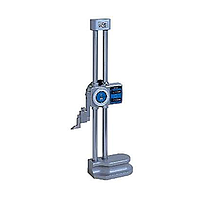
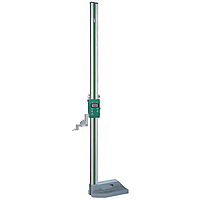
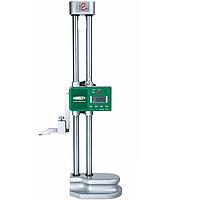
Height gauge
Precise vertical measurement is a routine requirement in machining, toolmaking, inspection, and general quality control. When parts need accurate height, step, or scribed reference checks on a surface plate, a height gauge becomes one of the most practical instruments in the metrology workflow. It helps operators verify dimensions consistently while supporting layout and comparison tasks across a wide range of workshop and inspection environments.
This category brings together height gauges suited to different accuracy targets, measuring ranges, and operating preferences. From compact digital units for bench work to larger systems designed for more advanced inspection, the range supports both everyday dimensional checks and more demanding measurement routines.
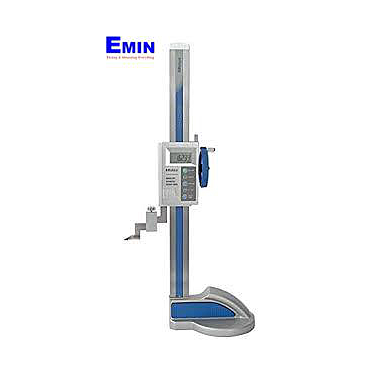
Where height gauges are typically used
A height gauge is commonly used on a flat reference surface to measure the vertical distance from the base to a feature on the workpiece. In practice, this can include checking shoulder heights, groove positions, hole center locations, and step dimensions. Many users also rely on the instrument for marking out or transferring measurements during setup and fabrication.
Because this tool sits within the broader family of mechanical measurement equipment, it is often used alongside instruments such as callipers for quick dimensional checks or dial indicators when comparative movement and runout evaluation are needed. Choosing the right combination depends on whether the task is direct measurement, comparison, alignment, or layout.
Common types available in this category
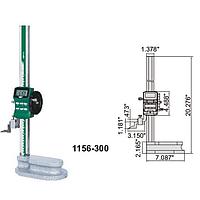
The category includes both traditional and digital approaches. In general terms, digital models are preferred when users want fast reading, fine resolution, and easier data interpretation. They are especially practical in production and inspection settings where repeat measurements and reduced reading error matter.
For example, compact solutions such as the MOORE & WRIGHT MW192-20D Digital Mini Height Gauge are suitable when a smaller measuring range is enough and portability is useful. Larger options like the MOORE & WRIGHT MW190-30DBL Digital Height Gauge or MW197-60DDL Height Gauge extend coverage for taller parts while maintaining clear digital readout for routine dimensional work.
How to choose the right height gauge
The first point to review is measuring range. A 150 mm or 300 mm class instrument may be sufficient for small components, fixtures, and benchtop inspection, while larger workpieces can require 600 mm or even over 1000 mm capacity. Selecting more range than necessary is not always the most efficient approach, especially if bench space, portability, or handling convenience are important.
The second factor is resolution and permissible error. In many workshops, 0.01 mm resolution is appropriate for general inspection and layout tasks. For applications that demand tighter control and better repeatability, higher-performance models can provide finer reading capability and more stable measurement behavior. It is also useful to consider base construction, as steel and granite base variants can influence stability, weight, and suitability for the inspection area.
Users comparing brands may look at solutions from MOORE & WRIGHT, which is well suited to practical workshop measurement, or explore Trimos systems for more advanced height measurement requirements. The right choice depends less on brand alone and more on the actual inspection task, required throughput, and target tolerance.
Examples of instruments in this range
For general-purpose measurement, the MITUTOYO 570-402 Digital ABS Height Gauge offers a 300 mm capacity and digital operation that fits well in inspection rooms and precision workshops. In a similar size class, the MOORE & WRIGHT MW197-30DDL Height Gauge is relevant for users who need a 300 mm digital unit with straightforward operation for daily checks.
Where larger vertical capacity is needed, instruments such as the MOORE & WRIGHT MW197-60DDL extend range to 600 mm. In the Trimos lineup, models like the V1+300, V1+300G, V1+600, and V1+600G illustrate how users can choose between steel-base and granite-base configurations depending on the balance they want between mobility and base stability.
For more demanding inspection tasks, higher-end systems such as the Trimos V9-1100 Height Gauges provide a much larger measuring range and advanced data output options. These are typically considered when larger components, tighter measurement control, or more integrated inspection workflows are involved.
What matters in daily operation
In real-world use, a height gauge is only as effective as the measuring setup around it. A clean reference surface, proper workpiece positioning, and careful stylus contact all influence repeatability. Stable movement along the vertical column and easy reading are important, especially in repetitive inspection routines where small handling errors can affect consistency.
Digital models can improve readability and reduce operator interpretation error, but good metrology practice still matters. Users should consider the instrument’s base size, overall weight, and how often it needs to be moved between stations. A lighter steel-base design may be easier to handle, while a granite-base version can be attractive where stability on the inspection bench is a priority.
Fit within a broader inspection workflow
Height gauges are rarely used in isolation. In many quality systems, they support incoming inspection, in-process checks, and final dimensional verification together with other measuring tools. If the task involves local thickness verification, a thickness meter may be more suitable, while profile or geometry-focused applications may require more specialized equipment.
This is why selecting a height gauge should be based on the measurement method you actually use: direct dimensional reading, comparative inspection, scribing, or data capture. The category covers practical options for these workflows without forcing one design approach for every application.
Choosing by application rather than specification alone
For maintenance departments, toolrooms, and general machining shops, a robust digital height gauge in the 300 mm range is often a sensible starting point. It covers a large share of standard measurement tasks while remaining manageable in terms of footprint and handling. If the work regularly involves larger fabricated parts or tall fixtures, a 600 mm class unit may be more appropriate.
Inspection labs and higher-precision environments may place more emphasis on fine resolution, repeatability, stable base construction, and connectivity. In these cases, stepping up to a more advanced Trimos model or reviewing additional metrology solutions from brands such as MITUTOYO can make sense when the measurement process demands tighter control.
Final considerations
A well-matched height gauge improves measurement consistency, supports efficient inspection, and helps standardize dimensional checks across the shop floor or quality room. The most suitable option depends on part size, required accuracy, working environment, and whether the instrument is mainly used for routine checks, layout work, or more advanced inspection tasks.
By comparing range, resolution, base type, and operating style, buyers can narrow the selection to the models that genuinely fit their process. Whether the need is a compact digital unit for everyday workshop use or a larger system for precise inspection, this category provides a practical starting point for selecting the right vertical measurement tool.
Get exclusive volume discounts, bulk pricing updates, and new product alerts delivered directly to your inbox.
By subscribing, you agree to our Terms of Service and Privacy Policy.
Direct access to our certified experts