Discoloration Meter
When product appearance is part of performance, visual change has to be measured in a controlled and repeatable way. A Discoloration Meter category is typically relevant for laboratories and quality teams that need to evaluate color change after washing, rubbing, light exposure, drying, coating processes, or other durability tests across textiles, inks, paints, and coated materials.
In practice, discoloration assessment rarely stands alone. It is usually part of a broader testing workflow that may include fastness, abrasion, drying, spread behavior, or environmental exposure. That is why buyers often compare not only the instrument itself, but also the surrounding test methods, sample preparation steps, and the type of material being evaluated.
Where discoloration measurement is used
Color change can indicate material degradation, poor process control, insufficient surface protection, or incompatibility between a product and its service environment. In industrial QA and R&D, this matters for textiles, printed surfaces, coatings, packaging materials, and finished components where appearance stability affects acceptance criteria.
A discoloration-related workflow may involve checking the effect of laundering, crocking, light exposure, or surface rubbing before and after comparison. For applications that also require barrier evaluation, related methods such as water vapor transmission testing or oxygen permeation systems can provide additional material performance context.
How this category fits into a test workflow
Choosing equipment in this area often starts with the question: what causes the visible color shift? In many labs, discoloration is evaluated after a controlled stress test rather than as an isolated measurement. That means the right solution depends on whether the sample is affected mainly by washing, friction, light, drying behavior, or coating properties.
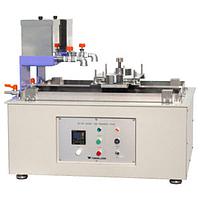
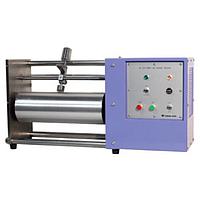
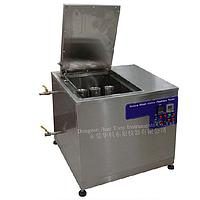
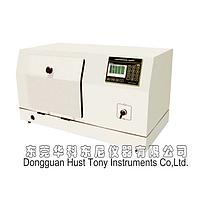
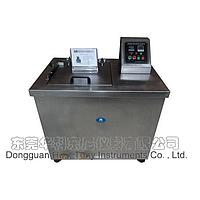
For textile and dyed material evaluation, instruments such as the Cometech QC-621N Electronic Crock Meter help assess rubbing-related transfer and appearance change. For laundering-based assessment, rotawash systems like the TONYHK HTC-007-A6 Rotawash Color Fastness Machine or the TONYHK HTC-007-C8 Rotawash Color Fastness Testing Machine are commonly associated with repeatable wash fastness procedures before visual or instrumental comparison.
Typical equipment types associated with discoloration evaluation
In this category context, buyers may be looking for instruments used directly or indirectly in color change assessment. Some support exposure or preparation steps, while others help reproduce the mechanical or environmental conditions that lead to discoloration.
- Rubbing and crocking testers for evaluating color transfer and surface change under friction.
- Launder-Ometer or Rotawash systems for wash fastness and post-wash appearance comparison.
- Light fastness testers for observing fading under controlled illumination.
- Drying and coating-related instruments where film formation and curing behavior can influence final appearance.
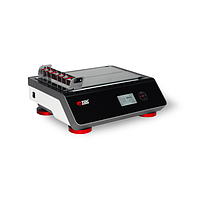
A practical example is the TONYHK HTE-001 Color Fastness to Light Testing Machine, which is suited to light exposure studies where fading or shade shift is part of the acceptance criteria. In coating and ink applications, tools like the TQCSheen AB3600 Drying Time Recorder, Yasuda 567 RCI Type Drying Time Recorder, or Yasuda 524 Prink Ink Drying Tester may be relevant because incomplete or uneven drying can affect gloss, hue, and surface uniformity.
What to consider when selecting a discoloration-related instrument
The first selection factor is the test standard or internal method your lab needs to follow. Textile, coating, and printing workflows use different sample sizes, loads, movement patterns, exposure times, and environmental conditions. The right instrument should align with the procedure already used by your QA team or required by your customer.
The second factor is the kind of sample and failure mode you need to reproduce. A fabric that loses dye through rubbing requires a different setup from a coating that yellows during drying or a printed surface that fades under light. Buyers should also consider throughput, specimen capacity, timer control, repeatability, and how easily the equipment fits into routine laboratory work.
Manufacturer preference can also matter for maintenance, familiarity, and workflow consistency. Brands such as TQCSheen, Cometech, Yasuda, and TONYHK are relevant in this broader test ecosystem, with product ranges that support different stages of appearance and durability evaluation.
Examples from this category ecosystem
For textile testing, the Cometech QC-621N is a useful example where controlled rubbing conditions help identify staining or visible color loss after repeated contact. TONYHK rotawash models, including the HTC-007-A4, HTC-007-B6, and HTC-007-C8, illustrate how wash fastness setups can support comparative discoloration assessment across different sample loads and lab capacities.
For coatings, inks, and applied films, Yasuda and TQCSheen products highlight another side of the workflow. The Yasuda 506-PCM Automatic Spread Meter supports consistency studies in material application, while drying recorders from Yasuda and TQCSheen help evaluate film development over time. These are not all “meters” in the narrow sense, but they are often part of the same decision process when the goal is to understand why a surface changes appearance.
Why discoloration testing matters in quality control
Visible change is one of the fastest ways a product fails customer expectations, even when its mechanical properties still meet specification. A controlled evaluation process helps teams distinguish between acceptable variation and a true quality issue caused by raw materials, formulation, finishing, curing, or exposure conditions.
Reliable discoloration-related testing also supports supplier comparison, failure analysis, and product development. Instead of relying only on visual impressions, labs can build a more structured workflow around repeatable exposure and assessment steps, improving consistency between batches and between operators.
Building a more complete material testing setup
In many laboratories, appearance change is reviewed together with other material properties rather than in isolation. Depending on the product, buyers may also need equipment for heat treatment, environmental conditioning, or specialized physical testing. For adjacent requirements, categories such as laboratory furnaces may be relevant where controlled heating affects surface behavior and color stability.
The best setup is usually the one that matches the real service conditions of the material. Whether the concern is wash fastness, rubbing, drying, or light exposure, selecting instruments that reproduce those stresses in a repeatable way makes discoloration evaluation far more useful for technical decision-making.
Final thoughts
This Discoloration Meter category is best approached as part of a broader appearance and durability testing workflow. The most suitable choice depends on the material under test, the source of color change, the method your lab follows, and the level of repeatability you need for QA or R&D.
If you are comparing options, focus first on the test condition you need to reproduce, then on sample format, throughput, and compatibility with your existing lab process. That approach will make it easier to identify the right equipment for meaningful and consistent discoloration evaluation.
Get exclusive volume discounts, bulk pricing updates, and new product alerts delivered directly to your inbox.
By subscribing, you agree to our Terms of Service and Privacy Policy.
Direct access to our certified experts