
Welded turtles
Maintaining a consistent welding path can be difficult when seam length increases, workpieces become heavy, or repeatability starts to affect production quality. In these situations, welded turtles are commonly used to support more stable travel speed and a more uniform weld line, especially in fabrication environments where manual movement alone may not deliver the same consistency over long runs.
These compact travel units are typically applied to guide welding movement along a preset direction on plates, structural sections, tanks, or other metal assemblies. For workshops that need better process control without moving to a fully automated line, this category offers a practical step between manual welding and more advanced automation.
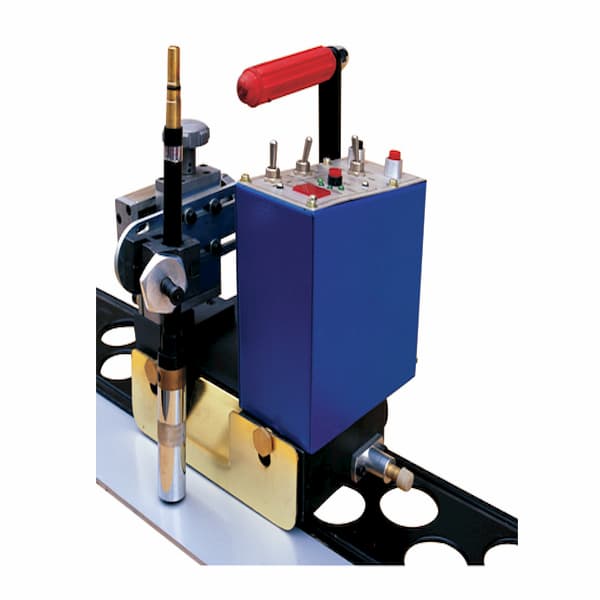
Where welded turtles fit in welding operations
In many industrial welding tasks, the challenge is not only generating heat and filler deposition, but also keeping the torch or welding head moving at a controlled pace. A welded turtle is designed for this purpose: it travels along the weld path so the process becomes more repeatable across similar jobs.
This makes the equipment especially relevant for long straight seams, repetitive fabrication work, and projects where operators need support in maintaining travel consistency. It can also help reduce variation between shifts or between different operators, which is important in production settings focused on stable output and predictable weld appearance.
Why travel consistency matters
Travel speed has a direct impact on bead formation, heat input, and overall welding quality. When movement is too fast or too slow, the weld result may become less uniform, and post-processing can increase. A welded turtle helps create a steadier motion profile than manual hand travel in many applications.
For manufacturers working on steel structures, sheet assemblies, frames, or repeated seam jobs, that consistency can improve workflow as well as weld repeatability. It does not replace process knowledge, fixturing, or parameter setup, but it can support a more controlled welding routine within the wider production system.
Typical application scenarios
Welded turtles are often considered when the workpiece is too large to reposition easily or when the seam is long enough that manual torch travel becomes tiring or inconsistent. Common examples include plate welding, structural fabrication, tank work, and assembly tasks where a straight or predictable path needs to be followed.
They may also be useful in production environments that combine several welding methods. For example, a workshop handling both automated seam movement and manual cutting may also evaluate related equipment such as plasma cutting systems to support upstream material preparation. In this way, welded turtles are part of a broader fabrication workflow rather than an isolated tool.
How to choose the right equipment for the job
Selecting a suitable unit starts with the actual welding task. Buyers typically review the seam type, workpiece size, required movement pattern, production volume, and how the machine will integrate with the welding power source and fixture arrangement. The goal is to match the equipment to the process, not simply to add motion capability.
It is also useful to consider operator setup time, workshop space, and the level of process repeatability required. In some facilities, different jobs may call for different welding equipment categories, including multi-function welding machines for flexible work or more specialized systems depending on the fabrication stage.
Role within a broader welding equipment ecosystem
Welding automation support does not always mean a fully robotic cell. In many B2B environments, productivity gains come from adding targeted devices that improve one part of the process, such as travel control, seam stability, or repetitive motion. Welded turtles fit well into this intermediate space, helping shops improve process control without completely changing their workflow.
They are often considered alongside other machine types depending on the joining method and production objective. For instance, companies handling resistance-based joining may also review spot welding equipment, while heavy-duty conventional applications may still rely on transformer welding machines in other parts of the plant.
Key benefits for industrial buyers
From a purchasing perspective, the main value of this category is improved process stability in suitable welding tasks. A well-matched welded turtle can help standardize travel, support repeatable weld appearance, and reduce dependence on constant manual movement over long seams. That can be relevant for subcontractors, metal fabricators, maintenance teams, and production workshops alike.
Process repeatability is often one of the main reasons buyers explore this type of equipment. When production targets require more consistent output from job to job, travel-assist welding devices can become an effective addition to the welding setup, particularly where workpieces are large, repetitive, or difficult to handle manually.
Points to review before ordering
Before selecting a machine, it is worth checking compatibility with the intended welding process, the type of seam to be welded, and the expected production environment. Buyers should also confirm practical factors such as movement requirements, setup conditions, and how the equipment will be used with existing fixtures, torches, and welding procedures.
Because application conditions vary widely across fabrication sites, the best choice is usually the one that aligns with the actual workflow rather than the broadest feature list. Looking at the full welding process—from material preparation to seam completion—helps ensure the selected equipment delivers value in day-to-day operation.
Conclusion
For workshops that need better control over seam travel without moving directly into complex automation, welded turtles offer a practical category to evaluate. They support steadier movement, more repeatable welding performance, and a more structured production process in many fabrication settings.
When chosen according to seam type, workpiece handling, and workflow needs, this equipment can strengthen consistency across routine welding tasks. Exploring the category in the context of your overall welding setup will make it easier to identify the most suitable solution for your operation.
Get exclusive volume discounts, bulk pricing updates, and new product alerts delivered directly to your inbox.
By subscribing, you agree to our Terms of Service and Privacy Policy.
Direct access to our certified experts