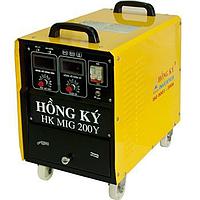
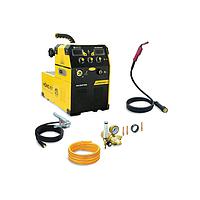
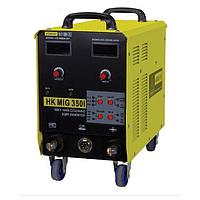
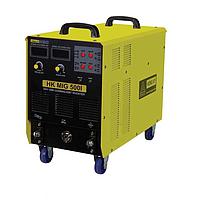
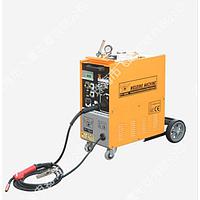
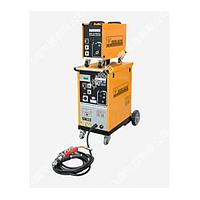
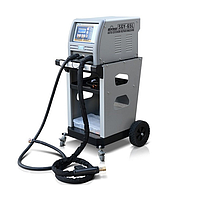
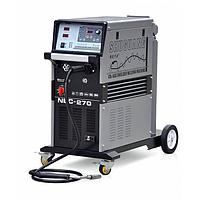
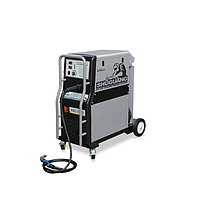
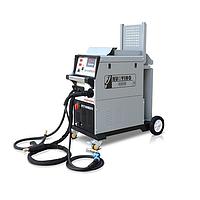
Mig/Mag welding machine
Fast deposition, stable arc performance, and cleaner weld appearance are some of the main reasons MIG/MAG equipment is widely used in fabrication, maintenance, and production workshops. For buyers comparing welding systems for steel structures, sheet metal, repair work, or general manufacturing, choosing the right Mig/Mag welding machine depends on more than output current alone. Power supply, supported welding modes, wire size, duty cycle, and gas or gasless operation all affect day-to-day usability.
This category brings together machines designed for both professional and industrial welding tasks, from compact inverter units for lighter jobs to higher-capacity models for continuous production. It is also a practical starting point if you need a process with good productivity, relatively low spatter, and flexibility across different material thicknesses.
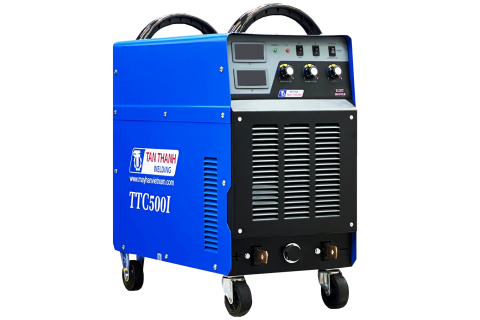
How MIG/MAG welding fits into real workshop applications
MIG/MAG welding is based on an electric arc formed between a continuously fed wire electrode and the workpiece, with shielding gas protecting the weld pool from contamination. In practice, this process is valued because it supports continuous welding, helps improve travel speed, and is suitable for repetitive fabrication tasks where consistency matters.
It is commonly used for carbon steel fabrication, stainless steel work, maintenance, chassis and frame production, and general metal assembly. Depending on machine design and setup, many users also look for support for stick welding in the same unit, especially when field repair or mixed applications require more than one process. If your work regularly shifts between processes, a dedicated multi-process welding option may also be worth reviewing.
Key advantages of inverter MIG/MAG machines
Compared with traditional equipment, modern inverter welding machines are often chosen for their more compact form factor, easier current control, and broader application range. For many workshops, this means easier transport, better energy efficiency in practical use, and smoother setup for both light and medium-duty work.
MIG/MAG systems are especially useful when productivity is important. The process can deliver high welding speed, reduced interruption compared with manual electrode changes, and a weld profile that often needs less post-cleaning. On suitable materials and parameters, users also benefit from lower spatter, more stable penetration, and better repeatability across long weld seams.
Understanding gas selection and welding modes
The “MIG” and “MAG” naming is closely related to shielding gas selection. MIG generally refers to inert gas shielding, while MAG uses active gas or gas mixtures. In many industrial steel applications, CO₂ or mixed shielding gases are common, while other materials may require different gas choices depending on weld quality targets, heat input, and material behavior.
Some machines in this category also support gasless welding with flux-cored wire, which can be useful for maintenance or jobs where bottled gas is inconvenient. For example, the Megatec MIG-250E and Megatec MIG-200 are positioned toward lighter-duty work where compact size and flexible setup can matter, while the Hồng Ký HKMIG200Z adds multi-function capability for users who need MIG and MMA in one platform. For buyers comparing supplier ecosystems, brands such as Megatec and Hồng Ký are relevant references within this category.
How to choose the right machine for your workload
A practical selection process starts with the material type and thickness you weld most often. Higher-current machines are generally more suitable for thicker sections, longer duty cycles, and more demanding production environments, while lower-capacity units are easier to deploy for repair, installation, and light fabrication.
Input power is equally important. Single-phase machines can be a practical fit for smaller workshops or mobile use, while three-phase equipment is often more appropriate for industrial lines and sustained output. Models such as the Megatec MIG-350E, Megatec MIG-350HP, Megatec MIG-500E, and Megatec MIG-500HP illustrate the difference between medium and higher-capacity solutions, while the Weldcom VMAG 400 sits in the range that may appeal to users balancing output and workshop-duty requirements. When the application involves cutting before joining, it can also be helpful to compare available plasma cutting equipment for a more complete fabrication setup.
Typical machine ranges in this category
This category covers a broad span of use cases. Compact machines such as the Megatec MIG-200 or NB-200DM are more aligned with lighter fabrication, maintenance, and smaller-scale repair work where portability and simple input requirements are important. Machines in the 200A to 270A class can be suitable for general workshop tasks, especially when users need MIG/MAG plus MMA capability in one unit.
At the other end, higher-output systems such as the Megatec MIG-500E and MIG-500HP are more relevant for thicker materials, heavier production schedules, and jobs requiring a longer operating window at elevated current. The presence of external wire feeders on some models also reflects a setup intended for more demanding industrial welding conditions rather than occasional use.
What to look at beyond current and voltage
Current range is only one part of the buying decision. Buyers should also review wire diameter compatibility, spool capacity, trigger modes such as 2T/4T, and whether the machine supports additional processes like MMA. These details directly affect operator comfort, consumable selection, and the ability to adapt to changing jobs on the shop floor.
Weight and overall dimensions matter as well, especially for service teams, site work, or crowded production areas. Machines like the Megatec MIG-270D and MIG-270DY show how similar output classes can still differ in configuration, portability, and accessory package. In facilities where older heavy-duty equipment is still in use, comparing with a transformer welding machine can help clarify whether inverter-based MIG/MAG is the better fit for efficiency and flexibility.
Who should consider MIG/MAG equipment?
This category is relevant for metal fabrication shops, maintenance contractors, mechanical workshops, steel structure businesses, and manufacturers producing repeat welds in medium to high volume. It also suits buyers who want a process that is easier to standardize for semi-automatic production than manual stick welding alone.
For procurement teams, the most effective approach is to match the machine to actual duty requirements rather than buying only by maximum amperage. A lighter inverter unit may be enough for repair and thin-section work, while a three-phase high-capacity system is more suitable when weld continuity, deposition rate, and industrial throughput are priorities.
Final considerations before ordering
A well-matched MIG/MAG welding system can improve throughput, reduce cleanup time, and support a wider range of fabrication tasks with more predictable results. The right choice usually comes down to balancing power input, welding mode, supported wire sizes, portability, and expected duty cycle against the materials and workflow in your shop.
If you are comparing models in this category, focus on how the machine will actually be used: occasional repair, mobile installation, general workshop fabrication, or continuous industrial welding. That approach makes it easier to narrow down from compact units to higher-output systems and select equipment that fits both current production needs and future expansion.
Get exclusive volume discounts, bulk pricing updates, and new product alerts delivered directly to your inbox.
By subscribing, you agree to our Terms of Service and Privacy Policy.
Direct access to our certified experts