Saw Blade Grinders
In busy woodworking, metalworking, and fabrication environments, blade condition has a direct impact on cut quality, machine load, downtime, and consumable cost. When teeth lose their edge, operators often notice rougher cuts, more noise, higher heat, and slower throughput. That is why many shops look for a more controlled way to restore cutting performance instead of replacing blades too early.
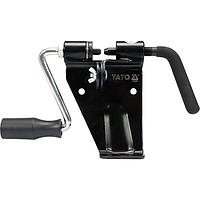
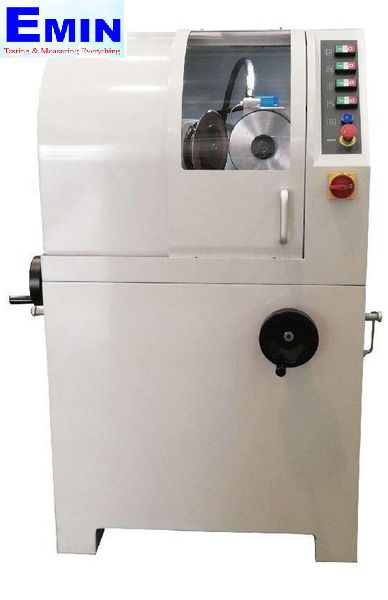
Saw Blade Grinders support this need by helping workshops resharpen and maintain circular saw blades, friction saw blades, TCT blades, and knife-type cutting tools with better consistency. For businesses that process blades regularly, having the right grinding solution can reduce outsourcing delays and make maintenance planning more predictable.
Why saw blades lose cutting performance
Blade wear is a normal result of production use, but the speed of wear depends on several practical factors. Material hardness, feed pressure, cutting temperature, dust buildup, resin contamination, and general handling all affect how quickly a blade becomes dull. In demanding applications, even a good blade can degrade faster than expected if the process is not well matched to the tool.
Another common issue is inconsistent maintenance. When blades are used continuously without cleaning, inspection, or timely resharpening, tooth geometry can deteriorate further and lead to unstable cutting results. In many workshops, a grinder becomes part of a broader maintenance workflow, much like cooling support from an industrial chiller system helps stabilize temperature in other machine processes.
Where saw blade grinding machines fit in production
A grinder is not just a repair tool. It is part of a tool maintenance strategy that helps extend blade life and maintain repeatable cutting quality. Instead of waiting until a blade is unusable, shops can resharpen at the right interval and return the tool to service with less interruption.
This is especially useful for operations that process large numbers of circular blades or rely on specialized tooth forms. With in-house sharpening capability, teams can reduce turnaround time, manage blade inventory more efficiently, and maintain closer control over production scheduling. For facilities that already operate other dedicated process equipment such as paper processing machinery, adding blade maintenance equipment can also support a more self-sufficient production setup.
Typical machine types in this category
The category covers more than one grinding task, and that matters when comparing machines. Some models are designed for standard circular saw blade sharpening, while others focus on TCT blades, friction saw blades, chamfering operations, or circular and slitter knives. Choosing the correct machine starts with matching the blade type and sharpening objective to the actual application.
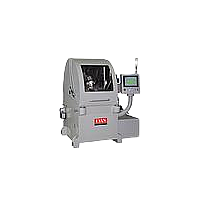
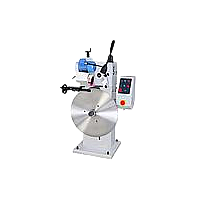
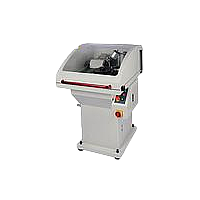
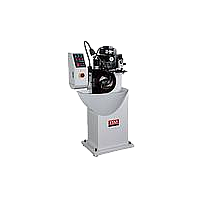
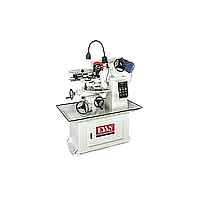
For example, EYAN is represented here with several specialized solutions. The EYAN ES-280 TCT Saw Grinder is relevant for carbide-tipped circular saw applications, while the EYAN S300, S450, and S500 Circular Saw Blade Sharpening Machines cover different blade diameter ranges for routine sharpening work. For friction saw blade applications, the EYAN SU-650, SU-850, and SU-1200 illustrate how capacity can vary depending on blade size.
There are also machines for more specific edge-preparation and knife-grinding tasks. The EYAN BW-650 Circular Saw Blade Chamfering Machine is intended for chamfering operations, and the EYAN CV-450 supports slitter knives and circular knives grinding. For operations needing a higher level of automation, the EYAN EMA-650 4A CNC Circular Saw blade Sharpening Machine reflects the move toward CNC sharpening for repeatable multi-axis blade processing.
Examples for broader grinding requirements
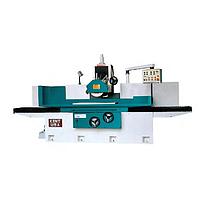
Although this category centers on saw blade grinding, some buyers also compare machine structures and precision characteristics across other grinding applications. In that context, the SMAC KGS620AH and KGS620AHD surface grinders show how larger grinding platforms are used for precision flat-surface work. They are not direct substitutes for dedicated saw blade grinders, but they help illustrate the wider grinding ecosystem within industrial machinery.
This distinction is important for procurement teams. A saw blade grinder is selected around blade geometry, tooth handling, angle adjustment, and sharpening workflow, while a surface grinder is designed for a different type of workpiece and finishing objective. Understanding that difference helps avoid selecting a machine that is technically capable of grinding, but not suitable for blade maintenance.
How to choose the right saw blade grinder
The first step is to define the blade family you actually service. Diameter range, tooth pitch, blade thickness, tooth material, and required grinding angle all influence machine suitability. A workshop dealing mainly with small to medium circular saw blades has different needs from one servicing large friction saw blades or carbide-tipped blades across many tooth counts.
Next, look at the required level of control and throughput. A manually adjusted or semi-automatic machine may be sufficient for lower volumes and simpler blade types. For higher-volume operations, or where repeatability across many blade sizes matters, automation and adjustment precision become more important. This is where CNC-oriented equipment can make practical sense.
It is also worth considering the surrounding operating environment. Coolant management, dust control, maintenance access, and power requirements all affect day-to-day use. In some facilities, support equipment such as compressed air treatment equipment may also be relevant if pneumatic systems are part of the wider workshop setup.
Practical benefits for workshops and maintenance teams
The most visible advantage of in-house grinding is cost control over time. Replacing blades too early can increase consumable expense, while outsourcing sharpening may create delays and reduce flexibility. A suitable machine allows operators to restore usable blades on demand and organize maintenance around production needs.
There is also a quality benefit. Sharper blades generally cut more cleanly, reduce unnecessary stress on the cutting machine, and can help improve consistency in finished parts. For B2B users, that often matters as much as the direct tool-saving value because cutting quality affects downstream operations and customer requirements.
From a workflow perspective, a dedicated grinder helps transform sharpening from a reactive task into a routine process. That can support better blade tracking, fewer emergency replacements, and more stable machine utilization across the shop floor.
When sharpening makes sense and when replacement is better
Sharpening is usually the logical option when the blade is worn but still structurally usable. If the body remains stable and the tooth condition is recoverable, resharpening can restore function and extend service life. This is particularly relevant for blades that are more expensive to replace or used frequently in production.
Replacement is often the better path when the blade has severe structural damage, major tooth breakage, or deformation that grinding cannot correct safely. The decision should always balance tool condition, production risk, and the value of recovery. A grinder improves maintenance capability, but it does not eliminate the need for inspection and practical judgment.
Choosing with application in mind
The best results usually come from selecting equipment around the blades you sharpen most often, not around the widest possible machine description. A business handling TCT circular saw blades every day may prioritize a machine like the EYAN ES-280, while another operation working across multiple sizes may look more closely at the S-series or CNC-oriented options such as the EMA-650 4A.
Across the category, the goal is straightforward: maintain blade performance, reduce unnecessary replacement, and keep cutting operations running with better consistency. By matching grinder type, blade range, and production volume to your actual application, it becomes much easier to build a practical and efficient sharpening workflow.
Get exclusive volume discounts, bulk pricing updates, and new product alerts delivered directly to your inbox.
By subscribing, you agree to our Terms of Service and Privacy Policy.
Direct access to our certified experts