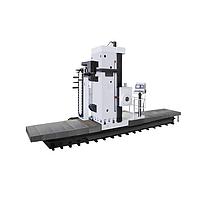
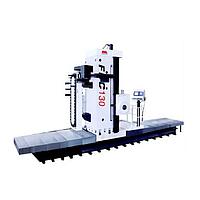
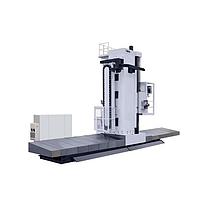
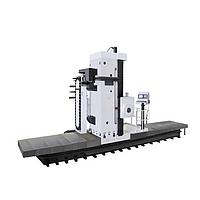
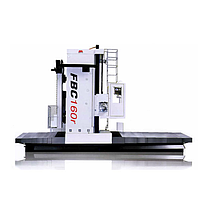
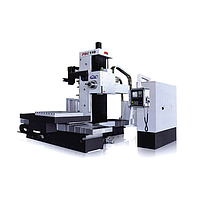
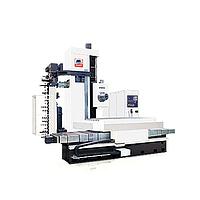
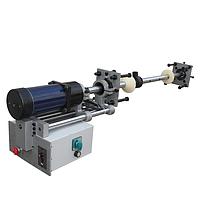
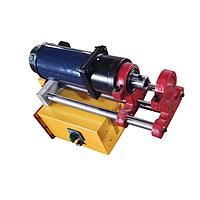
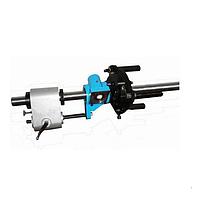
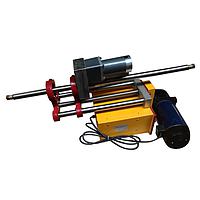
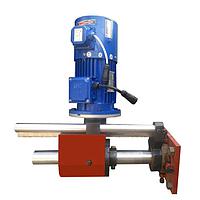
Boring Machine
Precision hole finishing is a core step in many repair, machining, and remanufacturing workflows. When bore geometry, surface finish, and concentricity directly affect assembly quality, choosing the right Boring Machine becomes important not only for machining accuracy, but also for throughput, repeatability, and long-term equipment fit.
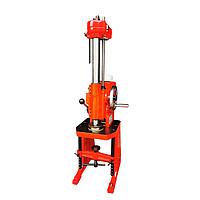
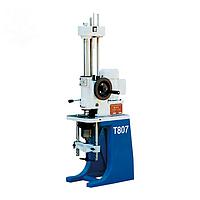
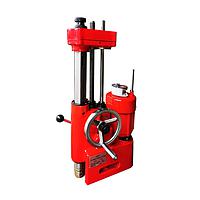
This category brings together machines designed for controlled boring operations across automotive and industrial applications. Within this range, buyers will find equipment suited to brake drum reconditioning and cylinder boring work, with practical options for different diameter ranges, spindle speeds, travel capacities, and workshop requirements.
Where boring machines are typically used
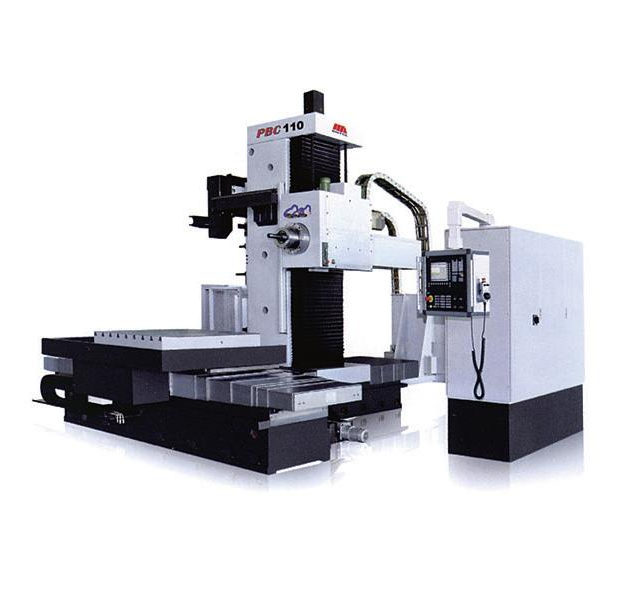
In industrial and automotive machining environments, boring machines are selected when an existing hole or cylindrical cavity needs to be enlarged, corrected, or restored with tighter dimensional control. Common use cases include brake drum machining, engine block and cylinder repair, and other maintenance operations where consistent internal diameter and surface condition matter.
For workshops handling component restoration rather than first-pass fabrication, a dedicated boring machine helps improve process stability compared with more general-purpose equipment. This is especially relevant where operators need repeatable feed control, suitable spindle speed options, and a machine structure capable of supporting accurate internal machining over varying bore depths.
Product scope in this category
The current selection is centered mainly on WMT CNC machines, including both brake drum boring machines and cylinder boring machines. This makes the category especially relevant for buyers looking at automotive service equipment, engine rebuilding machinery, or workshop machines for remanufacturing tasks.
Examples in the range include the WMT CNC T8358A, T8360, T8362, T8370, and T8380 series for brake drum applications, along with the TS8365 and TC8365A models for larger boring diameter requirements. For cylinder work, representative models include the WMT CNC T8018A, T8018B, T8018C, and T7220B, covering different processing diameters, boring depths, and spindle configurations.
Brake drum boring machines for repair and reconditioning
Brake drum boring machines are typically chosen for restoring worn or damaged drum surfaces to a usable internal diameter. In this category, model coverage extends from compact ranges such as the WMT CNC T8358A and T8358A-S up to larger-capacity options like the T8380, TS8365, and TC8365A, which support wider processing or boring diameter ranges.
Selection here usually depends on the size of the workpieces you process most often, the required slide or toolpost travel, and the preferred spindle speed and feed combinations for your repair workflow. For shops that handle a broad mix of passenger vehicle and larger brake components, comparing diameter capacity against available floor space and power requirements is often the most practical starting point.
Machines such as the WMT CNC T8370 and T8380 may be suitable when a wider processing range or heavier-duty workshop role is needed. Meanwhile, models like the T8360 or T8362 can be more aligned with standard brake drum repair tasks where capacity, machine footprint, and operating simplicity must stay balanced.
Cylinder boring machines for engine machining work
Cylinder boring machines are used where engine cylinders must be re-machined to restore dimensional accuracy or prepare for oversize components. In this category, the WMT CNC T8018A, T8018B, and T8018C offer different boring depth and processing diameter capabilities, allowing buyers to match the machine to the types of engine blocks or cylinder components handled in their facility.
The WMT CNC T7220B also stands out as a dedicated option where machining accuracy and surface finish are key considerations. For buyers evaluating cylinder boring equipment, the most relevant factors are usually maximum boring diameter, allowable boring depth, feed control, spindle speed range, and the overall rigidity of the machine for stable cutting performance.
Where process consistency is critical, it is worth reviewing whether the machine will primarily support light repair work, mixed engine rebuilding jobs, or more demanding repetitive production tasks. That distinction often determines whether variable speed behavior, longer travel, or a more robust machine build should take priority.
How to choose the right boring machine
A practical purchasing decision starts with the workpiece itself. Diameter range, maximum boring depth, required finish quality, and expected daily workload will usually narrow the shortlist faster than comparing model names alone. Buyers should also consider whether the machine is intended for a focused task, such as brake drum repair, or for broader workshop use involving multiple bore sizes and part types.
Machine travel, spindle speed, and feed control are important because they influence both precision and cycle time. A machine with appropriate travel and speed options can help operators handle different materials and bore sizes more efficiently, while an oversized machine may add unnecessary cost, footprint, and handling complexity.
It is also useful to look at installation conditions, operator access, and workshop utilities. In many facilities, boring equipment is part of a wider process chain that may include cleaning, cooling, or other production support systems. If your setup also depends on temperature management for connected machinery, related equipment such as an industrial water cooler or chiller may be worth reviewing as part of the broader plant layout.
Evaluating models by capacity and workflow
Not every machine in this category serves the same production profile. Smaller-capacity brake drum units such as the WMT CNC T8358A family are generally easier to position in compact workshops, while larger machines like the TS8365 or TC8365A are better aligned with wider bore ranges and more demanding service requirements.
For cylinder applications, the distinction between models such as T8018A, T8018B, and T8018C is meaningful when your jobs vary by bore diameter and maximum boring depth. Buyers comparing these machines should focus on the real dimensions of the parts they process, not just headline capacity, because setup stability and usable working range often matter as much as nominal limits.
Where compressed air is part of the workshop environment for clamping, cleaning, or auxiliary systems, supporting infrastructure can also influence overall equipment efficiency. In those cases, it may be useful to explore compressed air treatment equipment alongside machining equipment planning.
Why category-level comparison matters
Reviewing a category page rather than a single product page helps buyers compare machine types in a more realistic way. Instead of choosing based on one specification alone, you can assess whether a brake drum machine or a cylinder boring machine is the better fit, then compare multiple WMT CNC models by work range, power, travel, and physical size.
This is especially useful for procurement teams, repair workshops, and industrial buyers who need to balance technical suitability with operating conditions, available space, and future job scope. It also creates a clearer path for shortlisting a machine before moving into model-level evaluation and quotation.
Find a boring machine that matches your process
The right choice depends on what you machine most often, how much dimensional control your process requires, and how the equipment will fit into daily workshop operations. From brake drum reconditioning to cylinder boring work, this category is structured to help buyers compare relevant machine capacities and identify a practical match for real machining tasks.
If you are reviewing options for repair, remanufacturing, or industrial machining, start by comparing the workpiece range, boring depth, travel, and operating setup required in your facility. That approach will make it easier to narrow the selection to a boring machine that supports both current jobs and future workload growth.
Get exclusive volume discounts, bulk pricing updates, and new product alerts delivered directly to your inbox.
By subscribing, you agree to our Terms of Service and Privacy Policy.
Direct access to our certified experts