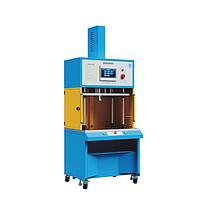
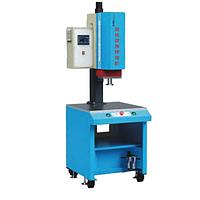
Spin Welding Machine
When a plastic assembly needs a strong, repeatable circular joint without introducing extra fasteners or adhesives, spin welding is often the practical choice. In production environments such as filter cartridge assembly, bottle or container joining, and polymer component fabrication, the process helps create clean welds with consistent cycle control and reliable sealing performance.
Spin Welding Machine solutions in this category are intended for thermoplastic joining applications where rotational motion, pressure, and controlled hold time are critical to weld quality. The range highlighted here focuses on industrial-use equipment from Danrel, with models suited to different part geometries, orientation needs, and automation preferences.
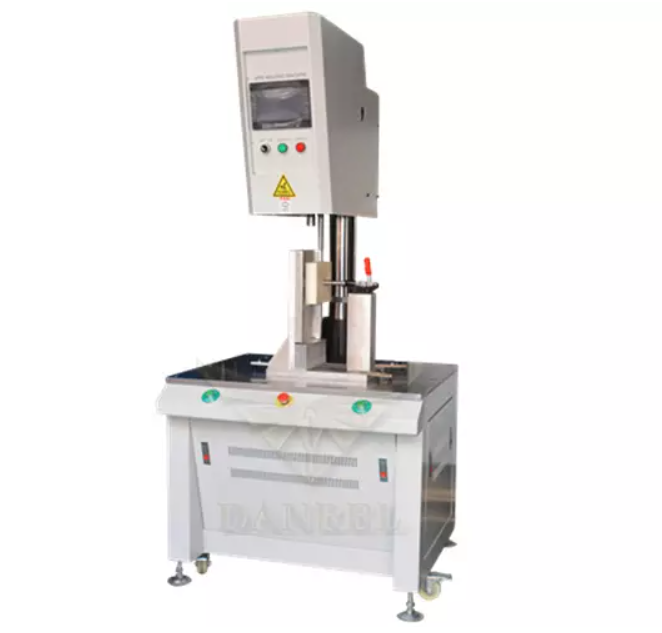
Where spin welding fits in plastic assembly
Spin welding is commonly used when two thermoplastic parts with circular mating surfaces must be joined by frictional heat. One part rotates at controlled speed while axial force is applied; once sufficient heat is generated at the interface, rotation stops and pressure is maintained so the joint solidifies into a welded bond.
This method is especially relevant for components such as water filter cartridges, plastic housings, pipe-related parts, and bottle-style assemblies. Compared with some other joining methods, it can support fast cycle times and repeatable production when the parts and process parameters are properly matched.
Typical machine configurations in this category
The category includes several machine styles rather than a single fixed format. Some systems are designed for standard vertical welding tasks, while others support servo-driven rotation, rotary table layouts, horizontal configurations, or angular orientation requirements for assemblies that must stop in a defined final position.
For example, the Danrel DR-SP2040 Servo Motor Spin Welding Machine represents a servo-based approach for controlled rotational welding, while the Danrel DR-SP204-A Rotary Table Automatic Spin Welding Machine for Water Filter Cartridge illustrates a format intended for more automated repetitive production. For parts that require alignment after welding, the Danrel DR-SP2060 Angular Orientation Spin Welding Polypropylene & Plastic Assembly Machin shows how orientation-capable systems can fit more demanding assembly workflows.
Applications commonly served by spin welding equipment
Many buyers looking at this category are working with thermoplastics such as PP, PE, or similar materials used in industrial and consumer product manufacturing. A common use case is water treatment product assembly, where circular cartridge housings and caps benefit from a sealed and repeatable welded joint. The Danrel DR-SP2040-Cover Servo Motor Spin Welder for PP Water Filter Cartridge is one example aimed at this type of process.
Other applications include bottle or container-style parts, tubular components, and round plastic assemblies that need stable mechanical integrity. The Danrel DR-SP18000 High Revolution Servo Plastic Welder Spindle Spin Welding Machine for Polyethylene & PE Bottles reflects this broader use in bottle-related production, while the Danrel DR-HSP2040 Horizontal Type Servo Motor Spin Welding Machine Rotary Welder for PP PE Pipe, Water Filter Cartridges highlights scenarios where a horizontal machine layout may better suit part handling or line integration.
Key selection factors before choosing a machine
Choosing the right equipment depends less on brand count and more on the actual joining task. Buyers typically need to review part diameter, required rotational speed, pressure method, cycle timing, orientation accuracy, and whether the process should be manual, semi-automatic, or integrated into a larger production line.
A servo model may be preferable when tighter control over speed, positioning, or stop angle is important. Pneumatic pressing can be suitable for many standard applications, while more specialized jobs may require attention to stroke, hold time, and repeatability at the weld interface. If the finished product has a visible top cover, outlet, or feature that must stop at a defined angle, an orientation-capable system becomes especially relevant.
It is also useful to think beyond the welding head itself. Stable compressed air quality affects pneumatic operation, and in some production cells cooling support may matter for overall throughput. Depending on the line setup, related equipment such as compressed air treatment equipment or an industrial water cooler/chiller can support more consistent machine performance.
Representative models and what they suggest about the range
The machines listed in this category show that the range is not limited to one part type. The Danrel DR-SP2050 Spin Welding Machine for Plastic Pickle Balls (4.4KW) points to application-specific setups for plastic ball assemblies, while the DR-SP204 series demonstrates equipment suitable for filter cartridge production with adjustable timing and rotational parameters.
Higher-speed and higher-power options within the lineup indicate support for different material combinations and productivity requirements. Rather than comparing machines only by motor power, it is more useful to assess the complete process window: rotational range, pressure control, cycle sequence, part fixturing, and whether the machine matches your product geometry.
How spin welding compares within a broader packaging or assembly line
Spin welding often works as one station within a larger industrial workflow. Upstream processes may include molding, trimming, cleaning, or part feeding, while downstream steps can involve leak testing, labeling, packaging, or shrink wrapping. That is why machine selection should also consider footprint, operator access, and compatibility with adjacent equipment.
For manufacturers building a complete packaging or finishing line, adjacent process equipment may also be relevant. In some cases, a heat shrinking machine is part of the post-assembly packaging stage, especially when welded plastic products move directly into retail or distribution packaging after inspection.
What buyers should prepare before requesting a quotation
To narrow down the right machine efficiently, it helps to define the workpiece material, outer diameter, weld interface design, target cycle time, and required production volume. You should also clarify whether the application needs angular orientation, horizontal loading, rotary table automation, or servo-based speed control.
Sample parts, drawings, and expected weld appearance are especially valuable during technical evaluation. With that information, it becomes easier to determine whether a model such as the DR-SP2040, DR-HSP2040, or DR-SP2060 is a better fit for the process objective, rather than selecting purely on headline specifications.
Choosing the right category for your process
This category is best suited to buyers looking for plastic spin welding equipment for circular thermoplastic assemblies in industrial production. The available Danrel models cover a useful range of machine styles, from standard servo spin welders to rotary table, horizontal, and angular-orientation configurations.
If your application involves filter cartridges, plastic bottles, pipe-related parts, or other rotationally weldable components, reviewing the machine format and process requirements together will lead to a better decision than focusing on speed or power alone. A well-matched spin welding setup supports repeatable joining, cleaner production flow, and a more stable assembly process over time.
Get exclusive volume discounts, bulk pricing updates, and new product alerts delivered directly to your inbox.
By subscribing, you agree to our Terms of Service and Privacy Policy.
Direct access to our certified experts