PMD Polarization
Polarization behavior often becomes critical only when an optical system starts showing unstable results, unexpected loss, or difficult-to-explain variation in measurement data. In those cases, choosing the right PMD Polarization equipment helps engineers, laboratories, and production teams evaluate how light behaves in fiber, components, and optically active materials with much better clarity.
This category brings together instruments used for polarization-related testing across photonics, fiber-optic communication, R&D, and quality control. The scope is broad: some devices focus on polarization mode dispersion and source analysis, others support polarity verification in multifiber assemblies, while some are intended for extinction ratio, polarization-dependent loss, or optical rotation measurement.

Where PMD polarization measurement fits in optical work
In modern optical environments, polarization is not just a theoretical parameter. It affects transmission stability, connector alignment, device characterization, and the performance of polarization-maintaining fiber assemblies. That is why polarization-related testing is often used alongside tools such as an optical power meter or an optical analyzer, depending on whether the goal is basic power verification or deeper signal behavior analysis.
PMD, or polarization mode dispersion, is especially important in fiber-optic systems because it can distort signals when different polarization modes travel at different speeds. In practical terms, this matters in telecom testing, component validation, and troubleshooting of higher-performance optical links. Equipment in this category is therefore relevant not only for research laboratories, but also for manufacturing, incoming inspection, and field-support workflows.
Different instrument types found in this category
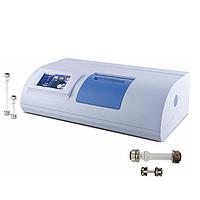
Not every polarization instrument measures the same thing, so selection should start from the actual test task. For example, the EXFO FLS-5834B CD/PMD Analyzer Source is oriented toward CD/PMD analysis workflows, where source stability and wavelength suitability are important for dispersion-related testing. This is very different from an automatic polarimeter used to measure optical rotation in chemical or pharmaceutical samples.
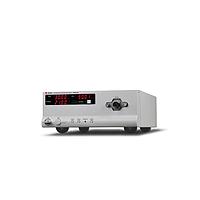
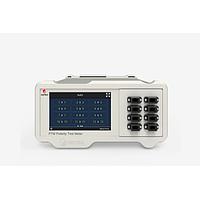
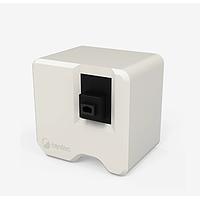
Other instruments in the category support fiber and connector production tasks. The Santec PTM-100 Polarity Test Meter and remote-head solutions such as the Santec RD-P-100 and RD-SP-100 are designed for polarity checking and mapping in multifiber applications, including MPO and MTP assemblies. For PM fiber alignment and evaluation, instruments like the Santec PEM-340 focus on extinction ratio, polarization angle, and power display in a way that is more directly tied to polarization-maintaining components.
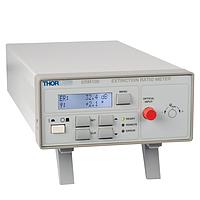
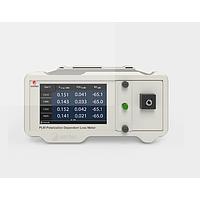
There are also devices aimed at broader polarization characterization. The Santec PLM-100 is intended for PDL, BR, and IL testing of optical components, while the THORLABS ERM100 supports extinction ratio measurement over a wide wavelength range. In parallel, laboratory polarimeters such as the KERN OAB 20LED Manual polarimeter or Bonnin SGW series models are more suitable when the application is optical rotation, specific rotation, sugar degree, or concentration measurement.
Common application scenarios
A major use case is fiber-optic communication and photonic component testing. Here, engineers may need to evaluate how a device handles polarized light, whether a connectorized PMF patch cord maintains the intended axis, or whether polarization-related loss is affecting a component under test. In these workflows, polarization instruments complement alignment, insertion loss, and transmission measurements rather than replacing them.
Manufacturing environments use polarization tools differently. Multifiber cable producers and QA teams often need quick pass/fail feedback, channel mapping, and polarity verification without introducing unnecessary handling steps. Instruments from Santec are relevant in this context because they support production-oriented tasks such as assembly mapping, incoming inspection, and exportable test records.
Another common application is analytical measurement of optically active substances. In those cases, the goal is not PMD in telecom fiber, but optical rotation and concentration-related testing. The Bonnin SGW-531, SGW-532, SGW-533, and SGW-568, along with the KERN OAB 20LED Manual polarimeter, fit this laboratory and process-control context where repeatability, reading resolution, and sample handling matter.
How to choose the right PMD polarization equipment
The first question is simple: what parameter do you actually need to measure? If the task involves PMD or chromatic-dispersion-related characterization, a dedicated analyzer source is more appropriate than a general polarimeter. If the job is polarity inspection of multifiber assemblies, a polarity detector or polarity test meter will be much more useful than an extinction ratio meter.
The second factor is the optical environment. Wavelength range, connector type, input power range, and the number of channels can all influence suitability. For example, a lab aligning PM devices may prioritize extinction ratio and polarization angle display, while a cable manufacturing line may care more about throughput, channel count, and fast pass/fail operation.
The third factor is workflow integration. Some users need standalone benchtop equipment for routine QA, while others need instruments that fit into a broader setup with data export, repeatable procedures, or compatibility with other optical test stages. In production or service environments, it may also be useful to pair polarization testing with tools such as a fusion splicer when working with PM fiber preparation and splicing processes.
Representative manufacturers and product examples
Several established brands appear in this category, each aligned with different needs. EXFO is commonly associated with telecom and fiber test workflows, including CD/PMD-related instrumentation. THORLABS is well known in laboratory and photonics environments where extinction ratio and polarization characterization are part of component development or experimental setups.
Santec stands out for its strong coverage of practical polarization tasks in fiber and connector testing, from remote-head polarity detection to PER and PDL measurement. Meanwhile, KERN and Bonnin are more closely tied to classical polarimetry applications where optical rotation and concentration measurement are required in laboratories, food testing, or pharmaceutical settings.
Because the category includes both optical telecom instruments and analytical polarimeters, buyers should not rely on naming alone. Two products may both contain the word “polarimeter” or refer to polarization, but their intended applications, operating principles, and measurement outputs can be completely different.
What these instruments do not replace
It is easy to confuse polarization instruments with more general optical test tools. However, they do not automatically replace an OTDR, a fault locator, or a standard power meter. If the objective is fiber event location, link distance analysis, or basic continuity troubleshooting, a dedicated OTDR meter or other fault-finding tool is usually the better choice.
Likewise, a polarization device does not necessarily provide full spectral analysis or broad signal diagnostics. Its value lies in measuring polarization-dependent behavior, optical rotation, extinction ratio, or related parameters that would otherwise remain hidden in a conventional optical test routine. That makes it a specialized but highly important part of the broader optical test ecosystem.
Choosing with confidence for lab, QA, or production use
A good selection process starts with the application, then narrows by parameter, wavelength, connector format, and level of automation. Teams working in telecom, photonics R&D, PM fiber alignment, or multifiber cable production will usually benefit from very different product types even though they all fall under the same category.
By comparing the intended use of models such as the EXFO FLS-5834B, Santec PTM-100, Santec PEM-340, Santec PLM-100, THORLABS ERM100, KERN OAB 20LED, and the Bonnin SGW series, buyers can focus on instruments that match their workflow instead of choosing by product name alone. That approach leads to more reliable measurements, smoother integration into existing processes, and a better fit for long-term optical testing needs.
Get exclusive volume discounts, bulk pricing updates, and new product alerts delivered directly to your inbox.
By subscribing, you agree to our Terms of Service and Privacy Policy.
Direct access to our certified experts