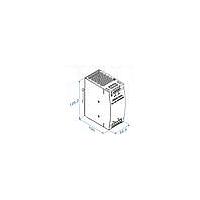
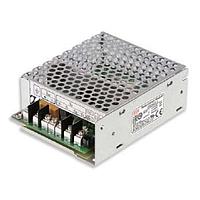
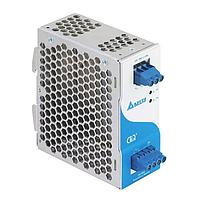
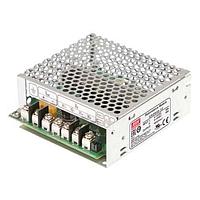
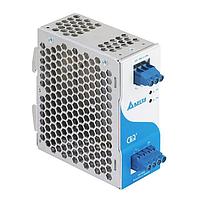
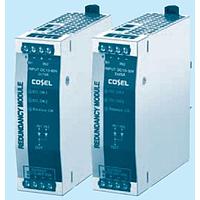
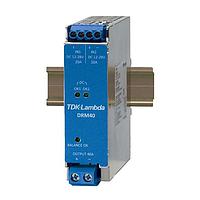
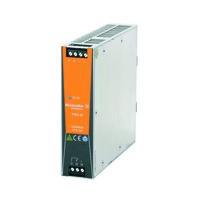
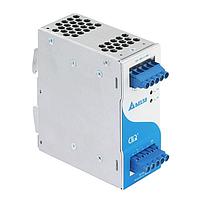
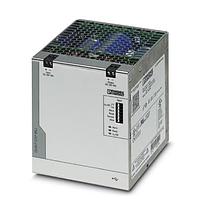
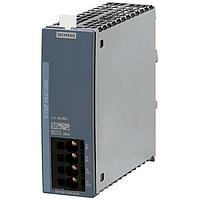
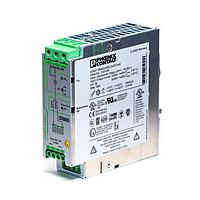
Redundancy Modules
In industrial power systems, a single power supply failure can shut down controllers, communication devices, I/O, and critical field equipment at the same time. That is why Redundancy Modules are widely used in control cabinets, process automation, machine building, and infrastructure applications where higher availability matters. They help create more resilient DC power architectures by decoupling parallel power supplies and supporting continued operation when one source is lost.
For engineers, panel builders, and maintenance teams, this category is relevant when designing systems that need stable 24 VDC distribution, reduced single points of failure, and easier serviceability. Whether the application is in factory automation, energy systems, transport, or industrial computing, redundancy is often a practical step toward improving uptime rather than simply adding more power capacity.
Why redundancy modules matter in DC power design
A redundancy module is typically installed between two DC power supplies and the load. Its main role is to isolate the output paths so that if one supply fails, shorts internally, or drops out of range, the second supply can continue feeding the load without backfeeding into the failed unit. In many industrial setups, this is a key part of a high-availability power architecture.
This approach is different from merely wiring power supplies in parallel. Parallel connection alone may increase available current, but it does not necessarily provide proper fault isolation. By adding a dedicated module, designers can improve fault tolerance, simplify maintenance planning, and reduce the risk that one supply problem affects the entire downstream system.
Where these modules are commonly used
Redundancy modules are often selected for systems that cannot tolerate unplanned stoppages, including PLC cabinets, industrial PCs, network switches, remote monitoring stations, and process instrumentation panels. They are especially relevant where control power supports multiple dependent devices and a single interruption can trigger wider production or service disruption.
They also fit well in applications that already rely on robust DC power supplies and need an additional layer of resilience. In installations with backup energy storage, they may be part of a broader strategy that also includes battery charging solutions to maintain continuity during mains disturbances or controlled shutdown scenarios.
Key selection points for redundancy modules
Choosing the right module starts with the electrical characteristics of the system. Engineers typically review nominal output voltage, load current, number of input channels, acceptable voltage drop, wiring method, and the behavior required during a source failure. Thermal conditions inside the panel and available DIN rail space also matter, particularly in compact enclosures.
Another important factor is the type of load being protected. Sensitive automation electronics, communication hardware, and edge computing devices may need tighter power stability than simple auxiliary loads. If the system is expected to expand, it is also worth checking how the redundancy concept aligns with the broader power distribution layout, including future maintenance access and modular cabinet design.
Redundancy modules and the wider power ecosystem
In practice, these modules are rarely chosen in isolation. They are part of a DC infrastructure that may include surge protection, circuit protection, terminal blocks, power monitoring, and backup storage. For example, systems that support electric transport or charging infrastructure may combine redundant DC power sections with products used in eMobility applications, depending on the control and communication requirements of the installation.
Where ride-through capability or short-term energy buffering is needed, designers may also evaluate related technologies such as supercapacitors. While supercapacitors and redundancy modules serve different purposes, they can complement each other in systems that need both fault isolation and temporary support during dips, switching events, or controlled transitions.
Typical manufacturer considerations
Product choice often depends on compatibility with the rest of the installed power platform, preferred mounting standards, and the support level expected in industrial environments. Well-known suppliers in this space include PHOENIX CONTACT, along with other established manufacturers such as MEAN WELL, TDK-Lambda, Eaton, SIEMENS, and Weidmuller. Each brand is typically considered within the context of panel design standards, service expectations, and the required balance between simplicity and system resilience.
For many B2B buyers, consistency across components is also a practical consideration. Selecting power products from familiar industrial manufacturers can help streamline documentation, replacement planning, and sourcing across multiple projects or sites. That said, the best fit still depends on the electrical design objectives and the operational criticality of the load.
Design and maintenance benefits in the field
Beyond failure handling, redundancy modules can make routine service easier. When a power supply needs replacement, a properly designed redundant system may allow maintenance with less disruption to connected equipment. This can be valuable in continuous processes, remote assets, and production lines where downtime carries operational cost.
They also support clearer troubleshooting. Instead of a single shared power path, the system is divided into more controlled input channels, making it easier to identify whether the issue comes from a supply, upstream AC source, wiring path, or the load itself. In real-world maintenance, that improved visibility can save time and reduce unnecessary component swaps.
How to evaluate this category for your application
If you are comparing options in this category, start with the role of redundancy in your system rather than focusing only on part count. Consider whether the goal is uninterrupted operation, easier maintenance, improved fault isolation, or a combination of these. Then verify that the module aligns with the output characteristics of the selected power supplies and the current demand of the connected load.
It is also helpful to review the broader cabinet design, including power distribution, environmental conditions, and future scalability. A redundancy module delivers the most value when it is integrated into a coherent industrial power strategy rather than added as an afterthought.
For applications where uptime, serviceability, and controlled DC power behavior are important, Redundancy Modules provide a practical way to strengthen the power path. Used with the right supporting components and matched to the actual operating conditions, they can help build more dependable industrial systems without unnecessary complexity.
Get exclusive volume discounts, bulk pricing updates, and new product alerts delivered directly to your inbox.
By subscribing, you agree to our Terms of Service and Privacy Policy.
Direct access to our certified experts