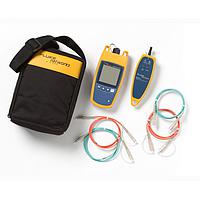
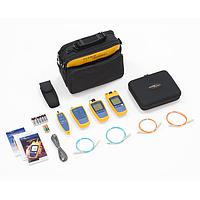
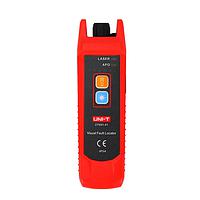
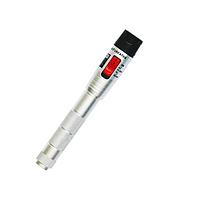
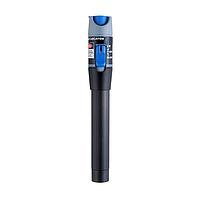
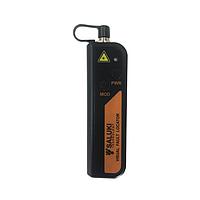
Optical fault locator
When a fiber link shows unexpected loss, intermittent transmission, or no signal at all, the fastest next step is often to make the fault visible. An optical fault locator, commonly used as a visual fault locator, helps technicians trace breaks, sharp bends, poor splices, and connector issues by injecting visible laser light into the fiber path.
For field maintenance, installation, and troubleshooting, this type of tool is valued because it is simple to use and highly practical. In many workflows, it complements other fiber test instruments rather than replacing them, especially when quick isolation of a physical fault is more important than a full loss or reflectance analysis.
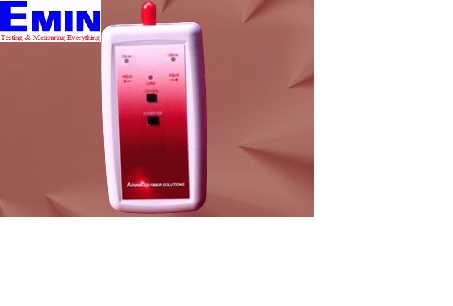
How an optical fault locator is used in fiber work
The operating principle is straightforward: visible red laser light is launched into the fiber, and any leakage along the route can indicate the location of damage or stress. This makes the tool useful for identifying fiber breaks, excessive bending, bad connector seating, and splice problems during installation or repair.
In practice, these devices are widely used in telecom maintenance, FTTH deployment, structured cabling support, and optical distribution network servicing. For more advanced diagnosis of distance-to-event and link behavior, technicians often use a locator together with an OTDR meter, while connector cleanliness and insertion loss checks are handled by other test tools in the fiber workflow.
What to look for when choosing the right model
A suitable unit depends less on headline power alone and more on the real job environment. Buyers typically compare detection range, wavelength, operation modes such as continuous wave and pulsed output, battery format, connector compatibility, and how portable the device needs to be for field work.
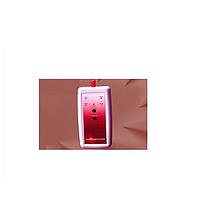
For short to medium-distance fault finding, compact handheld tools can be enough. The EXFO FLS-140 and EXFO FLS-240 are examples of portable visual fault locators built for routine inspection and troubleshooting, with pulsed and CW operation that helps users identify leakage points more easily under different lighting conditions.
For longer route checks, higher output devices may be more appropriate. Models such as the 3S Telecom VFL-15A and 3S Telecom VFL-30A are aimed at users who need greater reach in the field, but higher power also means laser safety procedures become even more important during operation.
Range, output power, and practical use cases
One of the most common purchasing questions is how much range is actually needed. In many building, campus, or cabinet-level jobs, a locator with a typical few-kilometer detection capability is sufficient for identifying visible leakage around connectors, patching points, trays, or short backbone sections.
For example, the EXFO FLS-140 and EXFO FLS-240 are positioned for typical visual fault location tasks where portability and ease of use matter. On the other hand, if technicians work on longer cable runs or need stronger visibility over extended fiber sections, the 3S Telecom VFL-15A and VFL-30A provide a higher-power option for that context.
Range claims should still be interpreted realistically. Actual visibility depends on fiber condition, connector quality, bends, jacket construction, and the specific fault type. A locator is best viewed as a fast fault-isolation tool, not a complete substitute for detailed optical characterization.
Beyond handheld VFLs: inspection tools in the same troubleshooting ecosystem
On many projects, solving a fiber issue requires more than finding where light leaks out. Dirty or damaged connector end faces are a frequent source of link instability, so inspection tools often sit alongside visual fault locators in the same maintenance kit.
EXFO offers several examples that fit this broader workflow, including the FIP-400B USB, FIP-400B Wireless, FIP-430B, FIP-435B, FIP-500, and the FIP-200 Connector Checker. These products are inspection-focused rather than simple fault locators, but they are highly relevant when the suspected problem comes from contamination or connector-end quality rather than a cable break.
In the same way, cable repair tasks often involve equipment such as a fusion splicer after the fault point has been identified. This is why many buyers evaluate the category as part of a complete fiber maintenance toolkit instead of as a stand-alone purchase.
Examples from leading manufacturers
This category includes products from established fiber and test equipment brands with different strengths and use cases. Santec stands out with the VFH-100 Ribbon Visual Fault Locator, a specialized solution using 12 individual red lasers for ribbon fiber fault location, which is especially relevant when working with multi-fiber structures rather than standard single-fiber checks.
EXFO is strongly represented in both visual fault location and fiber inspection. Its FLS series addresses handheld visible fault tracing, while the FIP series supports connector inspection and analysis. For buyers building standardized maintenance procedures, this makes it easier to align field troubleshooting, connector verification, and documentation within one equipment ecosystem.
3S Telecom provides practical handheld options for users who need simple operation and stronger output for longer visible tracing. Gossen Metrawatt also appears in the category context with the METRAFUSE FD PRO, although that product is designed for fuse detection in electrical testing rather than fiber fault location, so it should be considered separately from optical troubleshooting tools.
Selection tips for B2B procurement and maintenance teams
For procurement, the most useful approach is to define the maintenance scenario first. Consider whether the team mainly works on FTTH drops, indoor patching, distribution frames, campus links, or ribbon fiber infrastructure. The answer will affect whether a basic handheld VFL, a higher-power model, or a combination of fault locator and inspection scope is the better fit.
It is also worth reviewing day-to-day usability: battery type, physical size, connector interface, and whether technicians need pulse mode for easier visual tracking. If the maintenance process includes acceptance testing or optical loss verification, pairing the locator with an optical power meter can provide a more complete troubleshooting path from visible fault finding to quantitative measurement.
Finally, safety and training should not be overlooked. Even when a device is compact and simple, it still uses laser output and should be handled by personnel familiar with fiber testing practices and proper eye-safety precautions.
Common questions about optical fault locators
Is an optical fault locator the same as an OTDR?
No. A visual fault locator is used for quick, visible fault tracing, while an OTDR provides event analysis over distance and is better suited to detailed link diagnostics.
Can one device handle both fault location and connector inspection?
Usually these are separate functions. A handheld VFL helps reveal cable faults, while tools such as fiber inspection scopes are used to examine connector end faces and cleanliness.
Are higher-power models always better?
Not necessarily. Higher power can improve visibility over longer distances, but the right choice depends on the network type, working environment, and safety requirements.
Choosing with the full workflow in mind
An effective optical fault locator helps maintenance teams shorten troubleshooting time and identify physical fiber problems with less guesswork. The best choice is the one that matches actual cable distances, connector types, field conditions, and the broader service workflow your team follows.
If your work also involves connector inspection, loss testing, or post-repair splicing, it makes sense to evaluate this category together with related fiber test equipment. That approach leads to more reliable diagnosis, smoother maintenance routines, and a toolset that fits real operational demands instead of isolated specifications.
Get exclusive volume discounts, bulk pricing updates, and new product alerts delivered directly to your inbox.
By subscribing, you agree to our Terms of Service and Privacy Policy.
Direct access to our certified experts