Fiber optic accessories
Building, terminating, and maintaining fiber links often depends on small but essential tools that keep installation work accurate and repeatable. In many telecom, data network, and structured cabling environments, the right fiber optic accessories help technicians complete connector termination, cable handling, and field service tasks more efficiently while reducing avoidable errors.
This category focuses on practical support items used alongside broader optical installation and test workflows. Rather than being standalone core instruments, these accessories play an important role in day-to-day field preparation, cable work, and network maintenance where consistency and tool compatibility matter.
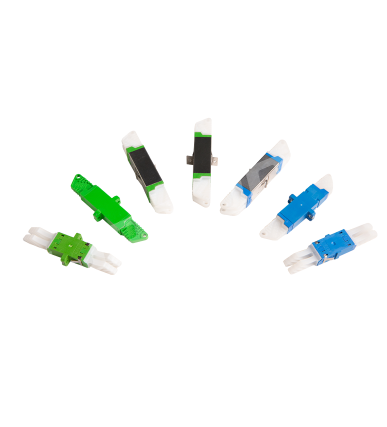
Where fiber optic accessories fit in the optical workflow
Optical networks rely on more than splicing and measurement equipment alone. Field teams typically use accessories during cable preparation, connector handling, termination support, and service intervention, especially when working on telecom cabinets, distribution frames, and structured cabling points.
These products are especially relevant in environments where clean installation practices and repeatable mechanical work are important. They may be selected together with instruments such as a OTDR meter for link troubleshooting or an optical power meter for insertion loss checks, depending on the stage of deployment or maintenance.
Typical applications in field installation and maintenance
In practical use, accessories in this category support technicians during cable routing, connector seating, terminal work, and cross-connect organization. They are relevant in fiber distribution points, telecom rooms, campus networks, enterprise infrastructure, and other installations where fiber links must be handled carefully and consistently.
Even when the main task involves splicing or testing, support tools can still influence job quality. For example, accessories used during termination or punch-down style work can improve handling speed, reduce strain during repeated operations, and help maintain cleaner workmanship across large projects.
Representative tools available in this category
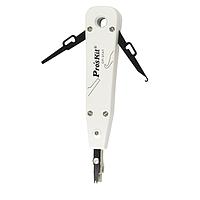
Among the notable items in this range are the Proskit CP-3141 Impact Terminal Tool For Krone and the Proskit 8PK-3141B Impact Terminal Tool. These tools are designed for impact and torque-assisted terminal work and include dual-purpose handling for screwdriver and wire-pull functions, making them useful in installation tasks where reliable seating and cable handling are required.
Both examples illustrate the broader role of accessories within optical and communication infrastructure projects: they are not necessarily the headline device on site, but they are often the tools that make routine work faster and more controlled. In projects that combine fiber and structured communication cabling, this kind of terminal tool can be a practical addition to the technician’s kit.
Choosing accessories for compatibility and workflow
Selection should start with the actual field task rather than product name alone. Buyers typically look at the connector or terminal standard in use, the type of panel or frame being serviced, the expected installation frequency, and whether the tool must support single-purpose or multi-function handling.
Material and build quality also matter in routine service work. A well-matched accessory should feel suitable for repetitive use, fit the intended termination method, and support stable handling in confined spaces such as telecom racks or wall-mounted distribution points. Where teams already standardize on a tool ecosystem, reviewing options from Proskit may help maintain consistency across field kits.
How accessories support broader optical equipment ecosystems
Fiber installation and maintenance usually involve several equipment layers: preparation, connection, verification, and fault isolation. Accessories sit close to the hands-on part of the process, bridging the gap between cable infrastructure and higher-level test instruments.
For example, a team may terminate or organize a link using support tools from this category, then verify continuity or performance with an optical fault locator or other test equipment. In more advanced deployment work, these accessories may also complement specialized systems such as fusion splicing and optical analysis equipment, even if their role remains operational rather than analytical.
What matters for B2B purchasing
For contractors, system integrators, maintenance teams, and industrial buyers, accessory selection is often tied to repeatability, technician familiarity, and stock efficiency. A seemingly simple hand tool can affect installation speed, training requirements, and the consistency of work performed across multiple sites.
It is also useful to consider whether the accessory will be used occasionally for service calls or regularly in ongoing rollout projects. Higher-use environments usually benefit from tools that balance durability, ease of handling, and task-specific compatibility, especially where teams must complete large numbers of terminations or maintenance actions under time constraints.
Finding the right accessory for your installation needs
This category is best approached as part of a complete optical workflow rather than as an isolated purchase. The right choice depends on the type of network being installed, the termination method involved, and how the accessory will interact with other optical tools already in use.
When comparing options, focus on the intended application, handling method, and fit with your team’s field process. A well-selected accessory can improve installation consistency, support cleaner maintenance work, and make broader optical projects easier to execute from preparation through verification.
Get exclusive volume discounts, bulk pricing updates, and new product alerts delivered directly to your inbox.
By subscribing, you agree to our Terms of Service and Privacy Policy.
Direct access to our certified experts