Cleaning Robots
Keeping large indoor spaces clean is often a balance between labor efficiency, cleaning consistency, and safe operation around people. In commercial environments such as retail areas, offices, hospitality venues, and public facilities, robotic floor care can help standardize routine cleaning while reducing the manual workload for repetitive tasks. This is where Cleaning Robots become a practical part of a broader automation strategy.
On this category page, you can explore autonomous and semi-autonomous cleaning solutions designed for different floor-care scenarios, from compact scrubbing to larger-area sweeping and multipurpose cleaning. The goal is not only to automate cleaning cycles, but also to improve repeatability, coverage planning, and day-to-day facility operations.
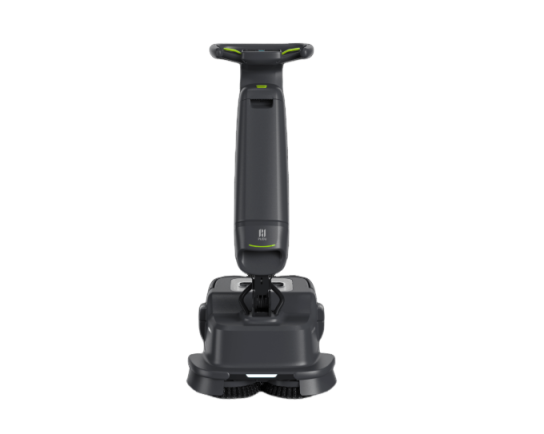
Where cleaning robots fit in commercial operations
Robotic cleaning systems are commonly used in facilities that require regular floor maintenance and predictable cleaning schedules. Compared with manual-only cleaning workflows, they can support more consistent route execution, scheduled operation, and better use of staff time for detail cleaning or supervision tasks that still require human judgment.
In the wider robotics landscape, these systems sit alongside solutions built for logistics, customer interaction, and service support. If your facility automation plan also involves internal transport or front-of-house assistance, it may be useful to compare this category with delivery robots or assistant robots depending on the operational workflow you want to streamline.
Typical cleaning tasks covered by this category
Not every site needs the same cleaning method. Some spaces mainly require routine floor scrubbing, while others need dry sweeping, spot cleaning, or a combination of washing and recovery in a single pass. A well-chosen robotic platform should match the floor type, aisle width, traffic level, and expected cleaning frequency.
Within this category, you may find systems suitable for applications such as scrubbing and mopping, dry debris collection, and autonomous cleaning of medium to large indoor surfaces. Compact units are often a better fit for tighter layouts, while larger machines are more suitable for open areas where coverage rate matters more than maneuvering in narrow passages.
PUDU solutions in this category
PUDU is one of the key manufacturers represented here, with several commercial cleaning platforms aimed at different operating conditions. Rather than approaching all floor-care tasks with one machine type, the lineup illustrates how cleaning robots can be tailored to different priorities such as compact form factor, longer runtime, or higher area coverage.
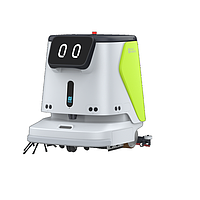
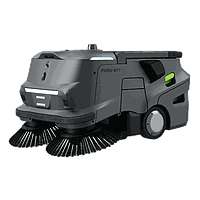
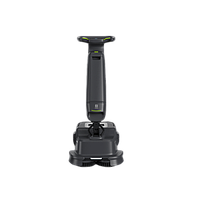
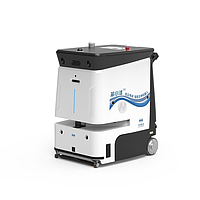
For example, the PUDU CC1 is positioned as a multipurpose commercial cleaning robot for routine indoor floor care, while the PUDU SH1 offers a more compact format that can be relevant where maneuverability and quick deployment are important. For larger sweeping-oriented applications, the PUDU MT1 is designed around broader coverage and longer operation, making it more suitable for expansive indoor spaces.
Examples of robots and accessories available
A category like this is often evaluated not only by the robot itself, but also by the surrounding ecosystem. The PUDU PUDU CC1 Commercial Cleaning Robot and PUDU PUDU SH1 Commercial Cleaning Robot are examples of machines intended for regular floor maintenance with different physical sizes and cleaning capacities. The PUDU PUDU MT1 Commercial Cleaning Robot extends that range toward higher-area sweeping tasks and longer duty cycles.
Accessories also matter in real deployments. The PUDU CC3 Portable Water Rank for CC1 Robot is an example of a supporting component that complements the cleaning workflow rather than replacing the main machine. In B2B purchasing, these supporting items are important because uptime, refill logistics, and operational convenience can have as much impact as the robot’s core cleaning function.
How to choose the right cleaning robot
The most effective way to compare options is to start with the operating environment. Consider the size of the cleaning area, the amount of open floor versus narrow passages, the type of debris or soil typically encountered, and whether the space is cleaned during active business hours or during off-peak periods. These factors influence the ideal combination of working width, runtime, tank or bin capacity, and navigation approach.
It is also useful to evaluate the expected level of autonomy. Some buyers prioritize machines that can follow repeatable routes and return for charging with minimal intervention, while others focus more on flexibility, swappable consumables, or ease of deployment across multiple zones. In practice, the right choice often depends on whether your facility needs daily maintenance cleaning, periodic high-coverage cleaning, or a mixed cleaning strategy across different areas.
Another important point is path clearance. A robot that performs well in open halls may not be the best fit for denser layouts with furniture, shelves, or changing foot traffic. In those cases, a compact machine can be more practical than a larger system with a higher nominal coverage rate.
Key technical considerations for facility buyers
When reviewing commercial robotic cleaners, buyers typically look beyond headline productivity figures. Navigation method, charging mode, battery runtime, solution and recovery capacity, and service access all affect real-world usability. For shared public spaces, stable obstacle handling and predictable route behavior are also part of the evaluation.
From a procurement perspective, it helps to think in terms of total operational fit rather than isolated specifications. A machine with moderate cleaning output may still be the better long-term option if it suits your floor layout, maintenance routine, and staffing model more closely than a larger platform. This is particularly true in multi-zone buildings where cleaning demands vary from corridor to corridor.
Cleaning robots as part of a broader robotics deployment
For many organizations, robotic cleaning is one of the most accessible entry points into service automation because the task is repetitive, measurable, and often schedule-based. Once a site becomes comfortable with autonomous cleaning, it may also explore adjacent systems for logistics or specialized use cases. Depending on your operation, related categories such as exploration robots or even more niche robotic platforms can help broaden long-term planning.
That said, cleaning robots should be selected on their own operational merits, not simply as part of a trend toward automation. Floor type, staffing structure, shift planning, and cleaning standards remain the foundations of a successful deployment.
What to expect from this category page
This category brings together commercial robotic cleaning options and relevant accessories for professional environments that need reliable floor-care support. Whether you are comparing a compact unit for tighter indoor areas or a larger platform for wide, repetitive cleaning routes, the available products can help you assess what level of autonomy and cleaning performance is appropriate for your site.
If your application involves regular indoor floor maintenance and you want a more structured, scalable cleaning workflow, this category is a strong place to start. Reviewing the robot type, cleaning method, runtime profile, and accessory ecosystem together will make it easier to identify a solution that matches your operational reality rather than just the specification sheet.
Get exclusive volume discounts, bulk pricing updates, and new product alerts delivered directly to your inbox.
By subscribing, you agree to our Terms of Service and Privacy Policy.
Direct access to our certified experts