Dehumidifiers
Controlling humidity is not only about comfort. In warehouses, production areas, archives, technical rooms, and many commercial spaces, excess moisture can lead to corrosion, mold growth, damaged packaging, unstable storage conditions, and reduced equipment reliability. Choosing the right dehumidifiers therefore starts with understanding the environment, the required drying capacity, and how the unit will operate in real conditions.
This category brings together dehumidification solutions for a wide range of applications, from ceiling-mounted systems to high-capacity industrial units. Instead of focusing only on headline capacity, it is more useful to evaluate airflow, operating temperature range, installation style, power supply, and whether the system is intended for continuous operation in large spaces.
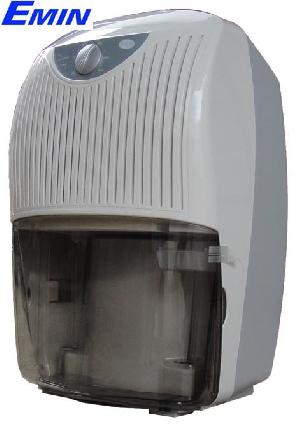
Why humidity control matters in industrial and commercial spaces
High relative humidity affects more than the feel of a room. In storage and production settings, it can cause condensation on surfaces, encourage fungal growth, reduce product quality, and create problems for paper goods, electronics, textiles, and raw materials. A stable humidity level helps protect both inventory and infrastructure.
In practice, dehumidification is often part of a broader moisture management approach. Facilities may also use tools such as moisture detecting papers for quick checks, while process-specific applications may require dedicated measuring instruments. The dehumidifier then becomes the active control device that removes moisture from the air and helps maintain target conditions.
How to evaluate dehumidifier capacity correctly
The first figure many buyers look at is dehumidifying capacity, commonly expressed in liters per day or kilograms per hour depending on the product line. This value gives a baseline for how much moisture the system can remove, but it should never be interpreted in isolation. Actual performance depends on room volume, initial humidity, air leakage, temperature, and how often doors are opened.
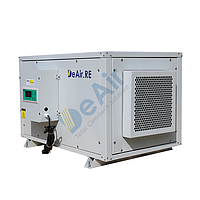
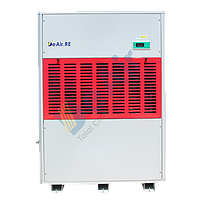
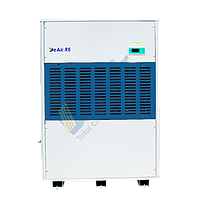
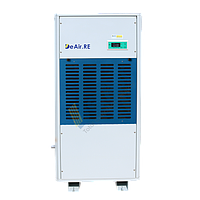
For example, the DeAir DeAir.RE-600CL ceiling mounted model is presented with a capacity of 25 kg/h and high airflow, which makes it relevant for larger fixed installations where air circulation is important. In the FUJIE range, models such as LTR7S, LTR15S, and LTR20S illustrate how capacity scales from medium to high-demand applications, with corresponding changes in airflow, power requirement, and physical size.
A practical selection process should compare the moisture load of the space with the duty cycle you expect from the unit. An undersized machine may run continuously without reaching the desired humidity, while an oversized system may increase upfront cost and require more installation planning than the application actually needs.
Installation style and airflow are just as important as liters per day
Not all dehumidifiers are deployed the same way. Some are designed as floor-standing industrial units, while others fit into fixed building layouts. A ceiling-mounted dehumidifier can be useful when floor space is limited or when airflow needs to be distributed more evenly across a working area.
Airflow rate matters because moisture removal is tied to how much air passes through the system. A unit handling several thousand cubic meters per hour can support larger rooms or spaces with more dynamic humidity conditions. This is why comparing only liters per day may be misleading: two machines with similar moisture removal figures may behave differently if their airflow, static pressure, and installation method are not the same.
In ducted or semi-centralized layouts, models such as FUJIE ETD10S, ETD15S, and ETD20S are relevant examples because their specifications indicate airflow and external static pressure, suggesting suitability for applications where air distribution is part of the design requirement rather than a simple standalone placement.
Choosing by operating environment
Temperature range is a key but often overlooked factor. Some dehumidifiers are intended for moderate indoor conditions, while others are built to keep working in warmer industrial environments. If the site experiences elevated temperatures, the acceptable operating range becomes critical for stable performance.
Within the products shown in this category, FUJIE LTR series models operate in a lower temperature band than several FUJIE HTR and ETD units, while HTR and ETD models indicate operation up to 60°C. That makes the comparison useful when screening products for warehouses, processing areas, or technical rooms where ambient conditions are more demanding than standard office spaces.
Power supply also needs to match the facility. Some units run on single-phase input, while others require 380V three-phase power. This affects not only electrical compatibility but also installation cost, available placement options, and long-term operational planning.
Representative product lines in this category
This category includes both brand variety and different equipment formats. FUJIE is represented by several industrial models across the LTR, HTR, and ETD series, giving buyers a useful spread of capacities and operating conditions for comparison. The LTR line is suitable for standard industrial dehumidification needs, while HTR and ETD models appear oriented toward more demanding environments or integrated air-handling setups.
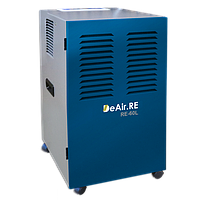
The DeAir DeAir.RE-600CL stands out as a ceiling-mounted option with strong airflow and a high-capacity format expressed in kg/h rather than only liters per day. This makes it a relevant reference for buyers looking beyond portable or floor-standing units and considering fixed installation as part of a facility-wide humidity control strategy.
When reviewing product pages, it is worth comparing not just moisture removal figures but also dimensions, weight, noise level where available, and refrigerant type. These factors influence maintenance access, room layout, and compatibility with the broader HVAC or environmental control system.
How dehumidifiers fit into a broader moisture management workflow
In many technical environments, humidity control is not limited to air treatment alone. Teams may need to verify moisture in raw materials, agricultural products, soil, or packaged goods alongside ambient humidity control. That is why dehumidification equipment is often selected together with measurement tools rather than as a standalone purchase decision.
For applications involving field materials or stored commodities, a multifunction moisture meter can support inspection and verification. In agricultural or biomass-related workflows, dedicated tools such as grass and straw moisture meters may be more appropriate. This broader view helps buyers choose a solution that addresses both moisture prevention and moisture assessment.
Key selection criteria before ordering
Before choosing a model, define the real operating target: maintaining comfort, protecting stored goods, reducing condensation, or supporting a process requirement. That target determines whether you should prioritize installation type, air volume, temperature tolerance, or electrical configuration.
- Capacity: match the moisture load of the space, not just the floor area.
- Airflow: important for large rooms, open layouts, and more even treatment.
- Operating range: check whether the unit suits the site's temperature conditions.
- Power supply: confirm single-phase or three-phase compatibility early.
- Installation format: choose floor-standing or ceiling-mounted based on layout and maintenance access.
- Physical dimensions: make sure transport, positioning, and service clearance are realistic.
For B2B buyers, these points are often more useful than comparing brands alone. A suitable machine is the one that can sustain the required humidity level in your actual environment with reasonable installation and operating demands.
Final considerations
The right dehumidifier should support stable operations, protect materials, and fit naturally into the way the site is built and used. Capacity, airflow, temperature range, and installation method all need to be considered together rather than as separate checklist items.
By comparing the available models in this category carefully, buyers can narrow down whether they need a ceiling-mounted solution like the DeAir.RE-600CL or a high-capacity industrial unit from the FUJIE range. A clear understanding of the application will lead to a more efficient and more reliable humidity control setup over time.
Get exclusive volume discounts, bulk pricing updates, and new product alerts delivered directly to your inbox.
By subscribing, you agree to our Terms of Service and Privacy Policy.
Direct access to our certified experts