
Humidity Sensor - Transmitter - Tranducer
Accurate humidity monitoring is essential wherever air quality, storage stability, process consistency, or environmental control directly affect outcomes. In HVAC systems, production rooms, storage areas, and outdoor monitoring points, the right sensing device helps maintain stable conditions and provides a reliable signal for control systems, alarms, or trend analysis.
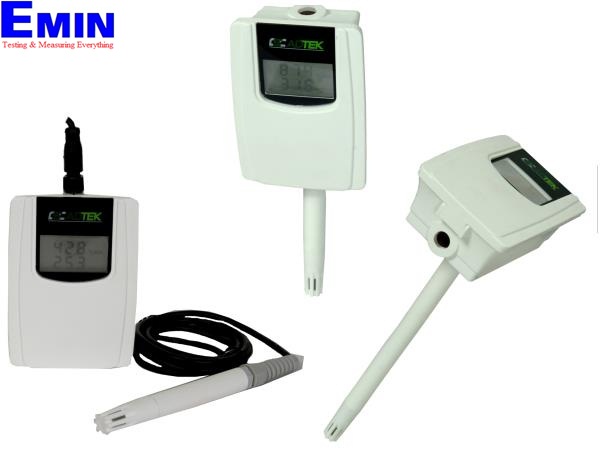
Humidity Sensor - Transmitter - Tranducer products in this category are intended for continuous relative humidity measurement, with many models also providing temperature measurement in the same device. They are commonly selected for building automation, duct and ambient monitoring, industrial process control, and demanding installations where signal stability, enclosure protection, and output compatibility matter as much as the sensing element itself.
Where these devices are typically used
Humidity measurement is not limited to comfort monitoring. In many technical environments, relative humidity directly influences product quality, corrosion risk, condensation, drying performance, electrostatic behavior, and the long-term stability of materials. That is why transmitters are widely used in AHU systems, clean process areas, electrical rooms, warehouses, and outdoor weather-exposed points.
Some applications need a simple ambient humidity signal, while others require a dual-output device that reports both humidity and temperature to a PLC, BMS, or SCADA system. For facilities that also evaluate material moisture rather than air humidity, related tools such as multifunction moisture meters may be more appropriate for portable inspection tasks.
Sensor, transmitter, and transducer: practical differences
In daily industrial use, these terms are often grouped together, but they can imply different roles in a measurement chain. A humidity sensor is the core sensing element that detects relative humidity. A humidity transmitter typically converts that measured value into a standardized output such as 4-20 mA or voltage for integration into automation systems.
The term transducer is often used more broadly for a device that converts one physical quantity into another signal form. On category pages like this, users generally search for all three terms when they need a field-ready device for continuous monitoring, so the key selection points are less about terminology and more about installation type, output signal, environmental protection, and whether temperature is included.
Common configurations available in this category
Several product patterns are represented here. Outdoor wall-mount transmitters such as the Dwyer WHT series are designed for ambient monitoring where enclosure durability and stable long-term operation are important. Models like the WHT-330, WHT-333, and WHT-32A illustrate typical configurations with humidity measurement and, depending on the version, an additional temperature sensing function.
There are also duct or process-oriented transmitters with current outputs for control systems. For example, the Dwyer 657-1 and 657C-1 provide dual 4-20 mA signals for humidity and temperature, which is useful when a control platform needs separate analog channels. In more demanding industrial environments, the HHT series supports hazardous-area use cases, including intrinsically safe or explosion-proof designs depending on model selection.
Accessories also play a practical role in measurement quality. Radiation shields such as the Dwyer RHRS and RHRS-10 help reduce errors caused by direct rain exposure or solar heating, especially in outdoor installations where the sensing point must reflect ambient air conditions rather than enclosure surface temperature.
How to choose the right humidity transmitter
The first step is to define the installation environment. Indoor HVAC monitoring, outdoor ambient exposure, and hazardous industrial zones each place different demands on housing, electrical connection, and protection level. A transmitter used in a weather-exposed location may need a suitable enclosure and shielding arrangement, while a unit installed in a classified area must match the site safety requirements.
The second step is signal compatibility. Many automation systems still rely on 4-20 mA output for noise-resistant transmission over distance, while other installations use voltage outputs for direct controller input. If the project needs both humidity and temperature values, a dual-output transmitter can simplify wiring and reduce the number of field devices.
It is also worth checking the expected measurement range, allowable operating temperature, and maintenance approach. In stable building systems, a compact ambient transmitter may be enough. In production or storage environments where traceability is important, users often combine fixed transmitters with complementary logging products from brands such as Onset for condition history and verification.
Considerations for AHU, duct, and outdoor monitoring
One of the most common sources of humidity error is not the sensor specification itself, but the way the device is installed. In AHU and duct systems, poor placement near coils, wet sections, turbulent discharge, or localized temperature gradients can lead to unstable or misleading readings. The sensing point should represent the actual air stream that the control system is intended to manage.
Outdoor installations create another challenge because sunlight and rain can distort measurement conditions. A weather-capable transmitter such as the Dwyer WHT series may be paired with a radiation shield to reduce heat loading from direct sun and protect the sensing assembly from precipitation. This is especially relevant when comparing ambient data across different times of day or using readings for ventilation control.
For buyers focused on agricultural materials or bulk organic products, air humidity transmitters solve a different problem than direct material moisture tools. In those cases, categories such as moisture meters for agriculture or grass and straw moisture meters may better match the application.
Featured product examples in this range
Dwyer is one of the most visible manufacturers in this category, with solutions that cover general-purpose, outdoor, and hazardous-area measurement. The WHT-330, WHT-333, and WHT-32A are relevant for outdoor humidity and temperature monitoring, while the 657-1 and 657C-1 suit installations that require dual analog outputs for control integration.
For hazardous environments, the HHT-IT, HHT-IU, HHT-IT-LCD, HHT-EU, and HHT-EU-LCD show the difference between intrinsically safe and explosion-proof configurations within the same broader measurement function. These products are useful examples of how humidity transmitters can be adapted for site safety requirements without changing the basic need for continuous RH monitoring.
This category context also includes other established brands such as OMEGA, Sensirion, Rotronic, PCE, and skSATO. In practice, selection should be driven by application fit and signal requirements rather than brand name alone.
Maintenance and long-term measurement reliability
Even a well-selected transmitter can drift out of useful performance if maintenance is overlooked. Dust buildup, chemical contamination, aging of the sensing element, and installation in an unrepresentative location can all reduce confidence in the reading. For that reason, periodic inspection and verification should be part of the maintenance plan, especially where humidity affects compliance, quality, or energy use.
It is also important to distinguish between cleaning and calibration. Cleaning may remove obvious contamination, but it does not confirm that the output still aligns with the expected humidity value. Where critical decisions depend on the signal, users often compare the installed transmitter against a trusted reference or logging device and then recalibrate or replace the unit if necessary.
Finding the right fit for your system
A suitable humidity sensing device should match the site conditions, control architecture, and maintenance expectations of the project. Some users need a compact outdoor transmitter, others need dual humidity/temperature outputs for building automation, and some require certified designs for hazardous locations. Looking at the application first usually leads to a better choice than filtering only by product name.
This category brings together fixed humidity sensors, transmitters, related accessories, and representative industrial models that support continuous environmental monitoring. If you are comparing options for HVAC, outdoor measurement, or process integration, reviewing output type, enclosure protection, mounting style, and whether temperature is included will help narrow the range to the most relevant products.
Get exclusive volume discounts, bulk pricing updates, and new product alerts delivered directly to your inbox.
By subscribing, you agree to our Terms of Service and Privacy Policy.
Direct access to our certified experts