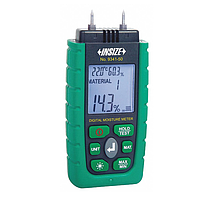
Wood and Construction Moisture Meter
Moisture control is one of the fastest ways to prevent avoidable problems in woodworking, renovation, flooring, and building inspection. Before wood is installed, concrete is covered, or a wall is closed up, reliable measurement helps teams identify hidden damp areas, reduce rework, and make better decisions on material readiness. This is where a Wood and Construction Moisture Meter becomes a practical tool rather than just a specification item.
On this page, you can explore instruments designed for checking moisture in wood and common building materials such as drywall, masonry, and other structural surfaces. The category includes compact handheld meters for routine site checks as well as more advanced models that combine pin, pinless, or even thermal imaging functions for broader diagnostics.
Why moisture measurement matters in wood and construction
Excess moisture affects more than appearance. In wood, it can contribute to warping, swelling, cracking, coating failure, or poor dimensional stability after installation. In construction materials, elevated moisture may indicate leakage, drying issues, condensation, or water intrusion that can later damage finishes and structural elements.
For contractors, inspectors, and maintenance teams, a moisture meter helps verify conditions before installation, during troubleshooting, and after remediation. It is especially useful when checking timber, flooring substrates, wall assemblies, plaster, or mixed-material surfaces where visual inspection alone is not enough.
Pin, pinless, and imaging options
A key selection point in this category is the measurement method. Pin-type meters use contact pins and electrical resistance to read moisture. They are often chosen when direct contact with the material is acceptable and when users want localized readings at the measurement point.
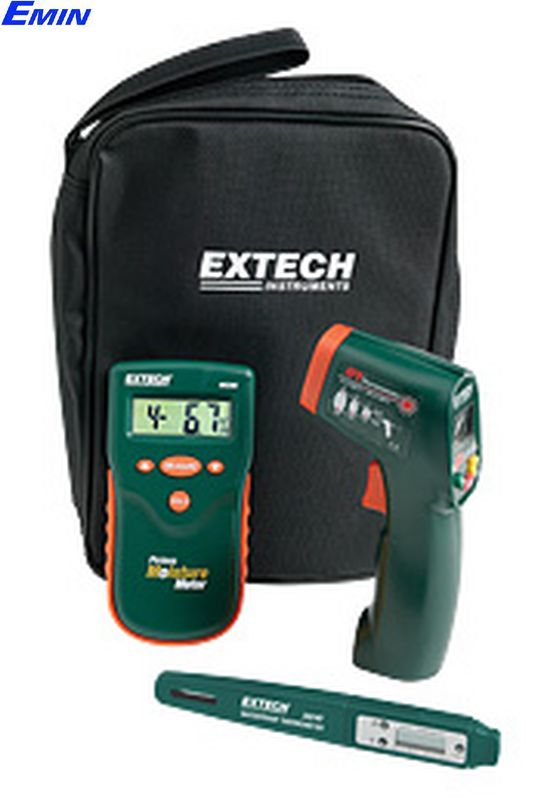
Pinless meters use a non-invasive sensor to scan beneath the surface without leaving pin marks. This approach is often preferred for finished wood, decorative surfaces, or rapid surveys across larger areas. For example, the EXTECH MO57 Pinless Moisture Meter is designed for non-destructive checks, while the EXTECH MO50 Compact Pin Moisture Meter is a straightforward pin-based option for routine field use.
Some applications benefit from both methods in one device. The EXTECH MO55 Combination Pin/Pinless Moisture Meter is a useful example for users who want to scan quickly and then confirm suspicious spots with pins. For deeper investigation, imaging models such as the FLIR MR160 Imaging Moisture Meter and FLIR MR277 Moisture tester add thermal context that can help locate areas worth testing more closely.
Common use cases across the jobsite
Wood and construction moisture meters are used in a wide range of day-to-day tasks. In woodworking and flooring, they help confirm whether timber is ready for processing or installation. In renovation and property maintenance, they support leak tracing, damp wall assessment, and post-drying verification after water damage.
They are also useful in pre-finish inspection, where trapped moisture can affect coatings, adhesives, or surface treatments. Building professionals may use them during handover checks, insurance documentation, or preventive maintenance programs to identify moisture-related risks before they become more expensive failures.
- Checking lumber, panels, and joinery materials before installation
- Inspecting drywall, plaster, and masonry after leaks or flooding
- Verifying drying progress in restoration work
- Comparing suspect areas against known dry reference points
- Supporting maintenance surveys in residential, commercial, and industrial buildings
How to choose the right meter for your application
The best choice depends on the material, the inspection goal, and how the reading will be used. If your work mainly involves finished surfaces or quick scanning, a pinless meter is often the practical starting point. Models such as the FLIR MR59 or EXTECH MO57 are suited to fast, non-invasive checks over broad areas.
If you need more direct contact readings in wood or specific building materials, a pin meter may be more appropriate. Compact units like the EXTECH MO210 Pocket Moisture Meter or EXTECH MO230 Pocket Moisture Meter are suitable for users who want portability and simple operation. Where the workflow involves varied materials, a combined instrument can reduce the need to carry separate devices.
For diagnostics beyond a simple moisture value, consider whether you need temperature, humidity, or thermal imaging support. If that broader workflow is important, you may also want to review the multifunction moisture meter range for models that cover additional inspection tasks in one platform.
Representative products in this category
This category includes a mix of compact field meters and more advanced diagnostic tools. The EXTECH MO57 focuses on pinless measurement for quick scanning, while the EXTECH MO50 and MO210 provide pin-based measurement in portable handheld formats. The EXTECH MO55 offers both pin and pinless modes, making it a flexible option for mixed inspection routines.
In the imaging segment, the FLIR MR160 and FLIR MR277 combine moisture detection with thermal visualization, which can help users locate colder or suspicious areas before taking a direct reading. For users looking at broader building surveys, the FLIR MR55 and MR59 provide pin or pinless testing in rugged handheld formats. The ELCOMETER 7000 Digital Moisture Meter and DELMHORST TECHCHECK PLUS also illustrate how this category serves professionals who need building-oriented moisture assessment across multiple materials.
Accessories can matter too. Replacement parts such as EXTECH MO200-PINS help extend the working life of compatible meters and are relevant for teams that rely on pin-type instruments for regular inspections.
Practical considerations for accurate readings
Moisture meters are only as useful as the measurement approach behind them. Surface condition, material density, measurement depth, temperature, and the presence of coatings can all influence results. That is why many technicians use readings comparatively: first scanning an area, then checking suspect spots against dry reference points nearby.
It is also important to match the meter type to the substrate. Wood, drywall, plaster, and masonry do not behave exactly the same, and some instruments are designed to handle different material groups more effectively than others. For broader moisture-related workflows outside wood and construction, related categories such as moisture meters for agriculture or soil moisture meters are better suited to those specific materials and environments.
Who typically uses these instruments?
This category is relevant to flooring contractors, carpenters, building inspectors, restoration teams, facility maintenance staff, and quality control personnel. It is also useful for distributors and procurement teams sourcing inspection tools for project delivery, preventive maintenance, or after-sales service support.
Because the product range includes both entry-level handheld units and more advanced imaging devices, buyers can align the instrument with the actual inspection task rather than over-specifying. A simple pin or pinless meter may be enough for routine checks, while more complex diagnostics justify imaging or combined-function models.
Finding the right fit for your workflow
Choosing a moisture meter for wood and construction work is ultimately about inspection method, material type, and decision speed. Some users need a compact device for quick pass/fail checks, while others need a more detailed tool for locating hidden dampness and documenting conditions across larger areas.
This category brings together practical options for both scenarios. By comparing pin, pinless, and imaging-based instruments from brands such as FLIR, EXTECH, ELCOMETER, and DELMHORST, you can narrow down the right meter for your site process, inspection depth, and material coverage with more confidence.
Get exclusive volume discounts, bulk pricing updates, and new product alerts delivered directly to your inbox.
By subscribing, you agree to our Terms of Service and Privacy Policy.
Direct access to our certified experts