Choosing between hyperspectral cameras and ordinary cameras begins with a clear understanding of the information each system records. Both use optics and image sensors to capture a scene, but their objectives differ. An ordinary camera is designed to create an image that people can readily view and interpret. A hyperspectral camera is designed to collect spectral information that can support more detailed material analysis.
For electronics manufacturing and other technical environments, this distinction matters. A visually clear image may be sufficient for documentation or general observation. When the task requires separating materials or examining spectral characteristics, hyperspectral imaging provides a different type of dataset for analysis.
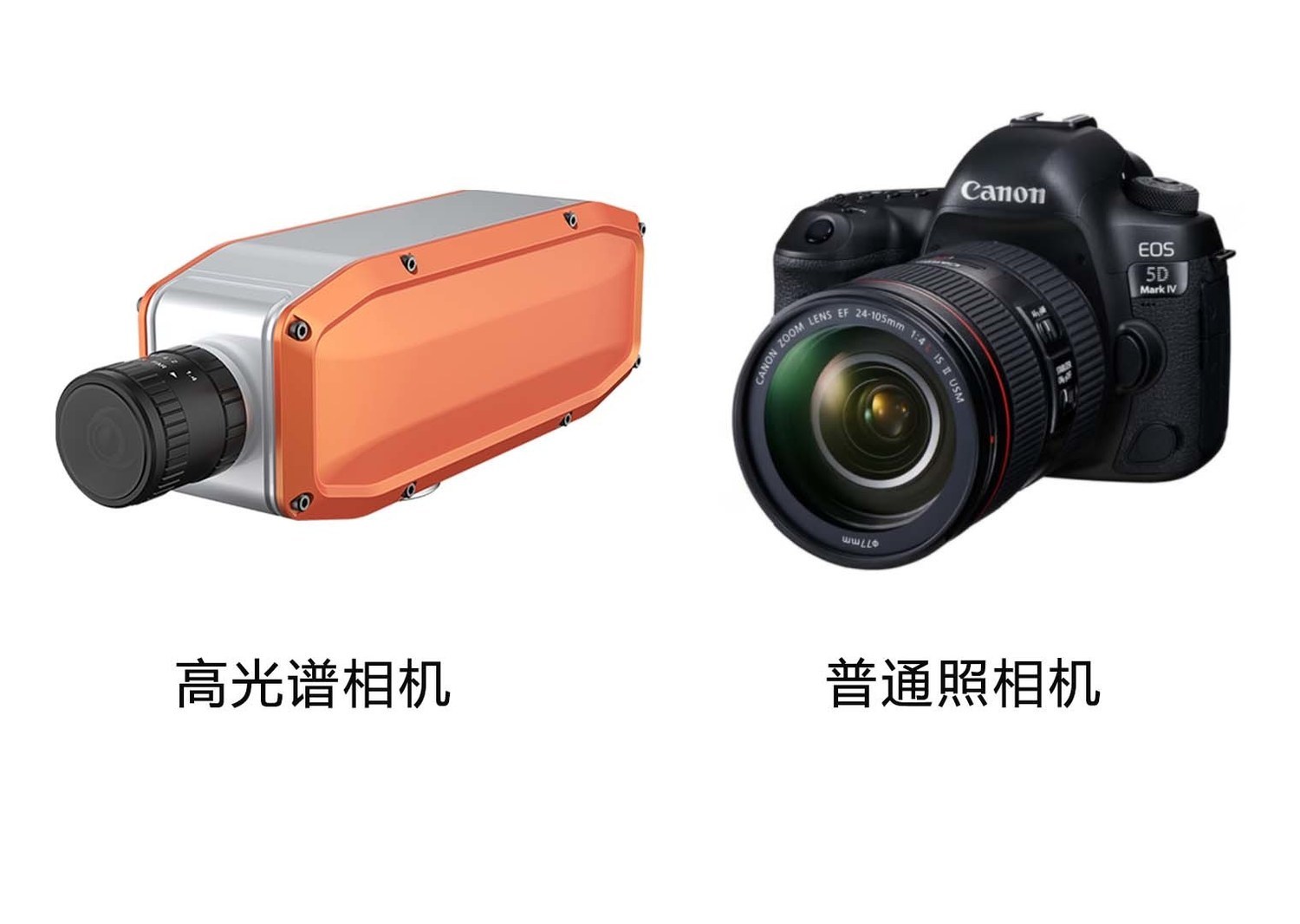
How the imaging principles differ
Ordinary cameras capture visual image information
An ordinary camera collects light through a lens and focuses it onto an image sensor. Sensor pixels respond to received light, and processing converts those signals into the final image. The result is commonly used to show visible features such as shape, color, texture, brightness, and contrast.
A typical color image uses red, green, and blue channels. These channels enable a broad visual representation of a scene, but each pixel contains a limited amount of spectral detail. Camera settings such as ISO, shutter speed, and aperture can affect the resulting photograph, while the primary outcome remains a visual image.
Hyperspectral cameras separate light by wavelength
Hyperspectral cameras acquire information across multiple spectral bands. In addition to visible-light information, they may capture spectral information in bands such as near-infrared and mid-infrared. During acquisition, light is separated into components at different wavelengths, and the reflected or emitted response is imaged for each wavelength.
This process can be understood as a spectral scan of the observed object. Rather than recording only its general appearance, the camera collects wavelength-dependent responses that can be analyzed to distinguish characteristics of materials or objects.
Data capture: 2D images versus spectral data cubes
The central difference between hyperspectral cameras vs ordinary cameras is the depth of information collected per pixel. Ordinary camera output is generally a two-dimensional image. Its pixel values primarily describe color and brightness for visual presentation.
Hyperspectral imaging adds a spectral dimension to two-dimensional spatial information. The resulting high-dimensional dataset is often described as a spectral data cube. Each pixel corresponds to a spectral curve that records how the object reflects or emits light across wavelengths.
That added dimension supports analysis beyond what may be apparent in a standard image. Materials that look similar to the eye can show different spectral characteristics. Spectral analysis can therefore help differentiate them when appearance alone is not enough for the task.
Typical applications for each camera type
Where ordinary cameras are commonly used
Ordinary cameras are widely used for photography, news coverage, product promotion, tourism, social media, and personal records. Their purpose is typically to create clear, visually appealing images that document a scene or communicate information quickly.
They can also support basic observation in research and work settings, including recording visible biological forms or simple experimental phenomena. In these uses, ease of operation and familiar image output are practical advantages.
Where hyperspectral imaging is used
Hyperspectral cameras are used in professional research and industrial applications where spectral information is relevant. Examples described for hyperspectral imaging include astronomy, geology, ecology, agriculture, environmental monitoring, product quality inspection, food component analysis, and material identification.
In agriculture, spectral features can be analyzed in relation to crop growth, pests and diseases, and soil conditions. Environmental monitoring can use spectral information when examining changes in water pollutants or atmospheric gas components. In industrial contexts, hyperspectral data may support inspection tasks involving materials, food components, or impurities.
The value of the system is not simply a more vivid image. It is the ability to work with spectral signatures that may help identify differences not readily visible in a conventional photograph.
Image appearance and analytical value
Ordinary cameras are generally optimized to produce images with pleasing color, contrast, clarity, and realistic visual detail. These qualities make the output accessible for human viewing and communication.
Hyperspectral images are evaluated differently. Their main value is the completeness and accuracy of spectral information. A hyperspectral result may not appear as visually striking as a standard color photograph, but its pixel-level spectral responses can be useful for analytical workflows. This makes hyperspectral imaging appropriate when the objective is precise material or composition-related examination rather than visual presentation alone.
Cost, operation, and implementation considerations
Hyperspectral camera systems involve optics, spectroscopy, electronics, signal processing, and specialized software or algorithms. This technical complexity means they generally require more professional knowledge to operate and to interpret the collected data. Users need an understanding of spectroscopy and relevant data-processing methods to make effective use of the output.
Ordinary camera technology is comparatively mature and easier to operate for general imaging. Basic photography knowledge is often enough to begin capturing useful visual images.
When evaluating a camera system, start with the required outcome. An ordinary camera is suited to visual documentation and image-based communication. A hyperspectral camera is better aligned with projects that require spatial information together with detailed spectral data for analysis. The appropriate choice depends on the application, the information needed from each pixel, and the available expertise for processing the results.