LED Protection Devices
Protecting LED drivers, luminaires, signage, and industrial lighting circuits usually requires more than basic overcurrent protection. In many installations, the weak points are transient events, open-LED failures, surge exposure, and sensitive low-voltage interfaces. LED Protection Devices help address these issues by adding a dedicated layer of protection that supports reliability in both compact electronics and field-installed lighting systems.
Within this category, you will find parts used for shunt protection, LED string bypass, and module-level surge handling. These devices are commonly selected for applications where uptime matters, whether the goal is preventing a single LED failure from interrupting a series string or improving resilience against switching transients and electrical stress.
Where LED protection devices are typically used
LED protection components appear across a wide range of designs, from compact PCB assemblies to outdoor lighting hardware. They are often used in LED drivers, indicator systems, display panels, architectural lighting, street lighting, and industrial fixtures where electrical disturbances can shorten service life or cause unexpected failures.
In practical terms, designers choose these devices to manage fault conditions in a controlled way. Some solutions act as shunt protectors across an LED or section of a string, while others are intended for larger surge-handling duties at the system level. For engineers working on broader circuit hardening, related components such as ESD protection diodes may also be relevant where sensitive data or control lines need additional protection.
Main device types in this category
This category includes several protection approaches suited to different LED circuit topologies. TVS thyristor and shunt-style devices are commonly used to bypass failed LEDs or clamp abnormal conditions, helping the rest of the circuit continue operating. These parts are especially useful in series-connected LED strings, where one open component could otherwise interrupt the full path.
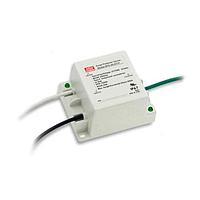
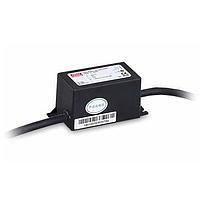
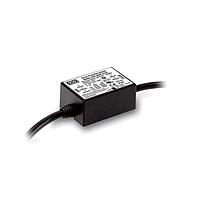
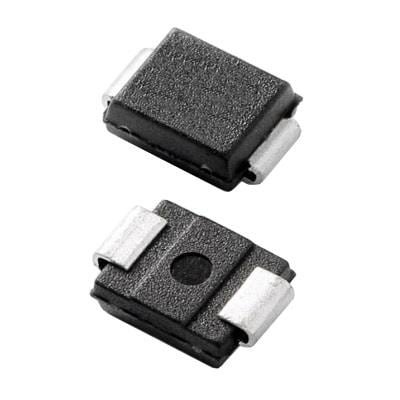
There are also dedicated LED protector devices and protection modules intended for higher-energy environments. Discrete SMD parts are often selected for board-level integration where space is limited, while chassis-mount modules are better suited to installed lighting equipment that must withstand harsher surge conditions and environmental exposure.
Representative products and manufacturers
Several established suppliers are represented in this range. Bourns offers shunt and thyristor-based protection options such as the LSP0900BJR-S and LSP0600BJR-S, which are relevant for LED bypass and fault-tolerant string protection. These types of devices are typically considered when maintaining continuity across an LED chain is important.
Littelfuse provides a broad mix of LED-focused parts, including compact devices such as PLED18S, PLED70S, PLED230S, and PLED380S, as well as module-level solutions like the LSP05240P and LSP05GI347P. For lower-voltage shunt protection, onsemi devices such as HBL1015T1G and SZNUD4700SNT1G illustrate another approach to protecting sensitive LED-related circuits with compact surface-mount packages.
How to choose the right device
The first step is to match the protection method to the failure mode you are trying to control. If the concern is an open LED in a series string, a bypass or shunt-oriented device is often the right direction. If the application is exposed to external surge energy, especially in installed lighting systems, a protection module may be more appropriate than a small PCB-level part.
Electrical ratings also matter. Engineers typically review off-state voltage, breakover or breakdown behavior, holding current, on-state current capability, and operating temperature range. Package style is equally important: TSOP, POWERMITE, DO-214AA, QFN, and chassis-mount formats each fit different assembly methods and thermal or mechanical constraints. For early-stage evaluation, circuit protection kits can be useful when comparing protection strategies before finalizing a design.
Selection considerations for real-world installations
LED systems are often deployed in environments that introduce extra stress beyond nominal electrical operation. Outdoor luminaires, signage, factory lighting, and infrastructure projects may all experience switching noise, long cable runs, power disturbances, and temperature variation. In these cases, choosing a device with a suitable mounting format and environmental fit can be just as important as its headline voltage rating.
For example, compact SMD parts support dense PCB layouts inside drivers and control boards, while IP-rated parallel protection modules can be better aligned with field wiring and retrofit scenarios. Designers should also consider serviceability, expected surge exposure, and whether the protected circuit is part of the power path or a lower-energy signal and control section.
Supporting reliability across the protection chain
No single component solves every protection requirement in an LED system. A robust design may combine LED shunt devices with surge suppression, line protection, and mechanical fuse integration depending on the architecture. The right combination depends on the location of the risk and the consequences of failure.
Where a design also includes replaceable overcurrent protection, components such as a fuse holder may form part of the broader protection strategy. Looking at protection as a coordinated system rather than a single part selection usually leads to better long-term reliability and easier maintenance.
What to expect from this category page
This selection is suited to buyers comparing package styles, mounting options, and protection approaches for LED electronics and lighting assemblies. Some products are aimed at compact board-level integration, while others are designed for higher-level installation protection in commercial and industrial environments.
If you are narrowing down options, focus on the circuit topology, expected fault condition, and installation environment first. That makes it easier to identify whether a discrete shunt device, a thyristor-based protector, or a chassis-mount module is the better fit for your application.
FAQ
Are LED protection devices only used in lighting fixtures?
No. They are also used in signage, displays, indicators, driver circuits, and other electronic assemblies that include LED strings or LED-based outputs.
What is the difference between a shunt protector and a protection module?
A shunt protector is typically a smaller device used at LED or PCB level to bypass or control local fault conditions. A protection module is generally intended for higher-level installation protection and may be better suited to field-mounted lighting systems.
Do I need LED-specific protection if I already use general surge or ESD parts?
Often yes, because LED circuits can have failure modes such as open-string interruption that require a dedicated bypass or shunt function. General-purpose protection still has value, but it may not replace an LED-specific device.
Choosing LED protection is ultimately about matching the device to the way the circuit fails in real use. A well-selected part can help maintain string continuity, reduce stress on surrounding electronics, and improve the durability of LED-based equipment over time.
Get exclusive volume discounts, bulk pricing updates, and new product alerts delivered directly to your inbox.
By subscribing, you agree to our Terms of Service and Privacy Policy.
Direct access to our certified experts