
Power Outlet Strips
Reliable power distribution is a basic requirement in control panels, workstations, production areas, and service benches. When multiple devices need organized, safe access to mains power, Power Outlet Strips help simplify installation, reduce cable clutter, and support a cleaner electrical layout across industrial and technical environments.
In B2B settings, selecting the right strip is not only about adding more outlets. It also involves matching the installation environment, the number of connected loads, the expected duty cycle, and the broader protection strategy used in the system. This category brings together power strips and power distribution units suited to practical use cases ranging from office equipment support to more structured industrial power distribution.
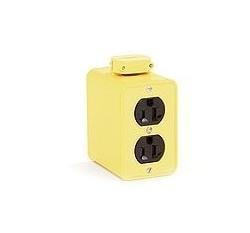
Where power outlet strips fit in an electrical setup
A power outlet strip is often used as a compact power distribution point for several devices in one location. In technical workplaces, that may include test equipment, network hardware, office electronics, bench tools, or auxiliary devices installed in cabinets and racks. The goal is to distribute power in a more controlled and accessible way than using multiple separate wall connections.
These products are also relevant in the wider context of circuit protection. While a strip itself provides the physical outlet interface, the overall installation may still depend on upstream protection and supporting components such as fuse holders to help manage branch circuits appropriately. This makes product selection more effective when it is considered as part of the full electrical architecture rather than as a standalone accessory.
Typical product types in this category
The category includes both straightforward power strips and more application-focused power distribution units. Some products are intended for general equipment connection, while others are better suited to organized deployment in professional environments where cable routing, service access, and repeatable installation matter.
Examples from this range include the Panduit P24F02M-GN2B Power Distribution Units, Molex 1301350168 Power Distribution Units, and OMRON K2ZC-K2WR-NS Power Distribution Units. For simpler outlet expansion, products such as the TE Connectivity 2076089-8 Power strip and Molex 1301350200 Power strip for office equipment illustrate how the category also covers more familiar strip-style formats for distributed device power.
How to choose the right model
The most useful starting point is the real operating environment. Consider how many devices will be connected, whether loads are continuous or intermittent, and whether the strip will be used in an office, lab, panel, machine area, or maintenance bench. Mechanical layout also matters: mounting style, cable entry direction, and accessibility can affect daily operation just as much as electrical compatibility.
It is also important to think about the protection scheme around the strip. In many installations, power outlet strips are one part of a broader system that may include branch protection, surge handling, and serviceable replacement parts. Depending on the design, related products such as fuse clips or other circuit protection components can be relevant when building a maintainable and safe distribution setup.
Common application scenarios
In offices and technical support spaces, outlet strips are commonly used to centralize power for computers, monitors, chargers, printers, and other peripheral equipment. Products such as the Molex 1301350207 Power strip for office equipment are representative of this practical, facility-level usage where simple distribution and tidier cable management are often the main priorities.
In industrial and automation contexts, the role can be more structured. A strip or distribution unit may support control hardware, communication equipment, service tools, or rack-mounted accessories. Models such as the Panduit P38D25M-YL1A and Panduit P38D25M-WH2C Power Distribution Units show how these products can fit into installations where organized power access is part of a larger engineered system.
Manufacturers commonly associated with this category
This category includes products from recognized industrial and connectivity-focused suppliers. Panduit, Molex, TE Connectivity, and OMRON are particularly relevant here based on the products represented in the range. Each brings a slightly different focus, from structured power distribution and connectivity ecosystems to application-specific electrical hardware.
Other major manufacturers in the broader category landscape include Eaton, PHOENIX CONTACT, SCHNEIDER, PANASONIC, Belden, and Klein Tools. Their presence is useful context for buyers comparing sourcing options across industrial electrical, automation, and facility power applications, even when the exact item selected depends on layout, form factor, and intended operating conditions.
Why system context matters more than outlet count alone
When buyers compare power outlet strips, the number of outlets is often the most visible difference, but it should not be the only deciding factor. A suitable product should align with cable management needs, the expected load distribution, maintenance access, and the service environment. In industrial settings, a poor fit can create unnecessary clutter, awkward cable runs, or harder troubleshooting later.
It is equally important to view power distribution alongside protection and serviceability. If the application needs replaceable protection components or organized spare-part handling, related categories such as fuse holder accessories may also become relevant. Looking at the complete setup helps buyers choose a solution that works well over time rather than only meeting a short-term connection need.
Examples of products buyers may compare
For projects that require structured distribution, buyers may compare options such as the Panduit P38D25M-GN1C, Panduit P24F02M-GN2B, and Molex 1301350168 Power Distribution Units. These are the kinds of products often considered when the application calls for better organization, repeatability, and integration into technical infrastructure.
For more direct outlet expansion, TE Connectivity 1-519547-4, TE Connectivity 5-1633917-9, and TE Connectivity 4-539355-3 Power strip models can be useful reference points. The right choice depends less on brand preference alone and more on how the strip will be installed, what equipment it will support, and how it fits within the surrounding electrical design.
Final considerations for sourcing
A well-chosen power outlet strip supports both convenience and operational reliability. Whether the need is a basic power strip for office equipment or a more structured unit for technical installations, the best results usually come from matching the product to the actual load environment, installation method, and maintenance expectations.
By reviewing the available range with those factors in mind, buyers can narrow the selection more efficiently and build a power distribution setup that is easier to deploy, cleaner to manage, and better aligned with the rest of the electrical system.
Get exclusive volume discounts, bulk pricing updates, and new product alerts delivered directly to your inbox.
By subscribing, you agree to our Terms of Service and Privacy Policy.
Direct access to our certified experts
