
Surge Protector
Unexpected voltage spikes can damage control panels, instrumentation, communication lines, and sensitive electronics long before the failure becomes visible. In industrial environments, that risk is amplified by switching events, lightning-related transients, unstable utility conditions, and noise introduced by connected equipment. Choosing the right Surge Protector category is therefore less about a generic accessory and more about protecting system uptime, maintenance budgets, and equipment reliability.
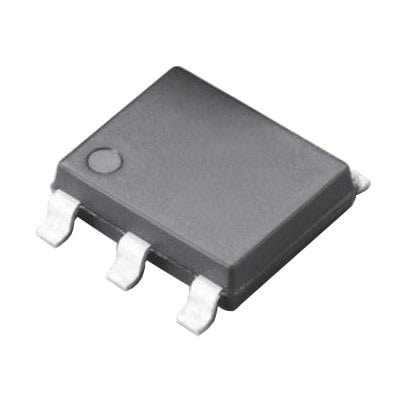
Why surge protection matters in industrial and commercial systems
A surge event is typically brief, but its impact can be severe. Power supplies, PLC-related electronics, interface circuits, monitoring devices, and communication equipment may all be exposed to transient overvoltage conditions that shorten service life or cause sudden failure. In many installations, the cost of unplanned downtime is much higher than the cost of adding proper protection at the right points in the system.
This category brings together devices used to help limit or divert damaging transients before they reach vulnerable equipment. Depending on the application, protection may be required at the service entrance, distribution level, field wiring, low-voltage signal paths, or specialized installations such as photovoltaic systems.
What you can expect in this category
The range includes industrial surge protection devices, surge arrestors, and related protection solutions for different installation points. Some products are suited to broader power-distribution protection, while others are more appropriate for panel-level or equipment-level integration. That distinction is important because surge protection is usually most effective when it is applied as part of a layered strategy rather than as a single device placed anywhere in the system.
Representative products in this category include the Bourns 4B04B-524-400 Surge protector, Eaton PBUS02 Surge protector, Eaton PBUS6.2 Surge protector, and American Power Conversion PMG2X-A Surge Arrestors. You will also find models such as the Bourns 1440-PV-400-P Surge protector, which may be relevant where application-specific protection is needed within a broader electrical protection scheme.
Common application areas
Surge protection is used across manufacturing, building infrastructure, utilities, machine installations, and energy systems. Typical use cases include protecting distribution boards, control cabinets, process instrumentation, communication interfaces, and equipment connected to long cable runs that can pick up transient energy. Installations exposed to outdoor cabling or unstable power conditions often require particular attention.
In practical terms, engineers often evaluate where a surge can enter the system and what equipment would be affected if that path is left unprotected. A mains surge protector may be selected for incoming power, while more localized protection can be added around control electronics or communication interfaces. For highly sensitive semiconductor-level protection, related components such as ESD protection diodes may also be part of the overall design.
How to choose the right surge protector
The best selection process starts with the installation environment rather than the product name alone. Consider the electrical system type, likely source of transients, exposure level, mounting location, and the importance of the loads being protected. A protector intended for panel distribution may not be the right choice for low-energy signal protection, just as a small device-level solution may be insufficient for upstream power events.
It is also useful to think in terms of coordination. In many systems, upstream and downstream protective elements work together so that higher-energy events are handled at the distribution level while sensitive equipment receives additional localized protection. Where maintenance teams are building or standardizing protection strategies across multiple assemblies, related resources such as circuit protection kits can help support evaluation, prototyping, or service readiness.
Examples from leading manufacturers
This category includes products from recognized names such as Bourns, Eaton, and American Power Conversion. Each brand is commonly associated with circuit protection solutions used in industrial and electrical applications, making them relevant choices for buyers who need dependable options from established suppliers.
For example, Eaton BSPD400480D3P ESD protection device, Eaton BSPMA2240S3GR ESD protection device, Eaton BSPD120480Y2P ESD protection device, and Eaton BSPD200480D3P ESD protection device illustrate the wider range of protection formats that may appear in real projects. Bourns TBU-Kit01 Surge Arrestors and Bourns 1260-3S-127 Surge protector show how the category can also support more focused protection tasks within a broader circuit protection architecture.
Surge protection as part of a broader circuit protection strategy
Effective protection rarely depends on a single component alone. Surge devices are often selected alongside fuses, holders, clips, and other supporting hardware to create a more complete approach to fault and transient management. While overcurrent protection and transient protection solve different problems, they are frequently evaluated together during panel design and maintenance planning.
If your application also requires mechanical support and replaceable overcurrent protection hardware, related categories such as fuse holders may be relevant. Looking at these categories together can make it easier to build a protection scheme that is both technically appropriate and easier to service over time.
What buyers should review before ordering
Before selecting a specific item, review the installation point, electrical architecture, and the nature of the equipment being protected. It is important to confirm whether the device is intended for power circuits, signal paths, or a more specialized use case. Buyers should also consider how the product will be integrated into the enclosure or system layout and whether coordinated upstream or downstream protection is already present.
On larger projects, standardization can be just as important as the protection function itself. Using a consistent family of surge protection devices across multiple panels or facilities can simplify spare parts planning, documentation, and maintenance procedures. That is often a practical advantage for OEMs, system integrators, and maintenance teams managing multiple installations.
Final thoughts
Protecting electrical and electronic systems from transient events is a practical reliability decision, not just a compliance checkbox. The products in this Surge Protector category support a wide range of applications, from distribution-level protection to more targeted equipment safeguarding, helping engineers and buyers match protection methods to real operating conditions.
When comparing options, focus on where the surge risk exists, what assets need protection, and how the device fits into the overall circuit protection design. A well-chosen solution can help reduce unexpected failures, improve system resilience, and support more stable long-term operation.
Get exclusive volume discounts, bulk pricing updates, and new product alerts delivered directly to your inbox.
By subscribing, you agree to our Terms of Service and Privacy Policy.
Direct access to our certified experts