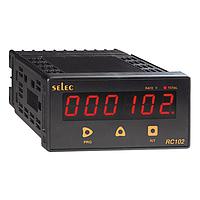
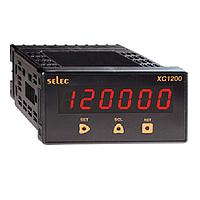
Rotary Revolution Counter
In machines that run continuously, a simple count of shaft turns can reveal far more than it seems. Tracking revolutions helps operators verify motion, monitor batch output, schedule maintenance, and confirm that a drive system is performing as expected. That is why Rotary Revolution Counter devices remain a practical choice in production lines, packaging equipment, test rigs, and general industrial automation.
Where rotary revolution counters fit in industrial systems
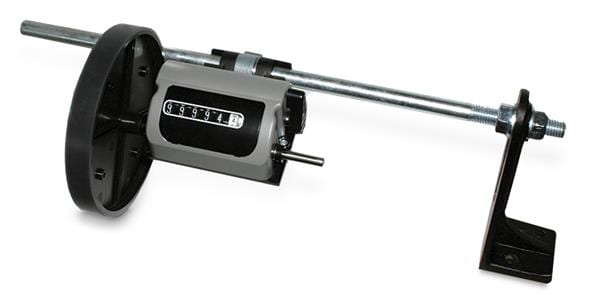
A rotary revolution counter is typically used to record the number of turns produced by a rotating element such as a shaft, roller, spindle, or wheel. In many facilities, this information supports process control, preventive maintenance, or simple production verification without requiring a complex measurement system.
These counters are commonly selected when the main requirement is reliable revolution counting rather than full speed analysis. For applications that need live RPM indication instead of cumulative turns, a tachometer may be a better fit. In some systems, both are used together to provide a clearer picture of machine behavior.
Typical applications for revolution counting
Rotary counters are useful anywhere rotational movement needs to be converted into a visible or trackable total. Typical examples include conveyor rollers, winding and unwinding systems, mixers, pumps, rotating inspection fixtures, and mechanical drive assemblies. By counting each revolution, maintenance teams can estimate wear cycles and production teams can compare actual machine output with target values.
They are also relevant in equipment where output is tied directly to repeated circular motion. A known number of revolutions can correspond to a defined process event, material length, or completed machine cycle. This makes revolution counters especially practical in environments where straightforward, repeatable measurement is more valuable than a complex control interface.
How to choose the right rotary revolution counter
Selecting the right unit starts with understanding the machine and the purpose of the count. The first consideration is the type of rotating element being monitored and how the counter will be mechanically or electrically linked to it. Mounting method, available installation space, and expected operating conditions should all be reviewed before choosing a device.
It is also important to think about display readability, reset requirements, counting range, and whether the application needs local visual indication only or integration with a broader control scheme. In some automation setups, buyers compare rotary counters with broader counters and tachometers solutions to determine whether they need simple accumulation, speed feedback, or both.
Mechanical counting versus pulse-based monitoring
Not every application uses the same counting principle. Some rotary revolution counters are chosen for direct, local counting on equipment, while others are part of a pulse-based measurement setup. In pulse-output systems, the rotation of a moving part creates electrical pulses that can be counted by a connected device, PLC, or display module.
This distinction is important when designing an automation architecture. If the process already generates proportional pulse signals, a dedicated counting solution can make integration easier. For example, products from Dwyer in related flow-monitoring applications show how pulse output can be used to totalize repeated physical events in a practical way.
Example of pulse counting in real industrial use
Although this category focuses on revolution counters, pulse-counting logic is also common in adjacent measurement tasks. A product such as the Dwyer WVT-A-02-1 vertical rotary piston water meter illustrates this clearly: the device provides pulse output proportional to flow, allowing external equipment to count events and build a totalized value. The same general counting concept is often applied in automation when rotational movement must be converted into usable count data.
Other examples from Dwyer, such as the WRBT-A-C-02-10 multi-jet water meter or WMH series high-temperature multi-jet meters for HVAC and hot water service, further demonstrate how pulse output supports totalization in industrial environments. While these are flow products rather than shaft counters, they are useful references for engineers evaluating how counted pulses can fit into monitoring, logging, or control systems.
Key considerations in industrial environments
For reliable operation, the selected counter should match the realities of the installation. Vibration, temperature variation, panel layout, operator visibility, and maintenance accessibility all affect long-term usability. In rotating equipment, stable signal generation and consistent mechanical coupling are just as important as the counter itself.
Buyers should also consider how the count will be used after installation. If the value is mainly for operators at the machine, a straightforward local display may be sufficient. If the count supports diagnostics or performance tracking, it may make sense to review compatible automation brands such as OMRON or other control-oriented product families available for broader system design.
Why this category matters for maintenance and process visibility
Revolution data can support decisions far beyond simple counting. Maintenance teams can use accumulated turns as a service interval reference, production teams can compare counts against throughput expectations, and engineering teams can use the information to validate machine behavior over time. This is particularly helpful on equipment where wear is tied directly to rotational cycles.
A well-chosen industrial counter can therefore become a low-complexity but high-value part of the monitoring strategy. In many cases, the benefit comes from making machine activity visible in a way that is easy to understand and easy to act on.
Finding the right fit for your application
The best choice depends on what you need to measure, how the signal is created, and how the count will be used within the process. Some applications need only a basic cumulative revolution display, while others benefit from combining count information with speed measurement or control feedback. If your requirement is centered on rotational speed, it may be worth comparing this category with a dedicated tachometer category before final selection.
For buyers evaluating machine monitoring components, this category provides a focused starting point for rotation-based counting. By matching the counter type to the motion source, environment, and operating objective, it becomes much easier to build a practical and maintainable measurement setup.
Whether the goal is machine cycle tracking, shaft revolution monitoring, or integration with pulse-based automation signals, rotary revolution counters offer a straightforward way to turn motion into actionable information. Choosing with the application in mind will help ensure dependable counting performance and better visibility across everyday industrial operations.
Get exclusive volume discounts, bulk pricing updates, and new product alerts delivered directly to your inbox.
By subscribing, you agree to our Terms of Service and Privacy Policy.
Direct access to our certified experts