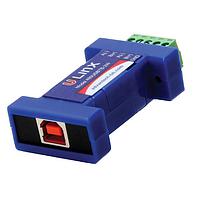
Interface Modules
Reliable signal transfer is a basic requirement in industrial automation, especially when controllers, sensors, serial devices, and field equipment need to communicate across different interfaces or over longer distances. In many systems, the challenge is not only connecting devices physically, but also maintaining stable communication in electrically noisy environments, handling protocol differences, and protecting equipment from interference.
Interface Modules help solve these integration issues by bridging communication standards and supporting practical field connectivity. Within a Field I/O architecture, they are commonly used to convert signals, extend transmission distance, add isolation, and improve compatibility between legacy serial equipment and modern control systems.

Where interface modules fit in industrial communication
In real installations, devices rarely share the same electrical interface or communication format. A PLC may need to communicate with a drive, barcode reader, instrument, or remote serial device that uses RS-232, RS-422, or RS-485. Interface modules provide the conversion layer that makes these connections practical without redesigning the full control system.
They are particularly useful when system designers need signal isolation, better noise immunity, or longer cable runs than a direct connection can support. For broader signal handling and device integration, users often evaluate them alongside I/O modules depending on whether the application needs communication conversion or field-level input/output expansion.
Typical functions of interface modules
Not every application requires the same type of conversion. Some projects need a simple serial interface bridge, while others require fiber transmission to overcome distance limits or electromagnetic interference. That is why this category is relevant for machine builders, panel integrators, utility projects, and industrial communication upgrades.
Common use cases include converting RS-232 to RS-422/485, extending serial communication across industrial cabinets, and creating more robust links between control equipment and remote devices. In environments with motors, switching equipment, or outdoor installations, modules with isolation and interference protection can help improve overall communication reliability.
Examples from the category
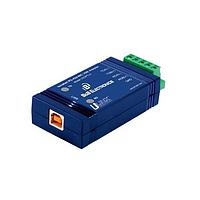
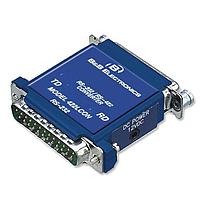
A practical example is the Advantech ADAM-4520, an isolated RS-232 to RS-422/485 converter designed for industrial communication tasks. This type of module is relevant when a controller or host device uses RS-232, but the field side requires RS-422 or RS-485 for longer distance communication and better resistance to electrical noise.
Another example is the Advantech ADAM-4542+, which converts fiber to RS-232/422/485 for applications where long-distance transmission and electrical isolation are important. A solution like this is suitable when serial data must travel much farther than copper wiring typically allows, or when fiber is preferred to reduce the impact of EMI, lightning exposure, or ground potential differences.
How to choose the right module
The first selection factor is the communication standard on each side of the connection. Before choosing a module, confirm whether the system uses RS-232, RS-422, RS-485, or fiber on the source and destination ends. This determines the basic conversion requirement and avoids mismatch between devices already deployed in the field.
The second factor is the installation environment. If the equipment will operate in electrically noisy areas, near heavy machinery, or over long cable routes, look for features related to isolation and interference protection. Power supply range, mounting method, and connection style also matter in control cabinets where space, wiring practice, and maintenance accessibility are important.
It is also useful to think about system architecture rather than a single point connection. In some projects, communication conversion modules work together with interface modules for field integration and other supporting devices to create a more maintainable automation network.
Why isolation and transmission distance matter
Industrial communication problems are often caused by ground loops, electrical transients, and signal degradation over distance. An interface module with galvanic isolation helps separate one side of the communication link from the other, reducing the risk that voltage differences or transient events will damage connected equipment or corrupt data.
Transmission distance is equally important. RS-232 is typically suitable for short-range communication, while RS-422 and RS-485 are better aligned with longer cable runs and multi-device industrial layouts. When distance becomes even more demanding, or when copper cabling is a poor fit, fiber-based conversion can provide a cleaner and more robust transmission path.
Integration in a Field I/O ecosystem
Interface modules are rarely deployed in isolation from the rest of the automation system. They often sit between controllers, remote devices, communication gateways, and distributed field equipment. In that role, they support more consistent data exchange and make it easier to connect older serial assets to newer automation platforms without replacing everything at once.
For projects that combine communication handling with modular expansion, it may also be useful to review related industrial interface solutions and adjacent categories within the same automation environment. This helps engineers and buyers compare whether the main need is protocol conversion, signal interfacing, or distributed I/O connectivity.
Applications across industrial sectors
These modules are relevant in factory automation, building systems, utilities, transportation infrastructure, and machine retrofits. They are often used wherever serial communication remains part of the installed base, especially when older instruments, control units, and operator devices still need to exchange data with current systems.
They can also support phased modernization. Instead of replacing every legacy serial device immediately, an interface module can create a practical bridge that extends equipment life while improving communication stability. This approach is often attractive in B2B environments where uptime, compatibility, and installation cost all influence purchasing decisions.
Final considerations
Choosing the right interface module starts with a clear understanding of the communication path: interface type, distance, electrical environment, and installation constraints. From isolated serial converters to fiber-based communication links, the right module can improve reliability and simplify integration between devices that were not originally designed to work together.
For engineers, system integrators, and industrial buyers, this category provides a focused starting point for solving real connectivity issues in Field I/O systems. When selected carefully, interface modules support cleaner communication, more resilient installations, and smoother integration across industrial networks.
Get exclusive volume discounts, bulk pricing updates, and new product alerts delivered directly to your inbox.
By subscribing, you agree to our Terms of Service and Privacy Policy.
Direct access to our certified experts