
Industrial Computing
Reliable computing hardware plays a central role in modern automation, machine control, data acquisition, and industrial visualization. In environments where uptime, expandability, and long service life matter, choosing the right Industrial Computing platform helps ensure stable operation across production lines, control cabinets, vehicles, and edge processing systems.
This category brings together computing products used in industrial and technical applications, from embedded motherboards and fanless box PCs to rackmount systems and specialized signage or in-vehicle platforms. Whether the requirement is local control, HMI support, image handling, networked communication, or infrastructure for connected equipment, the right hardware foundation makes integration much easier.
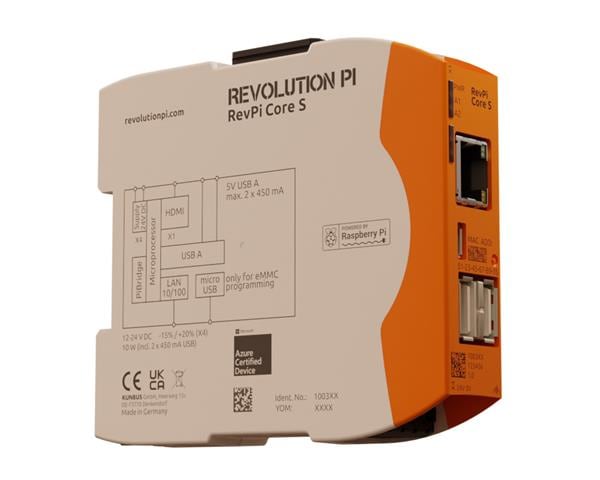
Built for automation, control, and continuous operation
Compared with standard office PCs, industrial computing systems are typically selected for their ability to operate in more demanding conditions and to interface with a broader range of equipment. This may include serial communication, multiple LAN ports, extended power input expectations, compact form factors, or support for specialized expansion cards and peripherals used on the factory floor.
These platforms often sit close to the process itself. They may be deployed as local machine computers, control room workstations, edge data nodes, digital signage controllers, or embedded systems inside larger OEM equipment. In many projects, they work alongside industrial controllers to support visualization, data logging, communication, and higher-level application logic.
Main product types in this category
The scope of industrial computing is broad, and different form factors address different integration needs. Industrial motherboards are often chosen by system integrators and OEMs that need to build a custom machine computer around a known CPU platform, expansion layout, and I/O structure. For example, boards such as the Advantech AIMB-585QG2-00A1N and Advantech AIMB-286F-00A1U illustrate how embedded motherboard options can support compact or modular system design.
Box PCs are another common choice when a ready-to-deploy platform is preferred. Models such as the Omron Automation and Safety NYB35-213K6 or PHOENIX CONTACT 1272688 show the role of prebuilt industrial PCs in applications where a complete computing node is needed for operation, interface handling, or edge-level processing. For vehicle and mobile applications, the Advantech ARK-2151V-S9A1U highlights a more specialized approach with features relevant to transport or onboard systems.
At the higher end, rackmount and server-class systems support centralized storage, virtualization, or heavier compute workloads. The Advantech ASR-3100PP-R11A1E is a good example of how industrial rack systems can be used where storage density, processing capability, and structured installation are key requirements.
Typical use cases across industrial environments
Industrial computing platforms are used in a wide range of scenarios. On production equipment, they may run supervisory software, collect process data, or serve as the host for machine-level applications. In inspection or monitoring systems, they can manage image streams, connect to network devices, or coordinate external peripherals.
These systems are also relevant in projects involving machine vision and surveillance, especially where local processing is required near the equipment. In those cases, industrial PCs may be paired with cameras and accessories to support inspection, recording, or event-driven monitoring workflows.
Other common uses include digital signage, industrial kiosks, transportation systems, warehouse stations, and engineering workstations in technically demanding facilities. The exact hardware choice depends on space constraints, processing load, connectivity, and the operational conditions of the site.
How to choose the right industrial computing platform
A practical selection process starts with the application rather than the processor alone. First, define the role of the system: is it a controller-side computer, a data gateway, a visualization node, a storage server, or a custom embedded platform? Once the function is clear, it becomes easier to narrow down the required form factor, interface set, and performance level.
CPU compatibility, memory capacity, storage architecture, and expansion support are important, but they should be assessed together with installation constraints. A Mini-ITX or Micro ATX board may suit an embedded cabinet design, while a fanless box PC may simplify deployment in enclosed spaces. If the system must support high-speed networking, multiple displays, PCIe cards, or heavy local storage, those needs should be confirmed early in the design phase.
It is also worth checking how the computing platform will interact with surrounding electrical and automation hardware. In control panels and machine installations, proper coordination with circuit protection devices helps improve reliability and supports safer system design.
Representative manufacturers and ecosystem fit
Several established suppliers appear in this category, each serving different needs within the industrial and technical computing space. Advantech stands out for its broad range of industrial motherboards, box PCs, in-vehicle systems, and rackmount platforms. This makes it relevant for OEM design, embedded integration, and infrastructure-level deployment.
Omron Automation and Safety is commonly associated with automation-focused industrial PCs that fit well into broader machine and factory control architectures. PHOENIX CONTACT also contributes compact industrial PC solutions suited to control and interface tasks. In contexts where standard computing components and industrial requirements overlap, products from GIGABYTE may also be relevant for certain build configurations, especially around board-level architecture.
The best manufacturer choice often depends less on brand preference and more on system compatibility, lifecycle expectations, mounting requirements, and support for the intended deployment model.
Component-level and system-level considerations
Industrial computing projects can be approached either as complete system purchases or as platform builds. A complete box PC reduces integration effort and is often preferred when deployment speed and validated compatibility are priorities. A board-level approach offers more flexibility for OEM development, especially when enclosure design, custom I/O, or thermal strategy must be tailored to the final machine.
Some listings in the broader ecosystem may include supporting hardware such as power supply units or mainstream computing components. These can be useful in technical builds, but in industrial applications they should always be evaluated in the context of duty cycle, power stability, service access, and installation method. The goal is not only to meet performance targets, but also to support maintainability over time.
Where motion, switching, and equipment coordination are involved, industrial PCs may also exchange data with devices such as contactors, counters, sensors, and control modules through the wider automation system. That broader compatibility is often just as important as raw computing performance.
Why this category matters in modern industrial architecture
As factories and technical facilities continue to generate more operational data, the boundary between control, monitoring, and computing becomes increasingly connected. Industrial computing hardware sits at that intersection, enabling local intelligence, communication, visualization, and application hosting close to the process.
For system integrators, panel builders, OEMs, and maintenance teams, a well-matched platform can simplify deployment and reduce future redesign work. From compact embedded boards to robust box PCs and rackmount systems, this category supports a wide range of industrial requirements without forcing a one-size-fits-all approach.
If you are comparing options, focus on the real operating context: form factor, interfaces, environmental demands, and long-term serviceability. That usually leads to a more dependable selection than choosing on processor class alone.
Get exclusive volume discounts, bulk pricing updates, and new product alerts delivered directly to your inbox.
By subscribing, you agree to our Terms of Service and Privacy Policy.
Direct access to our certified experts