Specialty Controllers
Many control tasks in industrial systems do not fit neatly into a standard temperature, level, or logic control category. Some applications need signal conversion, device monitoring, safety handling, network communication, or dedicated machine functions that call for more purpose-built control hardware. That is where Specialty Controllers become relevant in modern automation environments.
This category brings together controllers designed for specific functions within a wider control architecture. Instead of acting as general-purpose PLCs alone, these devices often solve targeted problems such as gateway communication, sensor control, heater monitoring, distributed I/O handling, or safety-related tasks. For machine builders, panel designers, and maintenance teams, the value lies in selecting the right controller for the exact operational requirement.
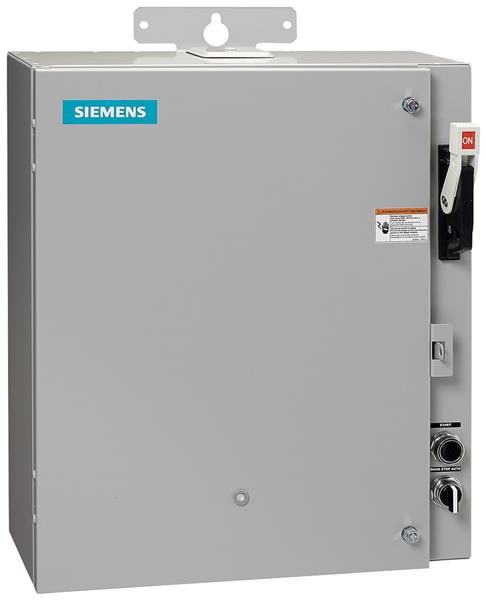
Where specialty controllers fit in an automation system
In a real production line, control is rarely handled by one device alone. A broader control system may include PLCs, HMIs, remote I/O, gateways, safety modules, dedicated monitoring units, and signal-processing components. Specialty controllers typically sit in these supporting roles, helping the system manage functions that are too specific for a standard controller or more efficient when handled by a dedicated device.
This makes the category especially useful when an application requires function-specific control. Examples include managing distributed inputs, converting communication protocols, monitoring heater status, or supporting high-precision sensing. In many projects, these devices improve modularity and simplify troubleshooting because each control task is assigned to a component built for that purpose.
Typical controller types found in this category
Because this is a broad technical category, the product mix can include several specialized formats rather than one uniform device type. Some models are designed for distributed automation and interface tasks, while others focus on sensing, machine safety, communication, or analog signal handling. This variety helps engineers choose hardware that matches the exact role required in the panel or machine.
For example, the PHOENIX CONTACT 2861690 IB IL 24 DI 8-2MB D-PAC illustrates the kind of controller used in distributed I/O environments, where signal acquisition and compact panel integration matter. On the sensing side, models such as the Omron Automation and Safety ZS-LDC11 are relevant in applications that require dedicated sensor control rather than a generic control platform. Safety-oriented needs are represented by products like the Omron Automation and Safety 6FTAC90 Safety Controllers, while communication-focused tasks can involve devices such as the Omron Automation and Safety 3G3AX-GW-EIP Ethernet/IP Gateway.
Common industrial applications
Specialty controllers are used across manufacturing, process equipment, packaging systems, utilities, and machine retrofits. They are often selected when the application has a narrow but critical requirement, such as encoder feedback processing, heater failure detection, or communication between subsystems that use different protocols. In these cases, a dedicated controller can reduce engineering effort compared with building the same function from scratch.
Examples from this category reflect that practical range. The Omron Automation and Safety E6F-AB5C-C 360 2M and E6F-AG5C 1024 2M relate to motion feedback and position-related tasks where encoder-based control information is important. The Omron Automation and Safety K8AC-H21PC-FLK, described for heater burnout detection, is more aligned with equipment monitoring and preventive maintenance. Meanwhile, interface parts such as the Omron Automation and Safety 44361846 connector show that some items in this ecosystem support installation and system integration rather than serving as stand-alone control units.
How to choose the right specialty controller
The best selection process starts with the control objective, not the product name. Engineers should first define whether the device is needed for sensing, safety, communication, analog conversion, remote I/O, or equipment monitoring. From there, practical factors such as available supply voltage, mounting constraints, operating environment, and compatibility with the existing control platform become easier to evaluate.
It is also important to review how the controller interacts with the rest of the automation architecture. If the application needs broad machine logic and sequencing, a dedicated programmable controller may be the better primary platform, with a specialty device handling one supporting task. If the requirement is more focused on process regulation, solutions in PID control may be more appropriate. The specialty controller category becomes most valuable when the application is clearly defined and a standard control class would be unnecessarily broad or inefficient.
Representative manufacturers and product ecosystems
Several established automation brands appear in this category, but the role of each product should be considered more carefully than the brand name alone. Omron Automation and Safety is strongly represented here through products covering sensing control, safety control, gateways, heater monitoring, and legacy control interfaces. That range makes it relevant for users who need specialized control functions within a broader factory automation environment.
PHOENIX CONTACT also appears as a meaningful option for applications involving interface-oriented control and distributed automation hardware. Depending on project requirements, buyers may also compare broader control ecosystems from other manufacturers listed in this catalog, especially when system compatibility, panel standards, or preferred supplier frameworks are part of the purchasing decision.
Integration considerations for panel builders and maintenance teams
From a system integration perspective, specialty controllers should be evaluated not only by their function but also by their role in commissioning and long-term support. Compact form factor, terminal style, environmental limits, and diagnostic accessibility can all affect installation time and maintenance effort. Even details such as connectors, wiring approach, and interface modules may influence whether a device is practical for a new build or retrofit.
Maintenance teams often prefer dedicated control devices when they make fault isolation easier. A separate monitoring or gateway unit can simplify diagnostics because it narrows the scope of the issue to one function block. In expanding systems, it may also be useful to review adjacent categories such as level controllers or power controllers when the control requirement becomes more application-specific over time.
Why this category matters in practical sourcing
For B2B buyers, the challenge is often not finding a controller, but finding one that matches a very specific task without adding unnecessary complexity. Specialty controllers help bridge that gap between standard automation platforms and field-level operational needs. They can support system expansion, improve signal handling, and provide dedicated control functions where precision or reliability matters.
When reviewing this category, it helps to compare products based on the actual machine function they serve, the interfaces they support, and how naturally they fit into the existing automation design. A focused selection process usually leads to faster integration and a cleaner control architecture. If your application has a specialized requirement that falls outside standard controller classes, this category is a practical place to narrow down the right solution.
Get exclusive volume discounts, bulk pricing updates, and new product alerts delivered directly to your inbox.
By subscribing, you agree to our Terms of Service and Privacy Policy.
Direct access to our certified experts