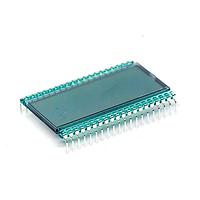
LCD Numeric Display Modules
Clear numeric readouts remain essential in many embedded and industrial devices, especially where power efficiency, straightforward integration, and long service life matter more than complex graphics. LCD Numeric Display Modules are widely used for counters, panel meters, handheld instruments, thermostats, timers, and compact control interfaces that only need digits and simple segment-based information.
Compared with more graphic-oriented display technologies, this category focuses on practical digit presentation: 2-digit, 3-digit, 4-digit, 6-digit, 8-digit, and 3.5-digit formats for measurement and indication tasks. For engineers and buyers, the main selection challenge is usually not just display size, but the right balance of viewing mode, supply voltage, digit count, character height, and environmental suitability.
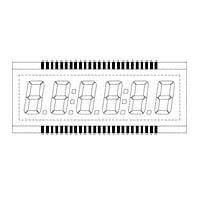
Where LCD numeric modules fit best
These modules are designed for applications where numeric information must be easy to read without unnecessary complexity. Common use cases include voltage and current indicators, process readouts, temperature controllers, elapsed-time counters, weighing devices, and portable instruments where low power consumption is important.
Because the display content is based on predefined segments rather than full graphics, integration can be efficient for systems that only need stable number presentation. If your project requires a broader range of display technologies for comparison, it may also be useful to review LED displays or OLED displays depending on brightness, contrast, and interface requirements.
Typical display formats in this category
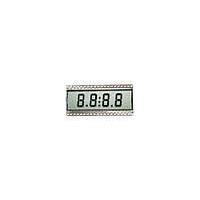
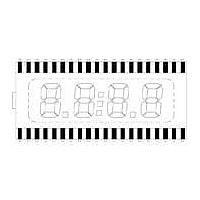
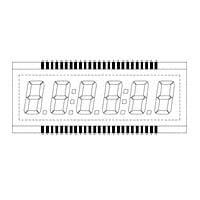
One of the main differences between modules in this range is the number of digits. A compact 2-digit module can be suitable for simple setpoint indication or status values, while 4-digit and 6-digit versions are more common in measurement equipment that needs greater resolution. An 8-digit module may be preferred when displaying larger counts, cumulative totals, or longer numeric strings.
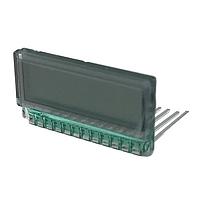
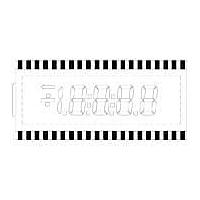
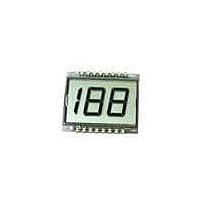
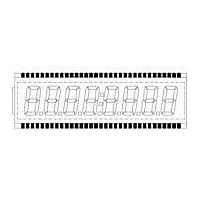
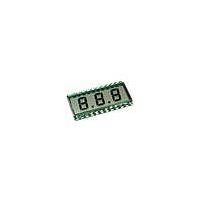
Examples in this category show that the product range covers both very compact and more visible formats. Models such as the Varitronix VIM-878-DP-RC-S support 8-digit readout in a reflective design, while options like the Lumex LCD-S601C71TF provide a 6-digit format with larger character size. There are also smaller-format solutions such as the Varitronix VI-201-DP-RC-S for 2-digit indication and the Varitronix VI-320-DP-RC-S for 3.5-digit style applications often seen in panel measurement devices.
Reflective vs. transflective display behavior
Another practical selection point is the display mode. Reflective LCD modules rely on ambient light, making them a strong fit for battery-powered equipment and installations used in well-lit environments. They are often chosen for simple, efficient readouts where backlighting is not the priority.
Transflective LCD modules add flexibility by supporting readability across a wider range of lighting conditions. In this category, products such as the Lumex LCD-S401C39TF and Lumex LCD-S601C71TF illustrate that transflective options can be useful when equipment may be used indoors and in brighter ambient light. The best choice depends on where the device will actually be read: a factory panel, a handheld field instrument, or a compact embedded controller.
Key specifications to compare before ordering
For engineering and procurement teams, several specifications have a direct impact on usability and integration. The first is character size, since readability at a distance changes significantly between compact digits and larger formats around 18 mm to 25.4 mm. The second is module size, which affects bezel design, PCB layout, and front-panel spacing.
Supply voltage is equally important. Many modules in this category operate from 3 V to 5 V, while some are specified for 5 V operation, which can simplify matching with an existing control board or instrument design. Viewing direction also matters in real installations, especially when a display is mounted on a sloped panel or read from below or above the normal axis.
It is also worth checking whether your application needs a basic numeric display only or a different visual format entirely. For projects that require richer graphical interfaces, TFT displays and accessories may be a more suitable path than segmented numeric modules.
Examples from Lumex and Varitronix
Lumex appears in this category with several digit sizes and readout formats, making it relevant for buyers who need flexibility between compact and larger numeric displays. Representative models include the LCD-S401C39TR, LCD-S401C52TR, LCD-S401C71TR, and LCD-S301C31TR-3, covering 3-digit and 4-digit presentation in reflective formats, along with transflective variants for broader lighting conditions.
Varitronix is also strongly represented with modules suited to compact panel and instrument designs. Examples include the VI-201-DP-RC-S for 2-digit indication, the VI-415-DP-RC-S for 4-digit readout, and the VIM-878-DP-RHW for reflective wide-temperature use. These examples highlight how the category supports both standard applications and designs that may need better environmental tolerance.
How to choose the right module for your application
A good starting point is to define the actual information the user needs to see. If the display only shows a short measured value or setpoint, a 2-digit or 3-digit module may be enough. If your device must show decimal precision, cumulative counts, or more detailed readings, a 4-digit, 6-digit, or 8-digit configuration is usually more practical.
Next, consider operating conditions. In bright ambient light, reflective modules are often efficient and easy to read. If the device will be used across varying light conditions, transflective options deserve closer attention. Also review available panel space, character height, and voltage compatibility before finalizing a part number, especially in retrofit projects or custom instrument builds.
Why this category matters in industrial and embedded design
Even as modern interfaces become more graphical, segmented numeric LCDs continue to serve an important role in reliable, purpose-built equipment. They support focused information delivery, can reduce system complexity, and remain highly relevant where users need quick interpretation of measurements rather than menu-driven interaction.
This category brings together modules suited to practical numeric display tasks across industrial control, instrumentation, and embedded electronics. By comparing digit format, display mode, size, and electrical compatibility, buyers can narrow the selection to modules that fit both the device design and the real operating environment.
For projects centered on clear numerical indication, LCD numeric modules remain a dependable choice. Reviewing the intended viewing conditions, required digit count, and mechanical constraints will usually lead to a more accurate shortlist and a smoother integration process.
Get exclusive volume discounts, bulk pricing updates, and new product alerts delivered directly to your inbox.
By subscribing, you agree to our Terms of Service and Privacy Policy.
Direct access to our certified experts