Time Delay Relay, Timer
Precise timing control is essential in panels, machines, and process equipment where outputs must switch in a defined sequence rather than immediately. In many automation and control tasks, that timing function helps reduce false triggering, coordinate startup and shutdown logic, and protect equipment from unnecessary stress. This is where Time Delay Relay, Timer devices become a practical part of the control system.
Within industrial relay applications, these products are commonly used to create adjustable delays for motors, alarms, lighting circuits, conveyors, packaging machines, and utility control panels. Whether the requirement is a simple ON delay or a more specific timing cycle, the right timer relay can improve repeatability, simplify wiring logic, and make machine behavior easier to manage during operation and maintenance.
Where time delay relays and timers are used
A time delay relay is typically selected when a circuit needs a controlled response after a signal is received, after power is applied, or during a repeated timing interval. Common examples include delayed fan start, staggered motor control, pump alternation support logic, alarm delay functions, and dwell timing in automatic machinery.
In panel building and industrial maintenance, these devices are also helpful when replacing more complicated hardwired logic with a compact timing element. For applications that require broader control architecture, timer relays are often used alongside protective and switching components such as safety relays or solid state relays, depending on the load type and control strategy.
Typical timing functions and operating logic
The main reason to compare timer relays carefully is that timing behavior can vary significantly from one device to another. Some units are intended for ON-delay operation, where the output activates only after a preset time once power or signal is applied. Others support OFF-delay, interval timing, flicker cycles, or combined ON-OFF sequences for more specialized control tasks.
In practical machine control, the choice depends less on the label and more on the sequence required by the application. A startup delay may be suitable for compressor or motor staging, while an interval function may be more useful for pulsed outputs, lubrication cycles, or repeated warning indicators. When timing accuracy, reset behavior, and input compatibility matter, reviewing the operating method is just as important as checking the mounting style or supply voltage.
What to consider when selecting a timer relay
The first step is usually to define the timing range and the expected switching behavior. Industrial users often need to confirm whether the relay must handle short-duration events in milliseconds, longer delays in minutes or hours, or multiple timing modes in one unit. It is also important to verify the control voltage, input type, and output format so the device matches the panel design and field signals.
Environmental and installation factors also matter. Front-panel protection, terminal style, and operating temperature can affect long-term reliability, especially in compact cabinets or dusty production areas. If the timer will be installed with plug-in relay systems, it may also be useful to review related relay sockets and hardware to simplify maintenance and replacement planning.
Product example within this category
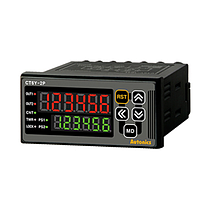
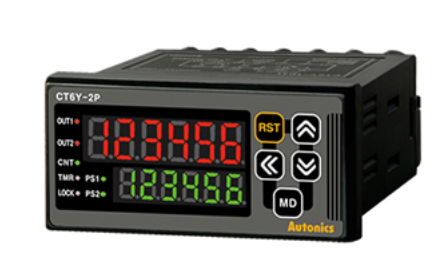
One representative product in this range is the Autonics CT6Y-2P2 Counter. Although positioned as a counter and timer-capable device rather than a basic single-function relay, it illustrates the broader role of timing products in industrial control. It supports multiple operating methods for counting and timing, with configurable functions that can suit different machine sequences and signal conditions.
This type of device is relevant when an application needs more than a fixed delay. Features such as selectable count direction, multiple input methods, and configurable output behavior can be useful in packaging, indexing, batching, and general automation panels. For buyers already standardizing on Autonics, this kind of multifunction unit can be a practical option where timing and counting functions overlap in one control point.
Manufacturers commonly considered for timing and relay control
Supplier preference often depends on project standards, panel design practices, and the level of functional flexibility required. In this category, buyers may compare offerings associated with manufacturers such as Agastat - TE Connectivity, Autonics, Eaton, Littelfuse, OMEGA, and other established names listed for industrial control applications.
Some brands are selected for straightforward panel timing functions, while others are preferred in projects that combine relay control with broader automation, measurement, or electrical protection requirements. Instead of focusing only on brand familiarity, it is usually more useful to compare timing modes, input/output logic, power compatibility, and installation requirements against the actual sequence the machine or panel needs to perform.
How timer relays fit into a wider relay ecosystem
Time delay relays are rarely chosen in isolation. In many industrial systems, they are one part of a larger switching and control arrangement that may include interface relays, monitoring devices, protective components, and application-specific relay types. Understanding that broader context helps avoid selecting a timer that works electrically but does not integrate well with the rest of the panel.
For example, designs involving sensitive signal handling may call for different relay technologies such as low signal PCB relays, while higher switching frequency or load characteristics may point toward another product family entirely. Reviewing the complete control path often leads to a better device choice than looking at timing range alone.
Choosing the right category for your application
If your goal is to introduce a controlled delay, create a repeatable timing sequence, or combine timing with counter-style logic in industrial equipment, this category is the right place to start. The most suitable product will depend on whether the application needs a simple relay-based delay, a multifunction timing unit, or a device that can process higher-speed input signals in addition to timing tasks.
A careful review of operating mode, power supply, output type, installation method, and environmental conditions will usually narrow the selection quickly. For OEM design, retrofit projects, and maintenance replacements alike, choosing the right timer relay helps improve control consistency while keeping panel logic easier to understand and service over time.
For industrial buyers, engineers, and maintenance teams, the value of a timer relay comes from predictable control rather than complexity. By matching the timing function to the real sequence requirement and the surrounding relay architecture, it becomes much easier to build reliable, serviceable automation panels that perform consistently in day-to-day operation.
Get exclusive volume discounts, bulk pricing updates, and new product alerts delivered directly to your inbox.
By subscribing, you agree to our Terms of Service and Privacy Policy.
Direct access to our certified experts