Cobot & Accessories
When a collaborative robot is added to a workstation, the arm itself is only part of the solution. Real productivity often depends on the surrounding hardware: mounting structures, sensor brackets, pedestals, mobile carts, feeder setups, and operator-facing accessories that help the cobot fit safely and efficiently into the process. This is where Cobot & Accessories becomes especially important for engineering teams building flexible automation cells.
On this page, buyers and integrators can explore accessory options that support cobot deployment in assembly, machine tending, inspection, and material handling environments. Rather than treating accessories as afterthoughts, it makes more sense to view them as part of the overall robot workstation architecture, influencing reach, stability, ergonomics, maintenance access, and changeover speed.
Why accessories matter in cobot integration
A collaborative robot may be compact and relatively easy to deploy, but its real-world performance depends heavily on how it is positioned and supported. A poorly chosen pedestal, bracket, or mobile base can reduce usable reach, create cable management issues, or make service access more difficult than necessary. Well-matched accessories help translate cobot capability into a practical, repeatable production setup.
In many projects, the accessory layer also determines how adaptable the cell will be over time. A workstation that includes adjustable mounts, sensor mounting hardware, or mobile assembly structures can make it easier to reconfigure layouts, add peripherals, or move the cobot between stations. For teams also comparing broader cobot controller options, it is useful to evaluate mechanical support and workstation accessories at the same time.
Typical product types found in this category
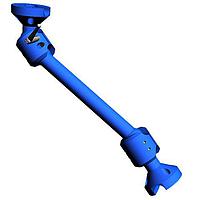
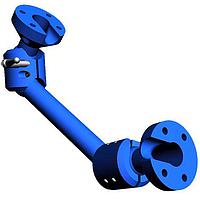
This category commonly supports the physical and functional ecosystem around the robot. That includes robot mounting kits, pedestals, monitor arms, sensor mounts, parts feeder components, mobile carts, and tool storage integrated into automation workstations. Each serves a different role, but all contribute to making the cell more usable on the factory floor.
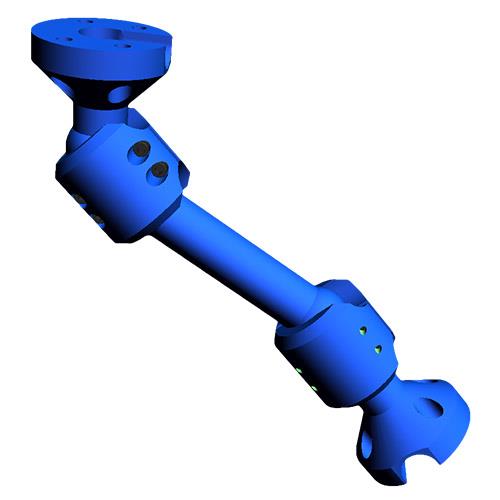
For example, a dedicated pedestal can place the cobot at a more effective working height, while a sensor mount helps align sensing devices consistently within the application. A monitor arm can improve HMI or display placement for operators, and a mobile assembly cart can support flexible manufacturing where the cobot station needs to be repositioned. If you are evaluating complete robot-related hardware beyond this page, the wider cobot accessory range may help provide additional context across similar solutions.
Representative Swivellink solutions for robotic workstations
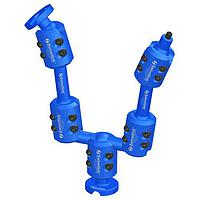
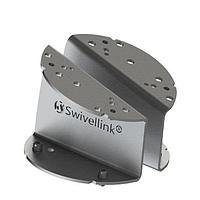
Swivellink is one of the most relevant manufacturers in this category, particularly for practical workstation hardware and robotic mounting components. Products such as the RB-MP-UR5E-10E-KIT robot mounting kit illustrate the role of dedicated mounting hardware in securing collaborative robots within a structured automation cell. For applications requiring a fixed elevated base, the RB-PED-18-CB200 robot pedestal is a useful example of how pedestal systems can support cobot positioning.
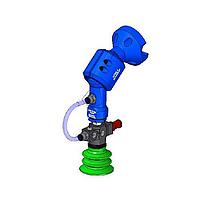
Other examples in the lineup show how accessories extend beyond the robot base itself. The SLM-8 sensor mount is relevant where barrel-style sensors need stable mounting, while the SLM-100100100-9 single arm basic kit supports display placement in workstation environments. For more mobile setups, products such as the RB-MCA-24KIT-MET and RB-MCA-42KIT-IMP mobile assembly kits highlight how carts and portable structures can support flexible deployment across production areas.
Supporting parts flow, tools, and operator efficiency
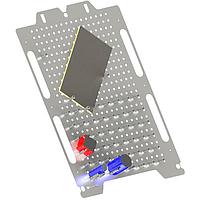
Many cobot applications are only as efficient as the surrounding material presentation and operator interface. Accessories such as parts feeder kits and templates can help deliver components to the working zone in a more organized and repeatable way, reducing unnecessary motion and supporting more stable cycle times. The RB-PPS-18CB200-45KIT parts feeder kit and the RB-PFT-PB25-KIT parts feeder template are good examples of hardware that supports the broader handling and presentation side of the process.
Tool storage can also play a practical role in daily operations. A mobile cart toolbox such as the RB-MTC-TBOX-5D or RB-MTC-TBOX-1D helps keep change parts, hand tools, and maintenance items close to the station without creating clutter. In environments where the cobot is part of a modular cell, these details can improve uptime and make setup changes easier for technicians and operators.
How to choose the right cobot accessories
The best selection process starts with the actual task, not just the robot model. Consider whether the cobot will be fixed in place or moved between stations, whether the application needs integrated sensing, and how operators will interact with the cell. From there, evaluate mounting height, reach, workspace access, floor space, and whether the accessory must support future changes in tooling or layout.
It is also important to think in terms of the complete workstation. A pedestal may solve robot placement, but you may also need a sensor bracket, monitor mount, or parts presentation hardware to make the station fully usable. For teams building out a broader automation environment, related categories such as educational robotic kits can also be relevant in training, prototyping, or lab-based validation contexts before full production rollout.
What to evaluate before ordering
Before purchasing, check the intended compatibility between the accessory and the robot or workstation design. Mechanical fit, mounting interface, physical dimensions, and overall load expectations all matter, especially for pedestals, robot mounts, and mobile assemblies. Even when the accessory seems straightforward, a small mismatch in footprint or mounting pattern can affect installation time and system stability.
It is also worth reviewing how the accessory fits into maintenance and expansion plans. A solution that supports cleaner routing, easier access, or modular add-ons may offer better long-term value than a simple one-purpose fixture. In B2B environments, these practical considerations often have a direct effect on commissioning effort and total integration cost.
Building a more complete cobot workstation
Cobot accessories are not just secondary items around the edge of an automation project. They influence how well the robot integrates into the workspace, how reliably peripherals are positioned, and how easily the station can adapt as production needs change. From robot pedestals and mounting kits to sensor brackets, monitor arms, mobile assembly structures, and parts feeder hardware, the right supporting components help turn a cobot installation into a usable production asset.
If you are planning a new robotic cell or refining an existing one, this category is a practical place to compare the accessory hardware that shapes deployment quality. A well-chosen combination of mounts, support structures, and workstation elements can make cobot integration more organized, more maintainable, and better aligned with the realities of industrial operation.
Get exclusive volume discounts, bulk pricing updates, and new product alerts delivered directly to your inbox.
By subscribing, you agree to our Terms of Service and Privacy Policy.
Direct access to our certified experts