Chamfering Machine
Clean, consistent edge preparation has a direct impact on assembly quality, weld readiness, operator safety, and the overall finish of machined parts. For workshops handling steel plate, pipe, structural components, or smaller precision parts, choosing the right Chamfering Machine helps reduce burr-related issues while improving process repeatability.
This category brings together portable and shop-floor chamfering solutions for different materials, edge shapes, and working conditions. Whether the requirement is a light handheld unit for quick deburring or a heavier machine for wider bevels on thicker workpieces, the selection can be matched to the part geometry, chamfer angle, and production volume.
Why chamfering matters in machining and fabrication
After cutting, drilling, or machining, many components are left with sharp edges or small burrs. These edge conditions can interfere with assembly, create handling risks, and affect later operations such as welding, coating, or dimensional inspection. A controlled chamfer helps create a cleaner transition at the edge while improving part usability.
In practical production, chamfering is often used to support smoother insertion during assembly, reduce stress concentration at corners, and prepare edges for joining processes. On plates and pipes, bevel quality also influences weld consistency. For that reason, chamfering equipment is commonly used alongside other shop systems such as compressed air treatment equipment when pneumatic tools are part of the workflow.
Common chamfering tasks covered by this category
The scope of this category includes machines designed for several typical edge-finishing jobs. Some units are built for straight external edges on flat workpieces, while others are better suited to holes, circular features, or pipe ends. This distinction is important because cutter style, support method, and machine weight all affect the final result.
For example, compact handheld models are useful when operators need flexibility for on-site work or small-batch processing. Larger bench or floor-capable machines are more appropriate when the target is a wider bevel, thicker material, or a more stable feed over long edges. In both cases, the goal is the same: a predictable chamfer angle and a uniform surface along the edge.
Representative machine types and applications
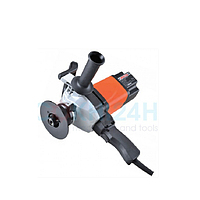
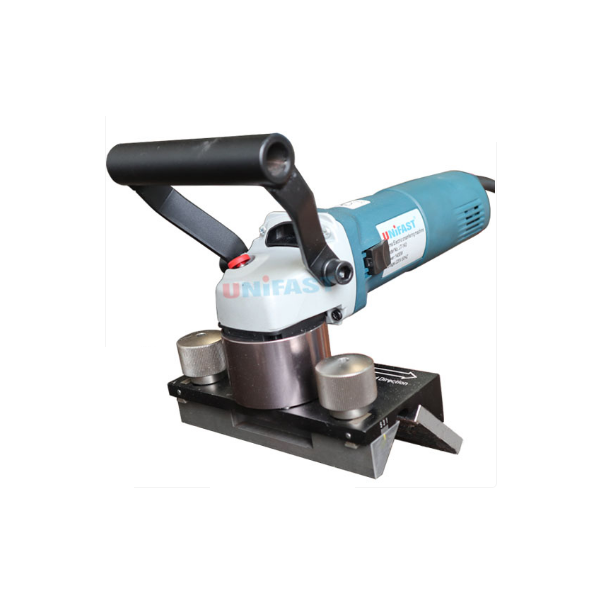
Portable electric chamfering machines are often chosen for general edge deburring and light to medium bevel work. Models such as the Unifast JT-120 Chamfering Machine (660W) and Unifast JT-140 Chamfering Machine illustrate this use case well, offering a 45-degree chamfer format for routine metalworking tasks where portability and ease of handling are important.
For internal edges or smaller circular features, a compact round-type design may be more suitable. The Unifast JT-100 Chamfering Machine (660W) and the pneumatic Unifast MAC-09 Chamfering Machine fit applications where lighter weight, access to smaller diameters, or higher spindle speed is beneficial. Pneumatic options are especially relevant in plants that already operate compressed air systems and want a lightweight tool for repetitive edge breaking.
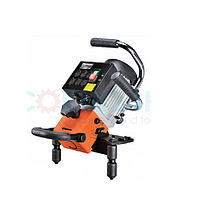
When the workload involves thicker material or broader angle flexibility, heavier-duty machines become more relevant. The JIUN TING range includes examples such as JT-12W and JT-20W for wider chamfering capability on thicker workpieces, while JT-200, JT-200A, and JT-250GS are suitable references for edge beveling on plate-type parts with multiple angle requirements.
Plate, pipe, and hole chamfering: choosing by workpiece shape
Workpiece geometry should be one of the first selection criteria. Flat bar, steel plate, and structural edges usually need machines that can track a straight edge with stability, especially when a wider chamfer must remain even across the entire length. Machines with guided support and suitable cutter arrangements are often preferred for this kind of job.
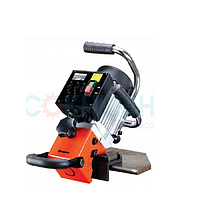
Pipe and tube preparation requires a different approach. The AGP EB24R Pipe Chamfering Machine is an example oriented toward pipe-end work, where consistent edge preparation is needed before fit-up or welding. For flat steel plate applications, the AGP EB24 Steel Plate Chamfering Machine represents a more suitable format. If hole edges or smaller circular openings are involved, compact round-cutter machines are generally easier to position and control.
Key factors to compare before buying
A practical comparison usually starts with chamfer angle, maximum depth or width, and the type of material to be processed. Many common applications use a 45-degree chamfer, but some jobs require a broader angle range. If the production involves both deburring and weld preparation, angle flexibility may be more important than raw speed alone.
Power source is another major factor. Electric machines are convenient for general workshop use, while pneumatic models can be attractive where low tool weight and high rotational speed are priorities. Buyers should also consider machine weight, voltage compatibility, and whether the machine will be used on a bench, at a fabrication line, or in field service conditions.
For operations that are part of a larger thermal or fabrication process, it may also be useful to review related equipment such as an industrial water cooler / chiller where temperature management supports nearby production machinery. The best choice is usually the one that fits the actual process flow rather than the broadest specification on paper.
Understanding portable versus heavy-duty chamfering machines
Portable chamfering machines are typically preferred for mobility, quick setup, and smaller parts. They are a strong fit for maintenance teams, site fabrication, repair work, and shops that process varied part sizes in short runs. Their advantages are flexibility and operator convenience, especially when the workpiece cannot easily be moved.
Heavy-duty chamfering machines, by contrast, are better suited to repeated processing of larger or thicker sections. They offer more stable support for wider bevels and can be more efficient when consistency across batches is critical. In production environments, this can help reduce rework and improve downstream operations such as fit-up and welding.
How to match a model to your application
If the main task is everyday edge finishing on plate or bar stock, a compact electric unit like the Unifast JT-120 or JT-140 may be enough. For small holes, curved edges, or lighter handheld work, the JT-100 or MAC-09 format may be more practical. Where thicker workpieces and adjustable angle ranges are involved, the JIUN TING JT-12W or JT-20W are more relevant examples to evaluate.
For dedicated pipe preparation, the AGP EB24R stands out as a more application-specific choice, while the AGP EB24 is aligned with steel plate beveling. Looking at the shape of the workpiece, required chamfer profile, and frequency of use will usually narrow the selection much faster than comparing motor figures alone.
Final considerations for industrial buyers
A suitable chamfering machine should support the real demands of the job: cleaner edges, safer handling, smoother assembly, and more consistent preparation for welding or finishing. The right selection depends less on brand count and more on matching machine format to part shape, target angle, and working environment.
Across this category, buyers can compare portable, pneumatic, plate-focused, and pipe-focused solutions from established names such as Unifast, JIUN TING, and AGP. Reviewing the intended application first will make it easier to shortlist the most appropriate machine and build a more reliable edge-preparation process.
Get exclusive volume discounts, bulk pricing updates, and new product alerts delivered directly to your inbox.
By subscribing, you agree to our Terms of Service and Privacy Policy.
Direct access to our certified experts