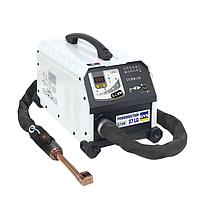
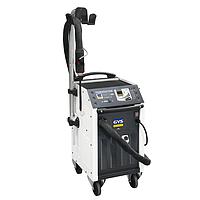
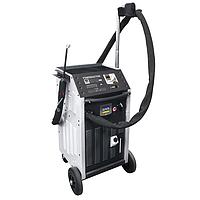
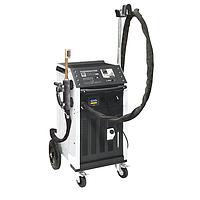
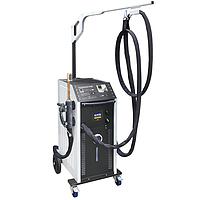
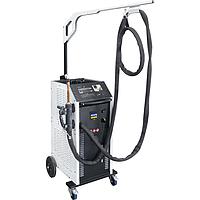
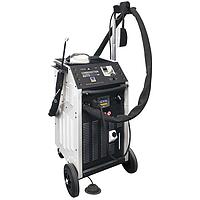
Induction Heating
Fast, controlled heat is critical in many industrial tasks, especially when parts need to be loosened, fitted, repaired, or processed without unnecessary contact or open flame. In these situations, Induction Heating is valued for its ability to deliver targeted energy directly to the workpiece, helping improve repeatability, operator control, and workflow efficiency.
This category brings together equipment and supporting components used in induction-based heating setups for industrial environments. It is particularly relevant for workshops, maintenance teams, metalworking operations, and production lines that need localized heating for fastening, forming, repair, or related thermal processes.
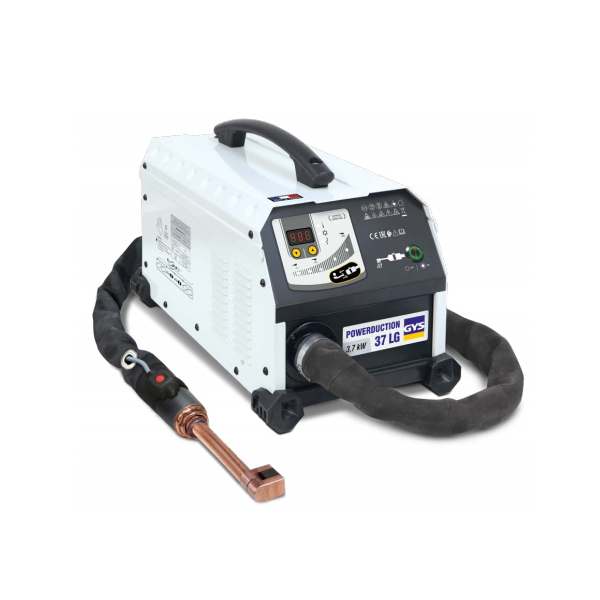
How induction heating fits into industrial work
Induction heating systems generate heat within conductive materials through electromagnetic principles, allowing rapid and localized temperature rise without direct contact between the heat source and the part. In practical use, this makes the process well suited to jobs where precision, speed, and cleaner operation matter.
Compared with more generalized heating approaches, induction is often chosen when users want to reduce heat spread to surrounding areas, improve handling on metal components, or support repeatable procedures in repair and production settings. In broader process environments, it may be used alongside supporting equipment such as industrial water chillers when thermal management is part of the overall installation.
What you can expect in this category
This range is not limited to one type of device. It includes core heating accessories as well as supporting items that help complete or maintain the operating setup. That is important in industrial purchasing, because effective use of induction equipment often depends on selecting the right inductor, adapter, handling accessory, and protective component for the job.
Examples from this category include the GYS ecosystem, with items such as the GYS 065000 Inductor L180 Spiral, GYS 064874 Inductor, and GYS 059795 Inductor L180 for application-specific heating tasks. Supporting parts such as the GYS 064508 Adapter, GYS 064515 Adapter 32L, and GYS 075955 Trolley for Inductor show that this category also serves users who need to configure, move, or adapt their induction setup rather than simply replace a single standalone unit.
Key accessory types and their roles
In many induction applications, the heating head or inductor geometry strongly influences how energy is delivered to the target area. Spiral and shaped inductors are commonly selected to match part size, access constraints, and the area that needs to be heated. Choosing the right form factor can help improve consistency and reduce unnecessary heating of adjacent material.
Adapters and ferrite-related components also play an important role in system integration and magnetic field management. Products such as the GYS 053755 3 x B4 Ferrite and GYS 054844 3 x B4 Ferrite Casing are relevant in setups where magnetic path control, component protection, or replacement of wear items is part of routine maintenance. Additional items like the GYS 050853 Protection Cover and GYS 079441 Pulley for Powerduction support safer handling and more practical day-to-day operation.
Typical industrial use cases
Localized metal heating is useful in repair and maintenance work, especially when technicians need to release seized parts, prepare components for fitting or removal, or apply controlled heat to a limited zone. This can be advantageous in environments where open-flame methods are undesirable or where better process control is needed around nearby assemblies.
Induction tools and accessories are also relevant in production and fabrication settings where repeatable heating steps must be integrated into an organized process. Depending on the workflow, users may combine induction equipment with nearby process systems such as compressed air treatment equipment or other industrial machinery to support stable, clean, and efficient operation across the work area.
How to choose the right induction heating equipment
Selection usually starts with the workpiece and the task rather than the part number alone. Buyers should consider the material being heated, the size and shape of the target area, access around the part, duty expectations, and whether the requirement is for heating, loosening, fitting, or another process step. These factors help determine whether a spiral inductor, a more specialized inductor shape, or a specific adapter is the better fit.
It is also worth checking the supporting hardware needed for practical use. Mobility and workstation layout may make a trolley or arm useful, such as the GYS 160/220LG Overhanging Arm or the GYS 075955 Trolley for Inductor. In systems where cooling and upkeep matter, consumable or maintenance-related items like the GYS 052246 10L Can of Welding Coolant can also be relevant to long-term operation.
Why system compatibility matters
One of the most common purchasing challenges in this type of category is compatibility. Inductors, adapters, ferrite components, covers, and handling accessories are often selected as part of a broader system, so buyers should evaluate them in relation to the existing induction unit, the intended application, and the physical constraints of the workspace.
This is especially important for replacement and expansion orders. A component that appears similar in function may serve a different geometry, mounting arrangement, or operating context. Reviewing the intended role of each accessory within the complete setup helps reduce procurement errors and supports smoother installation, operation, and maintenance.
Supporting reliable operation in industrial environments
In production and maintenance settings, uptime depends not only on the main heating equipment but also on the small components that support safe and repeatable use. Protective parts, ferrite elements, adapters, and motion or mounting accessories can all affect how easily a system is deployed at the workstation and how consistently it performs over time.
For facilities comparing broader thermal processing options, it can also be useful to review related categories such as heat shrinking machines when the application involves controlled heat for fitting, packaging, or process handling in a different form. This helps buyers align equipment choice with the actual process requirement rather than relying on one heating method for every task.
Finding the right fit for your application
This category is designed for buyers who need more than a generic heating tool. From inductors and adapters to ferrite components, protective accessories, and handling hardware, the available range supports a more complete approach to industrial heating integration. Whether the priority is targeted heating, easier servicing, or maintaining compatibility with an existing setup, the right selection depends on the job, the system, and the operating environment.
By reviewing application needs carefully and matching accessories to the intended process, it becomes easier to build an induction heating solution that is practical, maintainable, and aligned with day-to-day industrial use.
Get exclusive volume discounts, bulk pricing updates, and new product alerts delivered directly to your inbox.
By subscribing, you agree to our Terms of Service and Privacy Policy.
Direct access to our certified experts