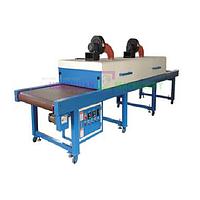
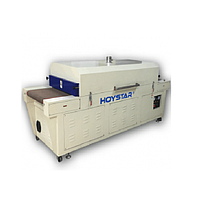
Infrared dryer
Fast, consistent drying is a critical step in many production lines, especially where surface curing time directly affects throughput, finish quality, and handling speed. In these environments, infrared dryer systems are often chosen for their ability to deliver controlled heat efficiently across textiles, printed materials, coated parts, and other conveyor-based processes.
This category focuses on equipment designed for continuous or batch drying with infrared heating, including tunnel-style machines, compact desktop units, flash dryers, and drying ovens. Whether you are setting up a small workstation or expanding a higher-volume line, the right configuration depends on material size, required temperature range, conveyor format, and the level of process continuity you need.
Where infrared drying equipment fits in production
Infrared heating is commonly used when products need rapid surface heating without relying only on long dwell times or bulky thermal systems. In practical terms, these machines help reduce waiting time between process stages, improve workflow continuity, and support more stable drying results when line speed and temperature are controlled correctly.
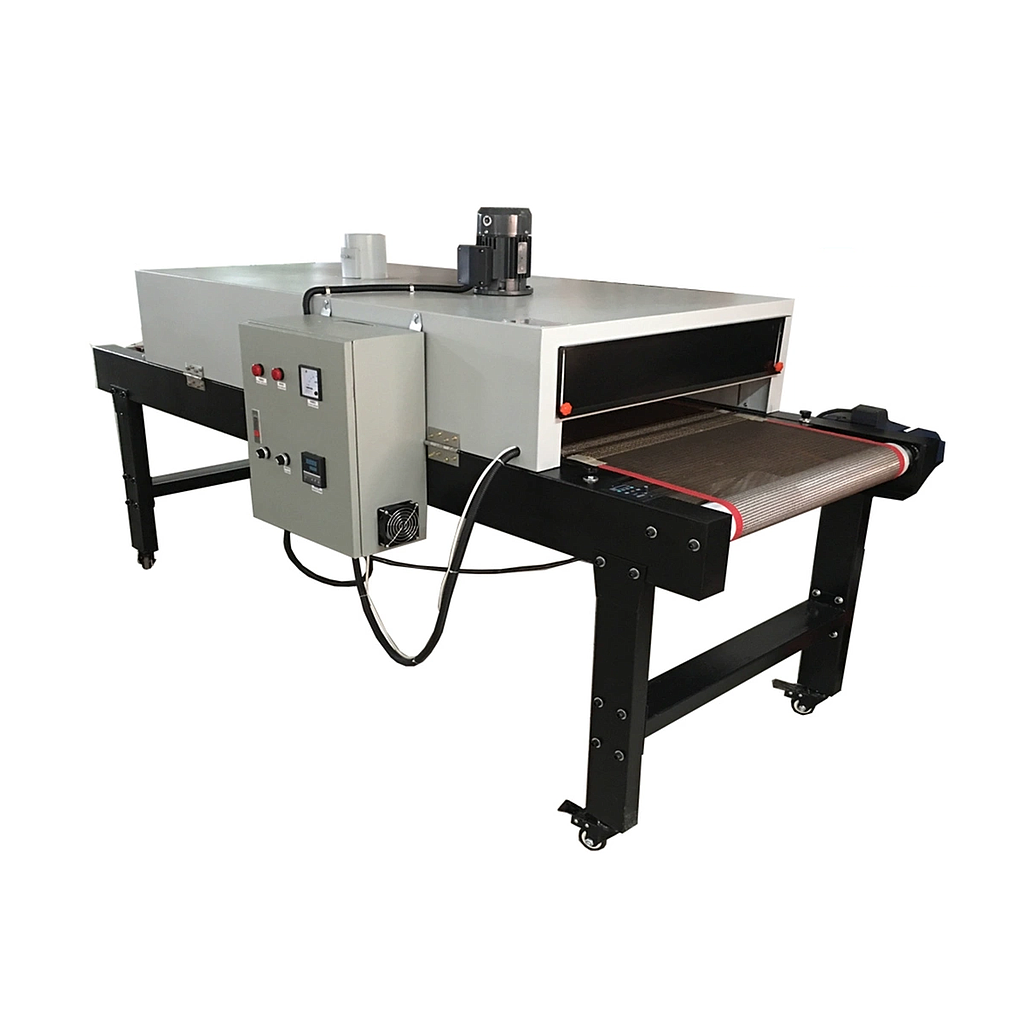
Many systems in this category are built around a conveyor and heated chamber arrangement, making them suitable for continuous processing. This is especially useful in textile decoration, printed garment finishing, light industrial curing, and similar operations where repeatability matters as much as output volume.
Main equipment types in this category
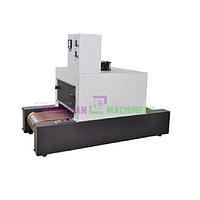
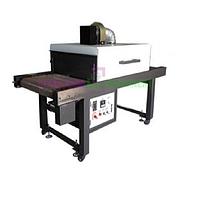
The range includes several machine formats for different operating scales. Conveyor tunnel dryers are typically selected when production requires steady movement through a heated zone. Models such as the Hoystar GW-500H, GW-600H, GW-700H, and GW-1000LH illustrate this approach, with different belt widths, heating lengths, and throughput potential depending on the size of the workpiece and target cycle time.
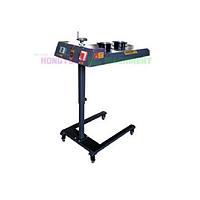
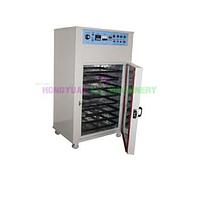
For smaller tasks or limited floor space, compact units like the Hoystar GW-200H desktop infrared drying machine can be more practical. A flash dryer such as the Hoystar GW-FD-2 may also suit localized or intermittent drying steps, while the Hoystar GW-KW-S drying oven fits batch-oriented applications where enclosed heating and broader temperature control are more relevant than conveyorized handling.
Key factors when selecting an infrared dryer
The first point to evaluate is the size of the product area that needs to be heated. Belt width, drying area, and maximum conveyoring height all affect whether the machine can handle your parts or textile pieces without creating bottlenecks. If the workpiece is wider or the process needs longer exposure time, a larger tunnel format is usually more appropriate than a compact desktop system.
The second factor is temperature and residence time. Some processes require moderate drying, while others need higher temperatures or a longer heating zone to achieve proper curing. Conveyor speed adjustment is important here because it allows operators to balance output rate with thermal exposure instead of relying on a fixed cycle.
Power supply and installation conditions also matter. Within this category, some machines are designed for single-phase operation, while others require 220V, 380V, or three-phase power. For buyers planning a complete production setup, it may also be useful to review related support equipment such as industrial chillers where thermal control elsewhere in the line is part of the wider process.
Typical features found in conveyor infrared drying systems
Several representative models in this category use Teflon conveyor belts, adjustable conveying speed, and infrared lamp heating. These features support smooth part movement, practical control over exposure time, and reliable heat delivery across a defined drying zone. Depending on the model, the machine may also include adjustable conveyoring height to accommodate different product thicknesses.
Larger units generally provide wider belts and longer heating sections for increased throughput, while mid-sized tunnel dryers are often a better fit for standard workshop production. Some machines also incorporate a hot air recycle system alongside infrared lamps, which can help stabilize heat distribution in specific drying tasks.
Examples from the Hoystar range
This category includes multiple machines from Hoystar, covering different production scales. The GW-500H and GW-600H are suitable examples for T-shirt and textile-oriented conveyor drying, while the GW-700H adds a larger working format with infrared tunnel operation. For higher-capacity requirements, the GW-1000LH offers a larger heating area and wider belt configuration intended for bigger workloads.
At the compact end, the GW-200H desktop unit is better suited to bench-level or low-volume use, where footprint and straightforward operation are priorities. The GW-FD-2 flash dryer and GW-KW-S drying oven broaden the category beyond tunnel systems, showing that infrared-related drying workflows can include both continuous and batch-oriented equipment depending on the process stage.
How infrared dryers compare with adjacent machinery
Infrared drying equipment is typically selected when direct heating and controlled exposure time are central to the process. That makes it different from equipment aimed primarily at packaging or material forming. For example, if your application is focused on film wrapping or shrink packaging, a heat shrinking machine may be the more relevant category.
In broader production environments, drying quality can also be influenced by utilities and upstream process conditions. Clean, stable air can be important in some automated lines, which is why some buyers also review compressed air treatment equipment when planning a complete installation. The right choice depends less on one standalone machine and more on how the equipment fits into the entire workflow.
Who should consider this category
This category is relevant for manufacturers, workshops, and processing facilities that need repeatable heating with manageable control over temperature, speed, and product handling. It is especially useful when drying must keep pace with production rather than remain a separate offline step. Conveyor-based designs are a strong match for continuous operation, while ovens and flash dryers can support specialized or lower-volume tasks.
Buyers comparing options should look beyond headline machine size and focus on the combination of working width, heating method, throughput expectations, and available utility connections. A well-matched system helps reduce rework, supports more predictable output, and makes it easier to integrate drying into the wider production line.
Final considerations before choosing a model
Selecting the right drying solution starts with understanding the material, the required finish, and the pace of your operation. Small-format machines can be efficient for focused applications, while larger tunnel dryers are better suited to continuous processing and higher daily output. The most practical choice is usually the one that aligns heat coverage, conveyor speed, and installation conditions with your real production needs.
If you are evaluating options in the Infrared dryer category, it helps to compare machine format, available temperature range, belt dimensions, and workflow compatibility rather than looking at power or size alone. That approach makes it easier to narrow the range to equipment that supports stable, scalable production over time.
Get exclusive volume discounts, bulk pricing updates, and new product alerts delivered directly to your inbox.
By subscribing, you agree to our Terms of Service and Privacy Policy.
Direct access to our certified experts