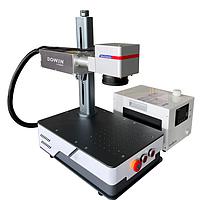
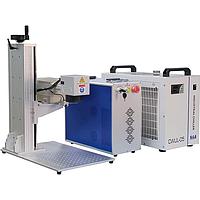
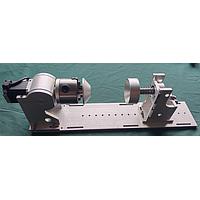
Marking machine
Permanent identification, traceability, and product personalization all depend on consistent marking quality. In production lines, workshops, mold making, and small-part engraving applications, the right equipment helps create clear marks on metal, plates, tools, cylindrical items, and custom components with better repeatability and less manual effort. This is where the Marking machine category becomes especially relevant for industrial users comparing laser and engraving-based solutions.
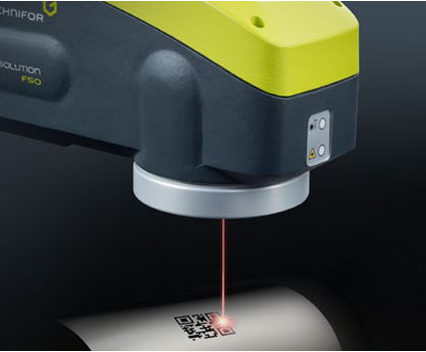
Where marking machines are used in industrial work
Marking equipment is commonly selected for applications where information must remain readable throughout manufacturing, assembly, or use. Typical examples include marking name plates, hot stamping molds, metal parts, tools, promotional items, pens, cylindrical objects, and production components that need serial, logo, or reference identification.
Depending on the process, users may need either laser marking for fast, non-contact marking on suitable materials, or mechanical engraving for shaping text and patterns into surfaces. In both cases, buyers usually focus on repeatability, marking area, supported workpiece geometry, ease of setup, and how well the machine fits into an existing workflow.
Laser marking and engraving machines serve different needs
Within this category, there is a clear distinction between fiber laser systems and compact CNC or gravo engraving machines. Fiber laser units are often chosen when speed, fine detail, and non-contact processing are priorities, especially in metal marking tasks. Mechanical engraving machines, on the other hand, are useful when users need engraved depth, mold-related work, name plate processing, or flexible handling of small customized parts.
For buyers evaluating process fit, it helps to think in terms of output requirements rather than only machine type. If the priority is fast coded identification with fine line control, a fiber laser option may be more appropriate. If the task involves hot stamping mold engraving, plate work, or specialized geometry such as pens and cylinders, a dedicated engraving platform can be the better match.
Representative solutions from Aczet and Yoosungeng
This category includes selected equipment from Aczet and Yoosungeng, covering both laser-based and mechanical marking requirements. These brands illustrate the range of applications industrial buyers may need to cover, from compact laser marking to small CNC engraving and gravo-style engraving for standard or cylindrical objects.
On the laser side, examples such as the Aczet LM 20 Fiber Laser Marking Machine and Aczet CFM 20F Fiber Laser Marking Machine show a typical fiber marking setup with pulsed laser source, compact footprint, and fine minimum marking capability. On the engraving side, models like the Yoosungeng IMP-C1 for hot stamping molds, IMP-350 and IMP-300 small CNC engraving machines, and the IMP-20 name plate engraving machine reflect applications where controlled tool movement and compact working envelopes matter.
For broader engraving tasks, the Yoosungeng IS400 Gravo Engraving Machine, IS400 VOL for cylinders, M40G for wine and cylindrical engraving, M40 STANDARD for multipurpose jobs, and IS200 for pen engraving demonstrate how machine choice can depend heavily on workpiece shape and fixture requirements rather than size alone.
Key factors to compare before choosing a marking machine
The first point to review is the marking method. Fiber laser systems typically suit high-speed marking with fine detail, while mechanical engraving machines are better aligned with cutting or inscribing operations where physical contact with the material is needed. This choice affects not only mark appearance, but also maintenance needs, tooling, material compatibility, and throughput expectations.
The second factor is working area and part geometry. Some machines are built for small, flat parts, while others are more suitable for molds, name plates, pens, or cylindrical components. A compact machine with a limited work envelope may be ideal for bench use and small precision work, whereas a larger engraver with cylinder capability is more relevant for specialized customization or industrial batch processing.
It is also important to look at resolution, repeatability, spindle or laser performance, and ease of operation. For many B2B buyers, the practical questions are straightforward: how small the text or pattern needs to be, how often setups change, whether operators need a compact desktop form factor, and whether the machine will be used for occasional custom work or routine production marking.
How application type influences machine selection
If your work mainly involves metal identification, production coding, or detailed permanent marks on compact components, a fiber laser system can be an efficient route. Machines such as the Aczet laser models in this category are representative of setups designed for fine marking accuracy, compact installation, and stable operation in industrial environments.
For mold shops, toolrooms, and custom engraving tasks, a small CNC engraver may offer better process control. The Yoosungeng IMP-C1 is relevant when hot stamping mold work is part of the requirement, while the IMP-30, IMP-300, and IMP-350 provide options for small-format engraving with different working capacities. If your business handles presentation items, cylindrical products, or personalized goods, gravo engraving machines like the IS400 VOL or M40G can be more suitable because they align better with rounded workpieces.
Supporting equipment may also matter in some installations. For example, thermal management can be relevant in broader machinery setups, and some users may also review related systems such as industrial water chillers when planning surrounding equipment for production environments, even though not every marking machine in this category requires the same cooling approach.
Choosing for workshop use, customization, or production environments
Not every buyer needs the same balance of speed, footprint, and flexibility. A compact engraving machine can be a practical fit for workshops, maintenance departments, and custom fabrication teams that need occasional but precise marking. In these cases, ease of setup and the ability to handle varied small parts may be more important than maximum production speed.
For production-oriented use, consistency and process repeatability usually become more important. That often means evaluating whether the machine supports stable positioning, convenient axis adjustment, and reliable operation over repeated cycles. Users building a broader shop-floor process may also compare adjacent machinery categories such as heat shrinking machines or compressed air treatment equipment when organizing complete manufacturing or packaging workflows.
Practical buying considerations for B2B procurement
Before purchasing, it is worth mapping the machine to actual production requirements: material type, expected mark size, workpiece dimensions, daily operating volume, and whether the task is identification, decorative engraving, or mold-related processing. This step usually prevents overbuying on power or underbuying on working area and fixture capability.
Procurement teams should also consider operator skill level, maintenance approach, and how many product variants must be handled. A machine used for repeated name plate work may benefit from simple, repeatable setups, while a machine intended for custom engraving may need greater flexibility across part shapes and applications. In either case, the goal is to select equipment that supports the real process instead of focusing only on headline specifications.
Finding the right fit in this category
This category brings together marking and engraving solutions for businesses that need durable identification, fine-detail marking, or compact engraving capability across different workpieces. With examples from Aczet and Yoosungeng, users can compare laser-based and mechanical options based on application type, part geometry, workspace limits, and process expectations.
If you are narrowing down options, start with the marking method, then review work area, part shape, and required precision. That approach usually leads to a much clearer shortlist and a marking machine that fits both current production needs and future customization work.
Get exclusive volume discounts, bulk pricing updates, and new product alerts delivered directly to your inbox.
By subscribing, you agree to our Terms of Service and Privacy Policy.
Direct access to our certified experts