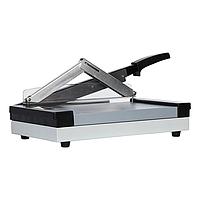
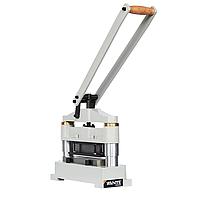
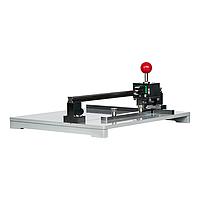
Sample Cutting Machine
Accurate specimen preparation has a direct impact on testing quality, repeatability, and downstream analysis. When a sample is cut cleanly and consistently, laboratories and production teams can reduce variation, protect material structure, and improve confidence in mechanical, metallurgical, or application-specific results. That is why choosing the right Sample Cutting Machine is an important step in many industrial and laboratory workflows.
This category covers equipment used to cut, notch, or prepare samples for inspection, material testing, and process control. Depending on the material and the testing method, the required solution may range from a high-speed cutter for metallographic work to a laser-based system for precise non-contact cutting, or a dedicated notching unit for impact specimens.
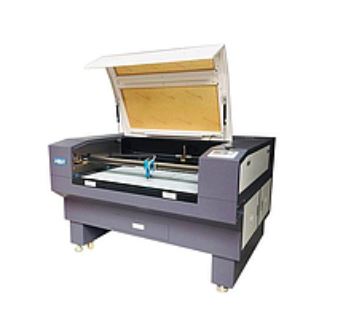
Where sample cutting machines are used
Sample cutting equipment is used across materials testing, quality assurance, research laboratories, manufacturing support, and technical education. The common objective is to produce test pieces with the correct shape, size, and edge quality before the next step, whether that is tensile testing, impact testing, microscopic examination, marking, or dimensional inspection.
Typical applications include preparing metal specimens, asphalt mixture plates, polymer samples, circular test pieces, and optical fiber-related parts. In some environments, the cutting stage is closely linked with cooling and thermal control, which is why related systems such as industrial chillers may also be relevant for stable machine operation and process protection.
Main types of equipment in this category
This category is broader than a single machine format. It includes abrasive and high-speed cutters, laser cutting systems, specimen notchers, and dedicated sample cutters for specific test standards or material geometries. The right selection depends on whether the priority is throughput, edge finish, heat reduction, geometry control, or compliance with a test method.
For example, high-speed cutter models such as the MTDI KANTA-100F, KANTA-100S, and KANTA-100E are suited to controlled sectioning of specimens where stable rotation speed and operator visibility matter. For contactless precision work, the Aczet CFC 50 and Aczet CFC 100 use fiber laser technology and can be considered where fine cutting or marking tasks are part of the process. For standardized impact specimen preparation, dedicated units like the Cometech QC-640A V-Notcher support consistent notch formation rather than general cutting.
Selection factors that matter in real operations
The first decision point is the sample material and geometry. Hard metals, brittle materials, asphalt mixtures, polymers, and optical fiber assemblies each respond differently to cutting force, friction, and heat. A machine that performs well for one specimen type may not be suitable for another, especially when the test result depends on preserving edge condition or internal structure.
Cutting method is equally important. Mechanical cutting systems are often chosen for robustness and practical shop-floor use, while laser systems may be preferred for fine detail, repeatability, or reduced mechanical stress. If your process includes specimen finishing and test-piece preparation, it can also be useful to review related manufacturers such as Cometech for specialized sample preparation equipment.
Other practical criteria include adjustable speed, clamping stability, safety enclosure design, ease of control, maintenance access, and coolant or filtration handling. In quality-focused environments, operators also pay close attention to repeatability, because even small variations in sample preparation can influence the final measurement or test outcome.
Examples of machines and their typical roles
Some products in this category are designed for very specific preparation tasks. The Samyon SY-0850 Asphalt Mixture Plate Cutting Machine is a good example of a dedicated solution for asphalt sample cutting, where stable structure, controlled feed, and smooth cutting surfaces are important for specimen quality. This kind of equipment is typically selected when sample dimensions and consistency are part of a repeatable testing routine.
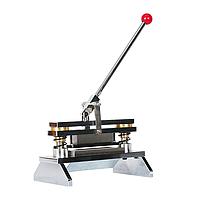
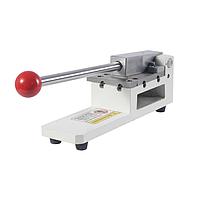
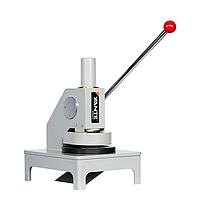
The Cometech QC-PS Circular Sample Cutter serves a different purpose, supporting the preparation of circular specimens for test methods that require a defined sample area. Likewise, the Cometech QC-105D Spherical-Stress Sample Notcher and QC-640A Impact Specimen V-Notcher are not general-purpose cutters, but preparation tools aimed at creating specific specimen features needed for testing.
For more advanced precision work, Aczet laser cutting machines such as the CFC 50 and CFC 100 offer a different process route. In optical and photonics-related tasks, the THORLABS LCM10 CO2 Laser Fiber Cutter addresses highly specialized cutting requirements where connector formats, fiber handling, and repeatable cut height are important considerations.
Why cutting quality affects test reliability
A specimen is only as useful as the quality of its preparation. Poor cutting can introduce burrs, microcracks, deformation, overheating, or dimensional inconsistency. These issues may alter the behavior of the sample during testing or complicate subsequent inspection under magnification.
This is especially critical in material testing and sample preparation workflows where the test standard expects defined geometry or notch quality. Clean, repeatable cutting helps reduce rework and supports more reliable comparison between batches, operators, or production lots. In many labs, the cutting stage is treated as part of the measurement system rather than just a preliminary operation.
Operational considerations for industrial buyers
For B2B procurement, machine choice is not only about cutting capability. Buyers usually evaluate installation space, power supply compatibility, operator safety features, maintenance workload, and long-term suitability for the expected sample volume. A stand-alone high-speed cutter may fit a metallography or QA room, while a compact specialized cutter may be more appropriate for dedicated test preparation benches.
It is also worth considering how the cutter fits into the wider production or laboratory workflow. Some operations require upstream material handling and downstream conditioning, storage, or packaging steps. In broader processing environments, nearby equipment categories such as paper processing machinery or heat shrinking machines may form part of the overall line, even if their function is separate from specimen preparation.
Choosing the right solution for your application
There is no single machine type that fits every sample preparation task. A suitable choice depends on the material being processed, the target sample dimensions, the acceptable level of thermal or mechanical influence, and whether the application calls for general sectioning, precision laser cutting, or standardized notching. Reviewing the intended test method in advance is often the fastest way to narrow down the most relevant machine format.
Within this category, buyers can compare equipment for asphalt specimen cutting, high-speed metallographic sectioning, circular sample preparation, impact specimen notching, and laser-based cutting tasks. That makes the category useful for both laboratories seeking repeatable preparation and industrial users who need practical, process-oriented cutting equipment for routine work.
When sample integrity, edge quality, and repeatability matter, selecting the appropriate cutting system can make a measurable difference to the entire workflow. Explore the available machines in this category to find a solution aligned with your material type, test method, and production environment.
Get exclusive volume discounts, bulk pricing updates, and new product alerts delivered directly to your inbox.
By subscribing, you agree to our Terms of Service and Privacy Policy.
Direct access to our certified experts