
Screen Printing Machine
When print quality, repeatability, and production speed all matter, choosing the right machine setup becomes a practical production decision rather than a simple equipment purchase. In many manufacturing and decoration workflows, screen printing remains a reliable process for applying graphics, logos, markings, and functional layers across a wide range of materials and product shapes.
Screen Printing Machine solutions in this category cover different production needs, from manual cylindrical printing to automatic equipment for socks, balloons, and optical glass applications. The range is especially relevant for users who need stable throughput, consistent print registration, and a machine layout matched to the geometry of the item being printed.
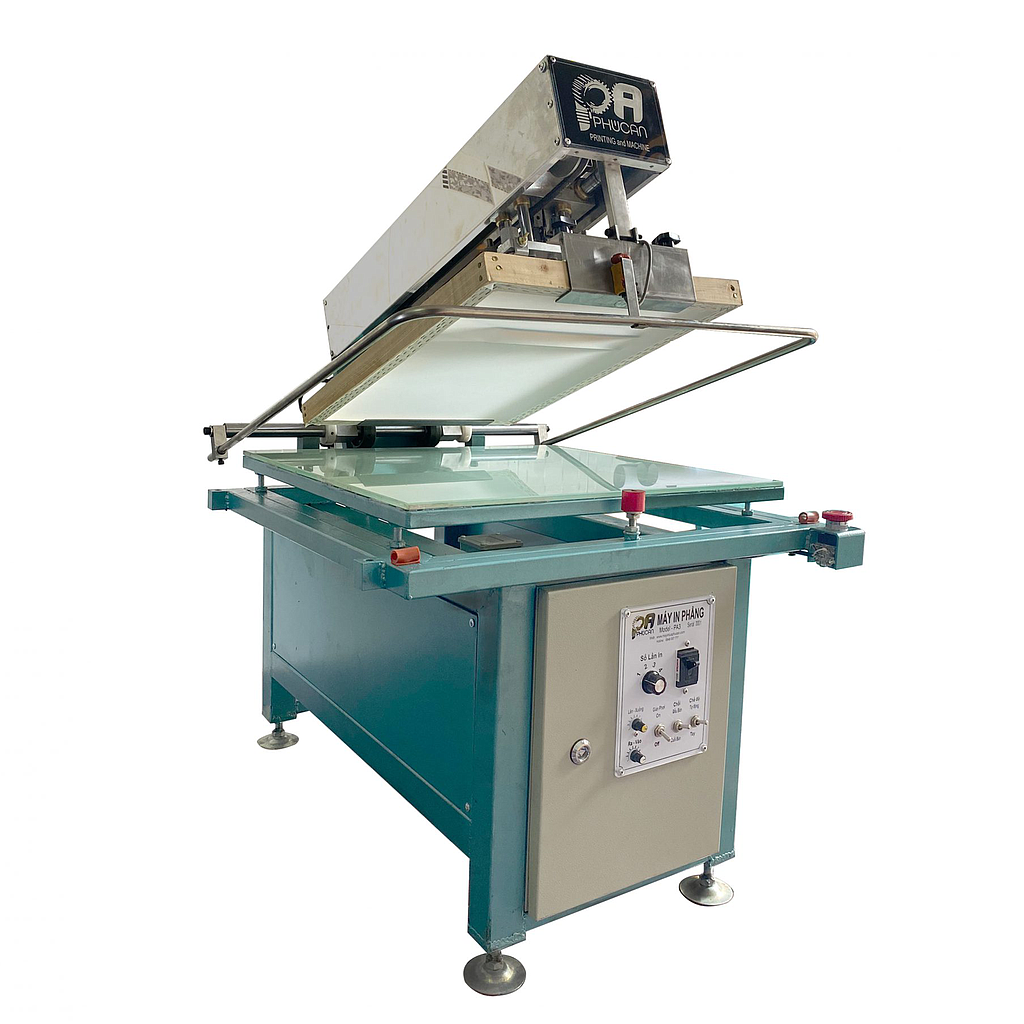
Where screen printing machines fit in industrial production
Screen printing is widely used when a process needs controlled ink deposition, repeatable image transfer, and compatibility with flat, curved, or specialty surfaces. Compared with more generic marking methods, this approach is often selected for applications that require durable prints, solid coverage, or support for different substrate formats.
In practice, machine selection depends heavily on the product being processed. A production line printing on optical glass has very different precision requirements from a line printing anti-slip patterns on socks or logos on latex balloons. That is why this category includes equipment designed around application-specific printing rather than a one-size-fits-all platform.
Typical machine types in this category
The product mix shows several distinct equipment groups. For flat and high-accuracy work, the Hoystar GW-JM-SZJ Automatic Image Position Optical Glass Screen Printing Machine is oriented toward optical glass printing, where image positioning and repeatability are central to process stability. This type of equipment is suited to operations that need precise alignment and controlled production speed instead of purely high-volume decorative output.
For textile-related applications, models such as the Hoystar GW-100TRS-F8, GW-200TRS-WZ, GW-100TRS-F10, and GW-RS are designed around socks printing workflows. These machines typically support repeated logo or anti-slip pattern printing with multi-station layouts and integrated drying sections, helping production teams maintain a steady cycle through loading, printing, and curing stages.
For inflatable products, balloon-focused systems such as the Hoystar GW-BL-2, GW-BL-4, GW-BL-A, GW-3A-1, and GW-QQJ-AT-1C address different output and color requirements. At the simpler end, single-color or manual-style configurations can suit smaller runs or more straightforward graphics, while full automatic multi-color equipment is more relevant when throughput and print consistency are priorities. The category also includes the Hoystar GW-Q1 manual cylindrical screen printing machine for cylindrical items where a compact, manual solution is sufficient.
How to choose the right machine for your process
A useful starting point is the shape and material of the product. Flat glass, elastic fabric items, balloons, and cylindrical parts each require different handling methods, fixturing, and print movement. A machine that performs well on one substrate type may not be appropriate for another because the registration method, contact behavior, and drying sequence can differ significantly.
The second factor is output requirement. Some users need moderate production for short or varied runs, while others need a machine capable of sustained high-volume operation. For example, balloon printing systems in this category include options with higher hourly output, while sock printing machines emphasize station-based process flow and repetitive production. If your line depends on thermal stabilization or process cooling, related support equipment such as an industrial water cooler or chiller may also become part of the broader installation.
It is also important to review utility requirements such as power supply, air pressure, and available floor space. Automatic systems generally deliver better productivity and repeatability, but they also require more planning around compressed air quality, machine footprint, and operator workflow. In plants where pneumatic components are critical, suitable compressed air treatment equipment can help support stable machine performance.
Key performance points that matter in real production
For most buyers, the decision is not based on a single speed figure. More meaningful evaluation points include print repeatability, registration stability, station configuration, drying integration, and how easily the machine matches the product handling process. A machine with a well-matched indexing or positioning concept can improve usable output even if its nominal cycle rate is not the highest in the range.
For precision-oriented work, image positioning accuracy becomes especially important. The optical glass model in this category illustrates that some applications place a premium on tight positional control. On the other hand, in products such as socks or balloons, practical concerns may include cycle continuity, print area suitability, color configuration, and whether the machine can support the intended production rhythm without bottlenecks.
Representative Hoystar solutions in this category
Hoystar is the main featured manufacturer in this range, with equipment covering several distinct printing scenarios rather than only one niche. This is useful for buyers comparing specialized machines within a single supplier ecosystem, especially when they need to evaluate differences between manual, semi-automatic, and full automatic formats.
Examples include the GW-JM-SZJ for optical glass printing, the GW-RS and GW-100TRS-F8 for socks production, and the GW-BL-A or GW-3A-1 for automatic balloon printing. Looking across these models helps clarify a practical rule: the best fit is usually the one that aligns with the product form, print complexity, and target output, not simply the machine with the largest structure or the highest listed capacity.
Related equipment around the printing line
Screen printing performance is influenced by more than the printer itself. Depending on the production setup, users may need additional process equipment for air preparation, cooling, or downstream handling. That is particularly relevant in continuous or automated environments where print quality depends on maintaining stable utilities and repeatable operating conditions.
In some packaging or finishing workflows, post-print processing may also be part of the line design. If printed products require sealed wrapping or protective final packaging, a heat shrinking machine may be relevant as a downstream complement. While not every production line needs these adjacent systems, considering them early can make installation planning more efficient.
What this category is suited for
This category is well suited for buyers looking for machines tailored to specific product types rather than generic print equipment. It supports use cases such as precision glass printing, anti-slip or logo printing on socks, balloon graphics, and cylindrical part decoration. That makes it relevant for manufacturers, contract printers, and industrial users who need a process-focused selection path.
If you are comparing options, focus first on substrate type, print area, color needs, output expectations, and utility conditions. From there, it becomes easier to narrow the choice between manual and automatic systems, between compact and multi-station layouts, and between general decorative printing and higher-precision applications. A well-matched screen printing machine can improve both day-to-day productivity and print consistency across the full production cycle.
Get exclusive volume discounts, bulk pricing updates, and new product alerts delivered directly to your inbox.
By subscribing, you agree to our Terms of Service and Privacy Policy.
Direct access to our certified experts