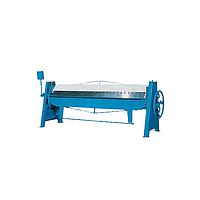
Slip Roll
Forming smooth cylinders, cones, and curved sheet metal parts starts with the right rolling setup. In fabrication workshops, maintenance departments, HVAC production, and general metalworking, a reliable Slip Roll helps turn flat stock into repeatable curved components with better control over radius, width, and material handling.
This category brings together manual and power rolling solutions for sheet metal work, with a focus on practical capacity ranges for everyday production. Whether the job involves light-gauge duct sections, guards, covers, tanks, or rounded enclosures, choosing the right machine depends on working width, material thickness, roll diameter, and the level of output your operation requires.
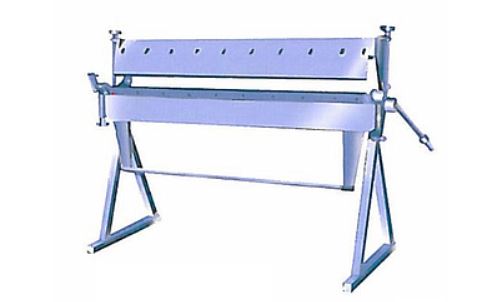
Where slip rolls fit in sheet metal fabrication
A slip roll is used to curve flat sheet material by passing it through a set of rollers that gradually form the desired radius. This makes the machine useful for producing round sections, partial curves, and cylindrical parts across a wide range of fabrication tasks. In many shops, it is one of the core machines for basic forming operations alongside cutting, bending, and folding equipment.
The category includes both hand-operated and powered configurations, so it can support small-batch work as well as more frequent production cycles. For companies building a broader forming workflow, a slip roll is often selected together with equipment such as a processing machinery line mindset for organized production planning, where each machine covers a specific shaping step.
Manual slip rolls and power rolls
One of the first decisions is whether a manual slip roll or a power roll is more suitable. Manual machines are commonly used for lighter-duty jobs, repair work, prototyping, and smaller production volumes. They offer straightforward operation and are often preferred where flexibility matters more than output speed.
Power rolls are better suited to repeated forming, thicker material within the machine's rated range, or workflows that benefit from more consistent rolling effort. In this category, examples such as the METALEX FR-PB5014 Power Roll and METALEX FR-P5016 Power Roll illustrate how powered machines support wider working lengths and practical mild-steel capacity for fabrication environments that need higher throughput.
If your work also includes edge forming or folding before rolling, a machine such as the METALEX FF-H5220 Folding Machine can complement the rolling process. For buyers evaluating the wider METALEX product range, it can be useful to look at how rolling and folding equipment fit together in the same fabrication workflow.
Key selection points before buying
The most important specification is the relationship between working width and material capacity. A machine sized for 1270 mm sheet width may be appropriate for larger panels or duct sections, while a 609 mm or 914 mm model may be enough for compact parts, repair tasks, or limited-floor-space workshops. Width alone is not enough, however; the actual sheet thickness and material type must remain within the rated forming range.
Roll diameter also affects forming behavior, especially when targeting smaller radii or working with different gauges. In general terms, the machine should match the material and radius requirements of the parts you produce most often, rather than being chosen only by maximum width. This helps avoid under-capacity issues and supports more stable forming results over time.
Another practical factor is machine weight and installation context. Heavier units are often associated with more robust construction and capacity, but they also require suitable shop layout, handling, and support. If the machine will operate in a production area with other process equipment such as an industrial chiller, space planning and workflow access should also be considered early in the selection stage.
Examples from the METALEX range
This category features several representative METALEX machines across different sizes and duty levels. For lighter manual applications, the METALEX FR-S2420 Slip Roll offers a compact 609 mm forming width, while the METALEX FR-S3622 Slip Roll extends that capability to 914 mm. These types of machines can be relevant for smaller sheet metal parts, maintenance jobs, and lower-volume fabrication.
For larger manual work, the METALEX FR-S5016 Slip Roll and METALEX FR-B5016 Slip Roll provide 1270 mm class capacity, supporting wider parts and heavier-duty forming than smaller bench-oriented units. In the powered segment, the METALEX FR-PB4016 Power Roll and METALEX FR-PB5016 Power Roll represent options for shops that need more efficient rolling over repeated jobs.
These examples show that the category is not limited to a single machine size or use case. Instead, it covers a range of practical rolling capacities so buyers can align equipment choice with actual production needs, from lighter gauge sheet forming to more demanding mild-steel work within the published machine limits.
Common applications in industrial workshops
Slip rolls are widely used in workshops producing ventilation components, cylindrical covers, machine guards, transition pieces, sleeves, and curved panels. They are also useful in maintenance and repair settings where replacement parts need to be formed quickly from flat sheet without outsourcing the work. For many B2B buyers, the value lies in improving responsiveness and keeping simple forming operations in-house.
In prototype development or low-volume manufacturing, these machines support fast iteration because operators can create curved parts without complex tooling. This is especially helpful when dimensions may change during design refinement or when different part radii are needed across a short production run.
How to match the machine to your workload
If most jobs involve thin sheet, shorter widths, and occasional use, a compact manual model is often the sensible starting point. If your production includes wider sheets, repeated daily operation, or more demanding mild-steel thickness within rated capacity, a powered machine typically offers better productivity and less operator effort.
It is also worth thinking beyond the machine itself. Material type, expected radius, batch size, and downstream steps all affect the right choice. In facilities where utilities and support systems matter for machine uptime, related infrastructure such as compressed air treatment equipment may also be part of the overall workshop planning, depending on the broader equipment mix in use.
Choosing with long-term use in mind
For B2B procurement, the best fit is usually the machine that handles your most frequent jobs reliably rather than the one with the broadest nominal range on paper. A realistic review of part dimensions, material gauges, and production frequency will lead to a more useful shortlist. It also helps reduce the risk of overbuying or selecting a machine that is too limited for regular shop work.
This Slip Roll category is designed to support that evaluation process with practical options from METALEX across manual and powered formats. By comparing working width, thickness capability, and intended workload, buyers can identify a machine that fits both current fabrication needs and future process growth.
When the goal is consistent sheet metal forming with dependable control over curved parts, the right rolling machine becomes a productive asset rather than just another piece of shop equipment. A careful selection based on actual application requirements will deliver the best value over time.
Get exclusive volume discounts, bulk pricing updates, and new product alerts delivered directly to your inbox.
By subscribing, you agree to our Terms of Service and Privacy Policy.
Direct access to our certified experts