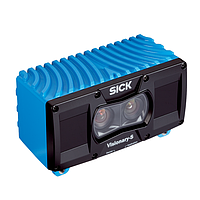
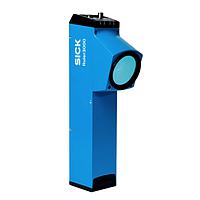
3D camera Vision
When a production line needs more than simple presence detection, 3D imaging becomes a practical tool for seeing shape, height, volume, and surface variation in real time. In packaging, sorting, and material handling environments, 3D camera vision helps manufacturers inspect products more reliably, guide automation equipment, and improve decision-making where 2D images alone may not be enough.
This category focuses on industrial 3D machine vision solutions for demanding applications on sorting and packing lines. It is especially relevant where operators or automated systems must deal with varying product dimensions, uneven surfaces, or fast-moving objects that require precise spatial data rather than only contrast-based image analysis.
Why 3D vision matters in automated production
Many industrial processes involve objects that differ in height, contour, orientation, or volume. In these cases, a conventional camera may identify position or printed features, but it may not provide enough depth information for accurate inspection or robot guidance. A 3D vision device adds measurable spatial data that can support more stable process control.
On sorting and packing lines, this can be useful for tasks such as verifying package geometry, checking fill level profiles, detecting deformation, and supporting pick-and-place operations. It can also complement adjacent equipment such as a labeling machine or a case packer where object shape and position directly affect downstream accuracy.
Core technology in this category
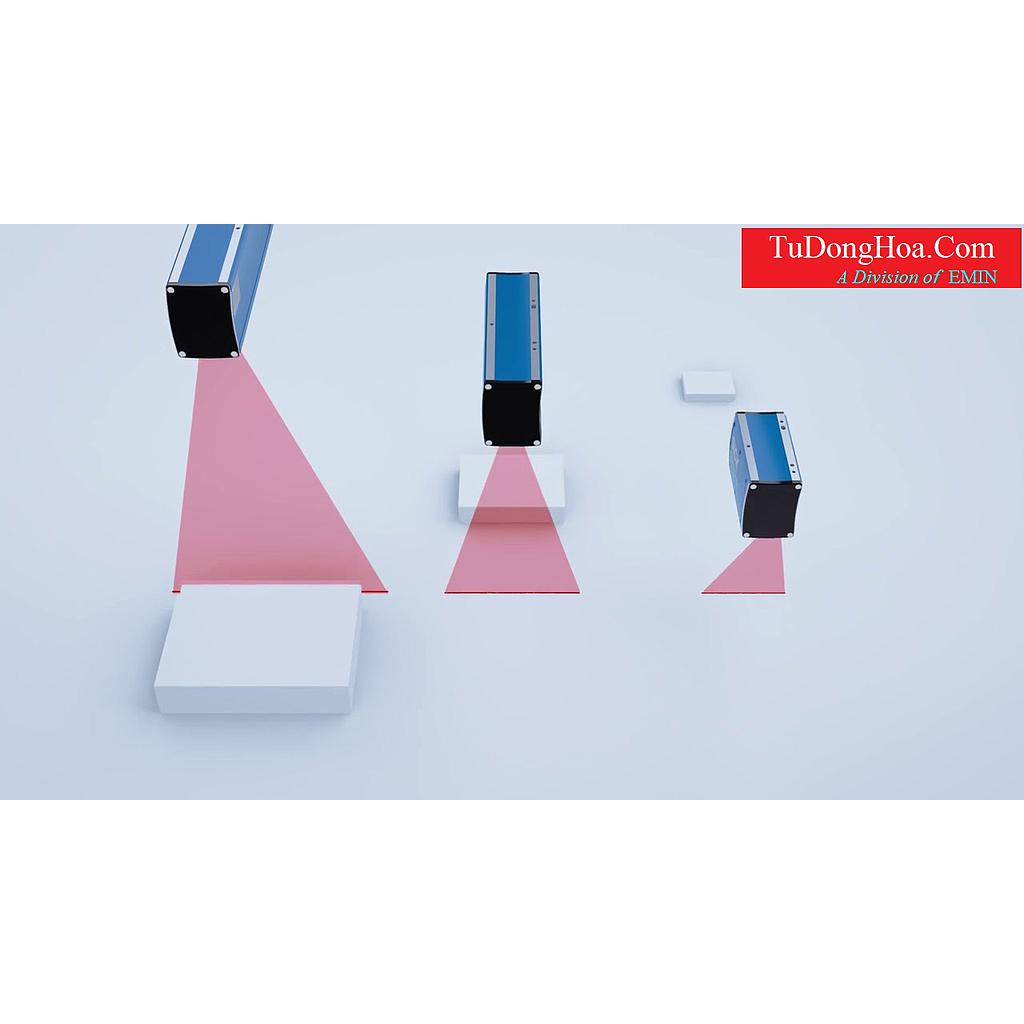
The products highlighted here are based on 3D triangulation, a widely used approach for capturing depth information with high repeatability in industrial settings. In practical terms, triangulation systems project laser light onto an object and evaluate the reflected profile to reconstruct surface geometry. This makes them suitable for measuring height changes, edge positions, and volumetric features across a moving target.
Several listed models also use a global shutter, which is important in applications involving motion. Compared with rolling capture methods, global shutter acquisition helps reduce image distortion on moving parts, making it easier to maintain reliable 3D data on conveyors and other dynamic production lines.
Integrated illumination is another relevant characteristic in this category. Because illumination is built into the sensor system, implementation can be more consistent and less dependent on external lighting arrangements, especially in controlled machine vision stations.
Representative SICK Ruler3000 models
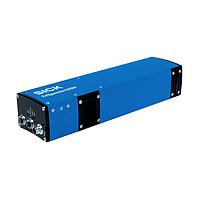
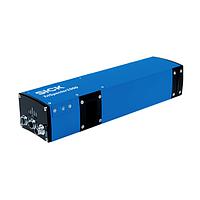
This category includes industrial 3D cameras from SICK, particularly the Ruler3000 family. These sensors are designed for machine vision tasks that require depth information, robust enclosure protection, and Ethernet-based industrial connectivity.
Within the available range, different models are suited to different measurement envelopes. For example, the SICK V3DX3-002BR21A Ruler3000 and V3DX3-004BR21A Ruler3000 are configured for relatively short working distances and compact fields of view, which can be useful for smaller targets or finer inspection tasks. At the other end, models such as the SICK V3DU3-120RM21A Ruler3000 and V3DU3-120RM25A Ruler3000 support much larger working distances and broader coverage, which is more relevant for larger products, wider conveyors, or applications where a bigger scan area is needed.
Mid-range variants like the V3DU3-020RM21A Ruler3000 or V3DU3-060RM21A Ruler3000 provide a practical balance between distance and field of view. This makes the category suitable for users comparing compact, medium, and wide-area 3D scanning options within one industrial platform.
How to choose the right 3D camera vision system
The first selection factor is usually working distance and field of view. A short-range system can deliver detailed measurement over a smaller area, while a longer-range model can cover more width or larger objects. The correct choice depends on product size, line layout, mounting space, and the level of detail your inspection or guidance task requires.
Another factor is the operating environment. The models in this category include industrial-grade enclosure ratings such as IP65 and IP67, which are relevant in dusty production areas or washdown-prone environments. Connection type also matters for system integration, especially where Gigabit Ethernet communication and I/O are part of the machine architecture.
It is also worth considering the type of target surface and process speed. Some listed models use red laser illumination, while others use blue laser illumination. Without overgeneralizing performance, this distinction can be part of the evaluation when matching sensor behavior to material properties, contrast conditions, and scanning requirements in real applications.
Typical applications on sorting and packing lines
In packaging and end-of-line automation, 3D cameras can support inspection steps that require dimensional awareness rather than only visual appearance. Examples include package profile verification, orientation checking, carton dimension assessment, and surface irregularity detection before sealing or palletizing.
They can also play a role alongside equipment such as a carton sealer or an auto case erector when package geometry influences alignment, handling, or quality checks. In these workflows, 3D data can help reduce jams, improve consistency, and support automated adjustments based on actual object dimensions.
For manufacturers handling mixed products, a 3D vision system may also improve flexibility. Instead of relying on fixed assumptions about object size or height, the line can respond to measured data in real time, which is valuable in high-mix production environments.
Integration considerations for industrial users
Successful deployment depends not only on the camera itself but also on how it fits into the broader automation system. Mounting position, conveyor speed, trigger logic, network architecture, and available processing resources all affect achievable performance. A technically suitable camera still needs the right mechanical and control integration to deliver reliable results.
The listed products are built for industrial installation with 24V DC supply requirements and standard machine-friendly connector formats. In practice, this supports integration into existing control cabinets, Ethernet networks, and inspection stations without treating the 3D sensor as a standalone lab device.
For engineering teams, it is often useful to review the complete station objective first: inspection, measurement, guidance, or classification. That decision helps narrow the range from compact high-detail models to wider-coverage variants intended for larger scenes and broader conveyor applications.
What this category is best suited for
This category is a good fit for users looking for industrial 3D machine vision hardware in packaging, sorting, and automated handling systems. It is particularly relevant when object height, volume, contour, or spatial orientation must be measured consistently under production conditions.
Rather than comparing devices only by model number, it is more effective to evaluate them by scan range, coverage area, integration needs, and the type of product variation present on the line. The available SICK Ruler3000 options provide a useful starting point for both compact inspection tasks and wider-area 3D measurement applications.
If your process requires more reliable dimensional insight than a standard camera can provide, exploring the 3D camera vision range can help clarify which sensor format aligns with your production layout, object size, and automation goals.
Get exclusive volume discounts, bulk pricing updates, and new product alerts delivered directly to your inbox.
By subscribing, you agree to our Terms of Service and Privacy Policy.
Direct access to our certified experts