Surface Grinder
Precision finishing work depends on more than stock removal alone. In many tooling, mold-making, and metalworking environments, surface quality, dimensional stability, and repeatable flatness are what determine whether a part moves smoothly into the next process or needs costly rework. That is where the Surface Grinder category becomes especially relevant for production engineers, maintenance teams, and workshop buyers looking for practical grinding solutions and workholding support.
This category brings together equipment and related components used in surface grinding applications, from compact handheld grinding tools for detail work to magnetic chucks and cooling accessories used in higher-precision setups. Whether the job involves mold correction, jig finishing, fixture preparation, or flat grinding on larger workpieces, selecting the right configuration helps improve consistency, reduce thermal distortion, and support safer operation.
Where surface grinding fits in industrial machining
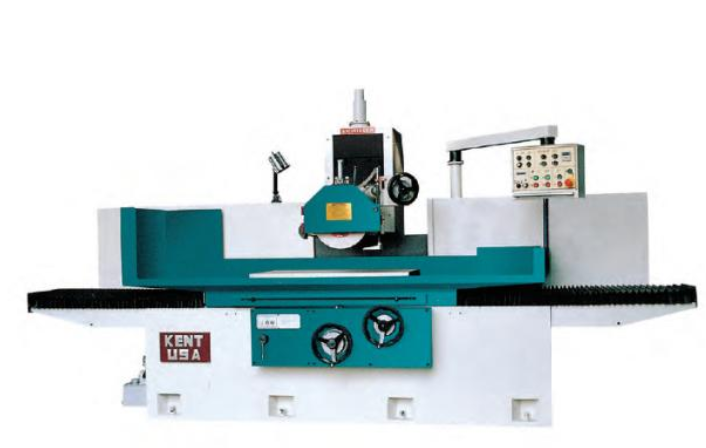
Surface grinding is commonly used when a workpiece requires a controlled flat surface finish, close thickness tolerance, or improved contact quality between mating parts. In practice, it is often part of toolroom work, mold maintenance, fixture manufacturing, and general metal finishing where conventional machining alone may not deliver the required surface condition.
Depending on the process, users may need not only the grinding machine itself but also appropriate workholding, cooling, and supporting accessories. This is why the category naturally connects machine-side requirements with practical items such as electromagnetic chucks, sine bar chucks, and cooler units for precision grinding operations.
Typical product types in this category
The range shown here reflects different roles within the surface grinding workflow. For example, the TOPTUL KAKB0456 air micro die grinder is suited to detailed grinding work in confined areas, where a lightweight pneumatic tool and high rotational speed support localized finishing, deburring, or mold correction tasks.
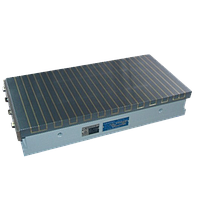
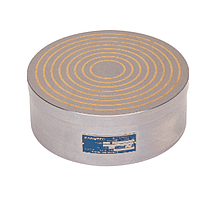
For machine-based grinding, KANETEC products illustrate the importance of stable magnetic holding. Models such as the KANETEC SBE-1131UFL-C and SBE-1131UFR-C tilt type electromagnetic sine bar chucks are designed for precision angle grinding of molds and jigs. In larger-format applications, the KANETEC KEZX-60100B, KEZX-50150B, and KEZX-50100B show how super powerful electromagnetic chucks with T-slots can support bigger workpieces and more demanding setups.
Some configurations also focus on thermal control. The KANETEC SBC-1131UFL-C and SBC-1131UFR-C water-cooled electromagnetic sine bar chucks are intended for higher precision grinding where internal cooling helps manage heat generated during energizing. The KANETEC LCU-2 cooler unit complements this type of setup by circulating coolant in water-cooled chuck systems.
Why workholding matters in grinding accuracy
In surface grinding, the grinding wheel does only part of the job. Workholding stability has a direct effect on flatness, repeatability, and finish quality. Electromagnetic chucks are widely used because they can secure ferromagnetic workpieces evenly across the contact area, reducing the need for complex mechanical clamping on certain applications.
Tilt type sine bar chucks add another layer of flexibility when angled grinding is required. This is useful in mold and jig production, where precise angular relationships need to be maintained without introducing setup variability. On larger jobs, heavy-duty electromagnetic chucks with T-slots can support a more robust fixture arrangement while still delivering magnetic holding force across a substantial surface area.
For buyers comparing options, it is worth looking at the relationship between workpiece size, chuck footprint, mounting conditions, and whether the job requires plain flat grinding or controlled angular positioning. These factors often determine whether a standard electromagnetic chuck or a more specialized sine bar style is the better fit.
Managing heat during precision grinding
Thermal control is often underestimated in grinding operations. Heat can affect both the workpiece and the holding system, especially in longer cycles or higher-precision applications. When an electromagnetic chuck is energized over time, temperature rise may influence dimensional stability, which is why water-cooled chuck designs can be valuable in demanding setups.
The KANETEC SBC series demonstrates this approach by enabling real-time internal cooling for precision grinding work. Paired with a dedicated cooler such as the KANETEC LCU-2, the system can help maintain more stable operating conditions. If your process depends on temperature management beyond the chuck itself, related equipment in the industrial water cooler and chiller category may also be relevant for broader plant cooling needs.
In pneumatic handheld grinding applications, air quality also affects tool performance and service life. For workshops using air grinders regularly, reviewing compressed air treatment equipment can help support cleaner, more stable air supply to pneumatic tools.
How to choose the right surface grinding setup
Selection usually starts with the actual job requirement rather than the product name alone. For fine manual finishing, edge cleanup, or mold detail work, a compact air micro die grinder may be the practical choice. For fixed-machine grinding, the decision shifts toward chuck type, working area, angle requirements, cooling method, and compatibility with the machine table.
Buyers should also consider the material being processed, the required tolerance level, and whether the operation is intermittent or production-oriented. A small precision grinding task on molds and jigs may benefit from a tilt type electromagnetic sine bar chuck, while larger steel plates or long workpieces may require a super powerful electromagnetic chuck with T-slots for more secure holding and fixture flexibility.
Another useful comparison point is process continuity. If your grinding work runs for extended periods or targets tight geometric accuracy, a water-cooled chuck arrangement can make more sense than a standard electromagnetic design. If the process is more manual or repair-oriented, a pneumatic grinder and straightforward support accessories may be enough.
Applications across tooling, molds, and production maintenance
This category is especially relevant in environments where finished surface condition affects assembly, sealing, wear behavior, or tool performance. Mold shops use surface grinding solutions to restore parting surfaces, prepare inserts, and refine angular features. Jig and fixture builders rely on accurate grinding to maintain alignment and contact surfaces across production tooling.
Maintenance teams may also use these products when refurbishing worn components, correcting surface damage, or preparing replacement parts before installation. In larger manufacturing settings, the combination of grinding equipment and magnetic workholding supports both one-off toolroom jobs and repeatable workshop processes.
Because grinding needs often sit alongside other finishing or machine-preparation tasks, some users also review related process equipment such as a heat shrinking machine when building out a broader tooling and machining workflow.
Practical buying considerations for B2B users
When sourcing from this category, it helps to evaluate more than nominal size or basic holding method. Consider installation space, utility requirements, machine compatibility, maintenance access, and whether the process needs a standalone tool, a magnetic chuck, or a complete cooling-supported workholding arrangement.
Manufacturer preference may also matter if your workshop already standardizes around certain tooling ecosystems. Brands such as BOSCH, METABO, Mirka, TOPTUL, and KANETEC are recognized in industrial environments for different parts of the grinding and finishing landscape, while the products highlighted here show particular strength in pneumatic detail grinding and magnetic chuck solutions for surface grinding applications.
For most buyers, the best result comes from matching the equipment to the grinding method, workpiece geometry, and expected production conditions. A well-chosen setup can improve process stability, reduce setup time, and support more predictable finishing quality over the long term.
Final thoughts
A reliable surface grinding process depends on the right balance of machine capability, workholding method, and thermal stability. From compact air grinders for precision touch-up work to electromagnetic chucks and cooler units for more controlled grinding operations, this category supports a wide range of practical industrial needs.
If you are comparing solutions, focus first on the type of grinding work you perform most often, then narrow your choice by workpiece size, angle requirements, and cooling considerations. That approach usually leads to a more suitable and cost-effective surface grinding setup for real production use.
Get exclusive volume discounts, bulk pricing updates, and new product alerts delivered directly to your inbox.
By subscribing, you agree to our Terms of Service and Privacy Policy.
Direct access to our certified experts