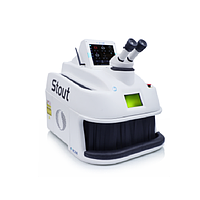
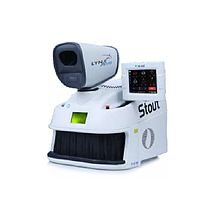
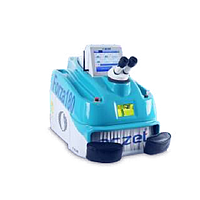
Laser welding machine
When weld quality needs to be precise, localized, and visually clean, laser-based equipment becomes a practical choice for many production and repair tasks. This category brings together laser welding machine solutions used where fine heat control, repeatability, and minimal distortion matter more than broad heat input.
Compared with conventional welding methods, laser spot welding is often selected for detailed work, small parts, thin sections, and applications that benefit from controlled pulse energy. For manufacturers, workshops, and technical users evaluating equipment for precision joining, understanding the working range, operating format, and machine configuration is more useful than simply comparing power numbers.
Where laser welding machines fit in industrial work
Laser welding equipment is typically used when a process requires focused energy delivery to a very small area. That makes it suitable for jobs where excessive thermal spread can damage nearby surfaces, affect appearance, or change the geometry of the part. In many environments, this is especially relevant for precision metal components, repair work, and small-batch fabrication.
Within a broader welding setup, laser systems are not a replacement for every process. Heavier structural work may still call for other technologies, while applications such as sheet cutting may be better served by a plasma cutter. The value of laser welding is usually strongest where accuracy, small weld zones, and controlled pulse behavior are priorities.
Typical characteristics of machines in this category
The products listed in this category are centered on pulse laser spot welding formats, with several models using 1064 nm laser wavelength configurations. Across the range, users will see practical differences in laser power, pulse duration, pulse frequency, spot diameter control, and viewing system options such as stereo microscope or 3D vision support.
Another notable point is machine usability. Many systems in this selection include features that support operator control during detailed welding, such as touchscreen displays, programmable memory, joystick-based chamber control, air nozzle integration, and dedicated cooling arrangements. These are important because real-world welding performance depends not only on the laser source, but also on visibility, stability, and ease of setup during repetitive tasks.
Representative Aczet models in the range
This category is strongly represented by Aczet, with multiple laser spot welding machines covering different working preferences and output levels. Examples include the Aczet Forza 160, Forza 180, and Forza 180-3D, as well as the Stout 180, Stout 180-3D, Stout 225, and Stout 225-3D. These models illustrate how buyers can choose between different viewing systems, cooling designs, and pulse energy capabilities depending on the job profile.
For instance, the Aczet Forza 160 Laser Spot Welding Machine is positioned as a lower-power option within the group, while models such as the Aczet Stout 225 and Aczet Stout 225-3D offer higher power and pulse energy for more demanding precision work. The Aczet CML-W150 Laser Spot Welding Machine adds another example of a compact laser spot welding format with defined installation and operating environment considerations, which can be important for facilities planning.
How to choose the right machine for your process
The right selection starts with the part itself. Material thickness, weld size, accessibility, surface finish requirements, and allowable heat input all influence which machine configuration is appropriate. A system with a smaller controllable spot range and fine pulse adjustment may be more suitable for delicate work, while applications needing deeper penetration or greater process margin may benefit from higher average power or higher pulse energy capability.
Operator workflow should also be considered early. If your process depends on close visual monitoring, microscope type and chamber ergonomics can matter as much as output rating. Models equipped with stereo viewing or 3D vision may support more comfortable operation for detailed assemblies, while programmable presets can help standardize recurring weld profiles across repeated production steps.
Key specifications that matter in evaluation
Several technical parameters are especially useful when comparing laser welding machines. Laser power, pulse width, pulse frequency, and maximum pulse energy together influence how energy is delivered to the weld zone. Spot size range affects how tightly the beam can be focused, which in turn impacts weld precision and practical control over small features.
Cooling method and power supply requirements are also important for installation planning. Some machines in this category use single cooling, while others use double cooling for more stable operation under heavier or more frequent use. Buyers should also review space requirements, utility availability, and environmental expectations, particularly when the equipment is intended for clean or controlled production areas.
Laser welding compared with other welding equipment categories
Laser welding is often selected for a different reason than conventional resistance or arc-based equipment. If the process centers on concentrated heat, cosmetic weld quality, and work on smaller components, a laser system can be a better fit than a standard spot welding machine. The comparison should be based on the actual joint design, material behavior, throughput target, and required finish rather than on technology preference alone.
In mixed workshops, laser welding may complement rather than replace other machine types. Some operations may still require a multi-function welding machine for general-purpose tasks, while laser equipment is reserved for the most precise assemblies or repair points. This process-based approach usually leads to better equipment utilization and a more practical investment decision.
Practical considerations before purchase
Before selecting a machine, it is worth confirming how the equipment will be used day to day: bench-based precision welding, repetitive repair work, prototype assembly, or controlled production runs. This helps narrow the choice between models with different output levels, display and viewing systems, and memory functions. It also clarifies whether the installation area can support the machine’s electrical and environmental needs.
For B2B buyers, long-term usability is just as important as the initial specification sheet. A well-matched laser welding machine should align with your part geometry, operator skill level, expected duty cycle, and workspace conditions. Looking at the complete operating setup rather than only headline power figures usually results in a more reliable and efficient selection.
Finding a suitable laser welding solution
This category is designed for buyers who need precision-oriented welding equipment with controlled pulse operation and compact weld zones. The available Aczet models provide a useful spread of configurations, from entry-level precision work to more advanced setups with higher pulse energy and enhanced viewing options.
If your application demands clean, accurate joining with careful control over heat input, reviewing the machine format, optical system, pulse settings, cooling arrangement, and installation requirements will help you identify the most suitable option. A laser welding machine is most effective when its capabilities are matched closely to the actual production task, not just the broad process label.
Get exclusive volume discounts, bulk pricing updates, and new product alerts delivered directly to your inbox.
By subscribing, you agree to our Terms of Service and Privacy Policy.
Direct access to our certified experts