
Plasma cutter
Fast, clean metal cutting is a priority in fabrication shops, maintenance teams, and industrial production lines where accuracy and throughput matter. A plasma cutter is often the practical choice for cutting conductive metals with less distortion, faster edge preparation, and more flexibility than many conventional thermal cutting methods.
On this category page, buyers can explore plasma cutting equipment suited to different workloads, from compact units for lighter sheet and plate cutting to higher-output machines designed for thicker materials and longer operating cycles. The range also includes models with different power requirements, helping users match equipment to available electrical supply and real production needs.
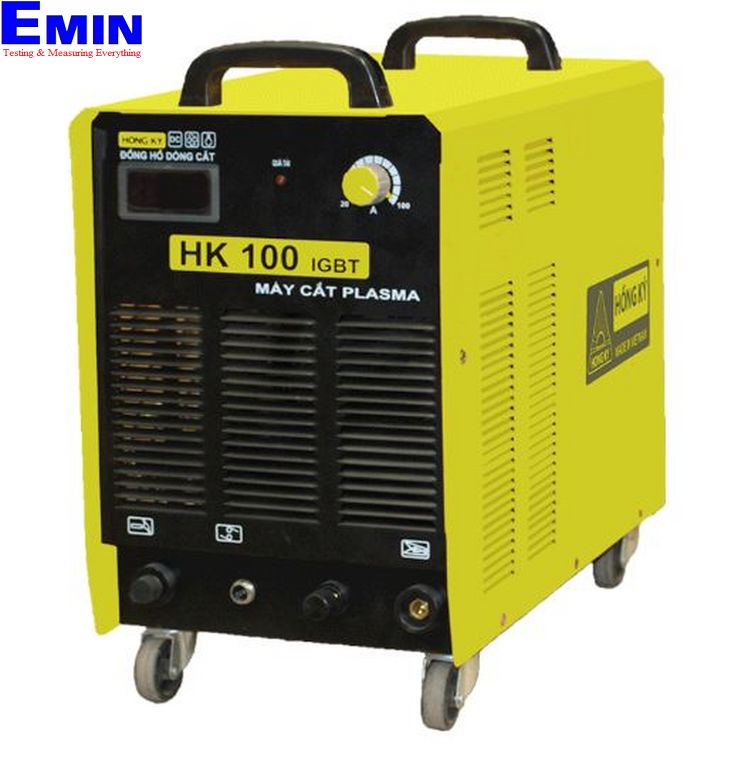
Where plasma cutters fit in metalworking
Plasma cutting is widely used for steel fabrication, repair work, workshop manufacturing, structural jobs, and general industrial maintenance. It is especially useful when operators need to cut carbon steel, stainless steel, or other electrically conductive metals with a good balance between speed and cut quality.
Compared with broader welding machine applications in fabrication environments, plasma systems focus on material separation rather than joining. In practice, many workshops use plasma cutting alongside welding equipment to handle both preparation and assembly in one workflow.
Typical machine configurations in this category
This selection includes both lighter portable units and more powerful industrial machines. Entry and mid-range models are often suitable for repair work, on-site fabrication, and small to medium workshops, while higher-current systems are more relevant for thicker plate and heavier production tasks.
Several featured machines use inverter technology, including IGBT-based designs, which are commonly chosen for stable output, improved efficiency, and a more compact machine size. Some models also combine plasma cutting with MMA capability or include a built-in air compressor, which can be useful where compressed air infrastructure is limited or mobility is important.
Featured product examples for different workloads
For lighter cutting tasks, the Megatec CUT-40 Inverter Plasma Cutter offers a compact format and single-phase 220V operation, making it a practical option for thinner materials and general workshop use. A step up in portability and output, the Megatec CUT-60DW provides a higher cutting current while still supporting applications where machine size and mobility matter.
In the mid-range segment, the Megatec CUT-80I and Megatec CUT-80DY address users who need more cutting capacity for thicker workpieces. The CUT-80DY is notable for its dual-voltage compatibility and built-in compressor, which can simplify setup in field or service environments.
For heavier-duty requirements, the Megatec CUT-100I and Megatec LGK-120DY are more appropriate for thicker material and demanding duty cycles. Buyers comparing higher-capacity equipment may also consider models such as the Tân Thành CUT100I Plasma cutter or Tân Thành CUT120I when three-phase power is available and industrial output is required.
Other examples in the category include the Honda ZO-95 Plasma Cutter and the Tân Thành CUT61F, which help illustrate the variety of machine classes available across different cutting ranges, electrical setups, and workshop conditions.
How to choose the right plasma cutter
The first point to review is material thickness. Clean cut thickness and severance thickness are not the same: clean cut performance is usually the more useful benchmark when edge quality and post-processing time matter. If a workshop routinely cuts thicker plate, selecting a machine with enough current headroom helps maintain consistency and efficiency.
Power supply is equally important. Some machines operate on single-phase 220V, while others require three-phase 380V. For many buyers, this is a practical constraint that immediately narrows the shortlist. It is also worth considering whether the machine will stay in one production area or move between job sites, since weight and dimensions can affect daily use more than headline output alone.
Beyond output current, users should look at torch configuration, air supply requirements, and operating mode features such as 2T/4T control. If the cutting process is part of a wider fabrication workflow, a multi-function welding machine may also be relevant for sites that need compact equipment coverage across several tasks.
Understanding key performance factors
Machine current range has a direct effect on cutting capacity and productivity. Lower-current systems are generally better suited to thinner sheet metal, maintenance work, and lighter fabrication, while higher-current units support thicker sections and more demanding industrial use. However, output alone should not be the only selection criterion.
Duty cycle, air quality, consumable condition, and operator technique all influence real cutting results. A well-matched machine with stable output and suitable torch components often delivers better day-to-day performance than an oversized unit used outside its ideal setup. In production environments, this can affect edge finish, consumable life, and rework time.
Brands and sourcing considerations
This category includes products from manufacturers such as Megatec, Honda, and Tân Thành, covering a range of machine sizes and application levels. Brand selection in industrial purchasing usually depends on service expectations, installed power, preferred machine architecture, and compatibility with the intended workload rather than name recognition alone.
When evaluating available options, it is useful to compare not only current rating and thickness claims, but also portability, integrated compressor availability, and whether the machine supports combined cutting and MMA functions. These details can make a meaningful difference in maintenance departments, mobile fabrication teams, and mixed-use workshops.
Related equipment for a complete fabrication setup
Plasma cutting is often only one part of the broader fabrication process. After cutting, many applications move directly into tack welding, assembly, reinforcement, or surface finishing. Depending on the job type, related equipment such as a spot welding machine or other welding systems may be useful for completing the full workflow efficiently.
For buyers planning a new workshop line or expanding an existing metalworking setup, reviewing adjacent equipment categories can help ensure that cutting capacity, joining methods, and electrical infrastructure stay aligned across the whole process.
Choosing with application in mind
The right plasma cutter is usually the one that matches actual cutting thickness, available power, mobility needs, and expected operating intensity. A compact single-phase unit may be ideal for repair and installation work, while three-phase higher-output models are better suited to continuous fabrication and thicker material processing.
This category is designed to support that comparison process with a focused range of plasma cutting machines from recognized suppliers. By reviewing output range, machine format, and application fit carefully, buyers can shortlist equipment that meets practical workshop requirements without over-specifying or limiting future work capacity.
Get exclusive volume discounts, bulk pricing updates, and new product alerts delivered directly to your inbox.
By subscribing, you agree to our Terms of Service and Privacy Policy.
Direct access to our certified experts
