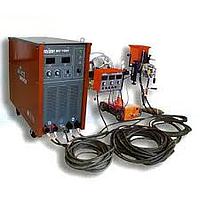
SUBMERGED ARC WELDING MACHINE
For heavy steel fabrication, pressure vessel work, beam production, and long straight welds, productivity often depends on choosing a process that can deliver stable penetration and consistent deposition over extended runs. In these environments, the SUBMERGED ARC WELDING MACHINE category is relevant for users who need high-current welding performance, repeatable results, and a setup suited to demanding industrial workloads.
Submerged arc welding is commonly selected when weld quality, travel speed, and arc stability matter more than portability. Because the arc operates beneath a layer of flux, the process is well suited to workshop and production-line use where thick materials and continuous seams are part of daily operations.
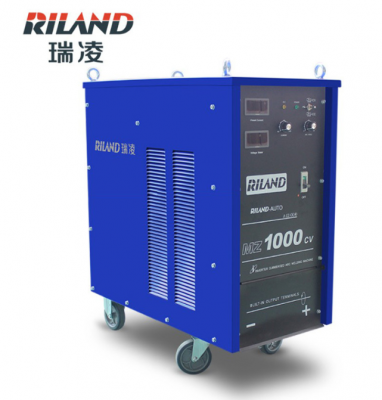
Where submerged arc welding machines fit in industrial fabrication
Submerged arc welding is widely used in applications that involve plate joining, structural steel, tanks, pipes, and other large metal assemblies. Compared with general-purpose welding equipment, this machine group is typically chosen for jobs that require deeper welds, higher deposition rates, and smoother operation on long seams.
That makes this category especially relevant for fabrication shops, mechanical contractors, and manufacturers working with repetitive weld procedures. If your process involves thick workpieces or extended welding lengths, a dedicated submerged arc setup may provide a more efficient workflow than equipment intended for lighter or more varied welding tasks.
Why this machine category is often chosen for continuous welding work
The main advantage of this equipment is its ability to support high-output welding under stable conditions. In production settings, that can help reduce interruptions, maintain a more uniform bead profile, and improve throughput on repetitive jobs. It is particularly useful where welding speed and consistency are both operational priorities.
Another practical benefit is process suitability for shop-based automation or semi-automatic workflows. Users comparing options across welding methods may also want to review categories such as transformer welding machines or multi-function welding machines when deciding between dedicated production equipment and more flexible general-use systems.
Typical selection criteria for submerged arc welding equipment
When evaluating a machine in this category, buyers usually start with the electrical supply and the required output current for the intended weld thickness and production cycle. For industrial installations, 3-phase 380 V input is a common consideration, especially in factories or fabrication plants where larger welding systems are already part of the infrastructure.
It is also important to look at duty cycle, wire diameter compatibility, and expected welding speed. These factors affect not only weld performance but also how well the machine matches your material range and operating schedule. In practice, the right choice depends on whether the priority is medium-duty production, heavier current output, or a setup built for larger-section workpieces.
Representative machines in this category
Several models from Tân Thành illustrate the range available within this category. The Tân Thành TTT500 Submerged Arc Welding Machine is positioned for users who need substantial output in a more moderate capacity range, while the TTT600 steps up current and wire handling capability for heavier fabrication demands.
For higher-load industrial applications, the Tân Thành TTT1000 provides a larger-capacity option suited to operations that require stronger output and compatibility with larger wire diameters. Across these examples, the progression in current, capacity, and machine size reflects a practical scaling path for workshops moving from standard production to more intensive submerged arc welding tasks.
Matching machine capacity to your production needs
A smaller mismatch in machine selection can lead to reduced efficiency, unstable workflow, or unnecessary operating cost. Choosing too little output may limit penetration or slow down production, while oversizing the machine without a clear need can add weight, space, and power requirements that do not improve day-to-day performance.
For that reason, buyers should consider the thickness of the materials being welded, the expected weld length per shift, and whether the work is repetitive or varied. A medium-capacity system may be sufficient for many fabrication lines, whereas higher-capacity models are more appropriate for thicker sections, heavier-duty cycles, and more demanding industrial schedules.
How this category compares with other welding equipment
Not every welding process is intended for the same job profile. A submerged arc setup is generally more specialized than portable or all-purpose equipment, making it a stronger fit for dedicated production environments than for maintenance or mixed repair work. Its strengths appear most clearly when the workload is structured, repetitive, and based on longer weld paths.
By contrast, if your work involves sheet metal cutting before welding, a plasma cutter may be relevant elsewhere in the process. If the requirement is localized joining on thin materials, users may instead explore a spot welding machine. Looking at the broader welding workflow can help determine whether submerged arc is the core process or one part of a larger fabrication system.
What to consider before ordering
Before selecting a machine, it helps to review your available power supply, floor space, material thickness range, and the level of operator familiarity with the process. In industrial procurement, these practical details are often just as important as the headline output figures because they affect installation, training, and long-term usability.
It is also useful to compare the machine’s operating range with your actual production needs rather than buying only on maximum current. Wire size compatibility, expected duty cycle, and the nature of the weld seam are all central to making a suitable shortlist. A clearer application profile usually leads to a better equipment decision and a more reliable return on investment.
Conclusion
This category is best suited to users who need a process-focused welding solution for heavy fabrication and consistent long-run welding performance. With representative options such as the Tân Thành TTT500, TTT600, and TTT1000, buyers can assess different output levels based on real production requirements instead of choosing solely by price or name.
If your operation depends on repeatable weld quality, stable high-current output, and efficient handling of longer seams, exploring the submerged arc welding machine range is a logical next step. A careful review of workload, material profile, and installation conditions will help narrow the right model for your shop or project environment.
Get exclusive volume discounts, bulk pricing updates, and new product alerts delivered directly to your inbox.
By subscribing, you agree to our Terms of Service and Privacy Policy.
Direct access to our certified experts