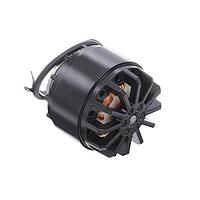
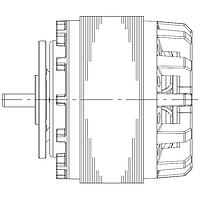
AC and DC Motors
Reliable motion starts with choosing the right motor for the job. In industrial automation, laboratory equipment, OEM machine building, and precision motion systems, the motor is not just a power source; it directly affects speed control, positioning behavior, efficiency, maintenance needs, and overall system integration.
AC and DC Motors in this category support a wide range of motion applications, from general rotary drive tasks to more compact and responsive systems where controllability matters. Whether you are selecting a motor for new equipment or replacing an existing unit, it helps to compare the motor type, control method, operating environment, and the wider motion architecture around it.
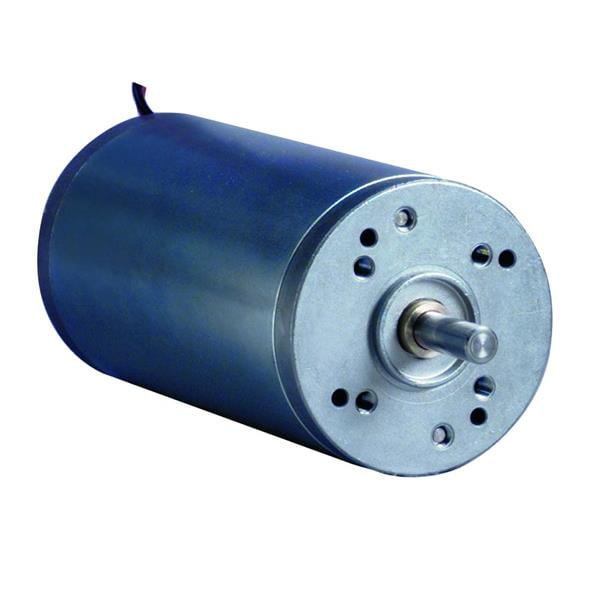
Where AC and DC motors fit in motion systems
Motors are central components in equipment that converts electrical energy into controlled mechanical movement. In practice, they are often selected alongside drives, feedback devices, power supplies, and mechanical transmission parts to achieve the required torque, speed, and response.
Within broader motion applications, AC and DC motors are commonly used together with motion and position sensing devices when closed-loop monitoring or more accurate feedback is needed. In systems that also include linear movement or controlled stroke, they may operate as part of a wider setup involving actuators and positioners.
Understanding the difference between AC and DC motor options
AC motors are typically chosen for applications that prioritize robust operation, continuous duty, and compatibility with common industrial power systems. They are widely used in equipment where stable rotation and long operating hours are important, especially in manufacturing and process environments.
DC motors, including brushless DC designs, are often preferred when compact size, responsive control, and efficient speed regulation are key requirements. They are frequently used in precision machinery, portable systems, medical devices, robotics, and OEM assemblies where dynamic performance and controllability are important selection factors.
The right choice depends less on a simple AC-versus-DC comparison and more on the full application context: supply conditions, duty cycle, load profile, control strategy, and integration with the rest of the machine.
Brushless DC motors for compact and precise motion
A notable part of this category includes brushless DC motor solutions, especially from Maxon, a well-known manufacturer in precision drive technology. Brushless designs are valued for reduced mechanical wear compared with brushed alternatives, along with smoother operation and better suitability for applications that need long service life and repeatable motion behavior.
Representative products in this range include Maxon 123858 Brushless DC Motors, Maxon 515458 Brushless DC Motors, Maxon B75D3E107412 Brushless DC Motors, and Maxon 539473 Brushless DC Motors. These products help illustrate the type of motor options often considered for advanced compact drive systems, especially where engineers are balancing installation space, performance, and control quality.
Other listed models such as Maxon 110127, Maxon 123826, Maxon 121394, Maxon 110049, and Maxon 123829 further show the breadth of available brushless DC motor choices within the category. Rather than focusing only on model count, the more practical approach is to match each motor to the electrical interface, motion profile, and mechanical constraints of the target application.
Selection criteria that matter in real applications
When comparing motors, buyers and design engineers usually start with the basics: required speed, expected load, available supply voltage, mounting constraints, and operating cycle. From there, it becomes important to consider startup behavior, controllability, thermal performance, and how the motor will interact with the rest of the system.
In many projects, the motor cannot be selected in isolation. Feedback and travel verification may call for related technologies such as displacement transducers, especially in systems where movement must be monitored beyond simple rotary output. If the application includes indexing, repeatability, or synchronized positioning, motor choice should also be aligned with the control platform and drive electronics from the start.
Environmental conditions also play a major role. Dust, vibration, ambient temperature, duty cycle intensity, and enclosure limitations can all influence whether a more compact precision motor or a more conventional industrial motor architecture is the better fit.
Related components in the motion ecosystem
Motors rarely operate alone in modern equipment. They are part of a larger motion chain that may include couplings, gearheads, controllers, sensor feedback, and power conditioning. In applications that require directional control, speed variation, or positioning logic, the surrounding electronics are just as important as the motor itself.
This is also why some products associated with motion systems may appear in the broader ecosystem even if they are not motors themselves. For example, the MITSUBISHI MR-BAT Battery and MITSUBISHI MR-J3BAT Battery serve a supporting role in specific servo-related absolute positioning systems. These kinds of components are relevant because long-term motion reliability often depends on maintaining the entire control and feedback architecture, not only the rotating drive element.
Manufacturer context and sourcing considerations
This category includes products connected with established motion and industrial component brands. Alongside Maxon and MITSUBISHI, the broader manufacturer landscape referenced here also includes names such as ADI Trinamic, Delta Electronics, Inc., Johnson Electric, Microchip Technology, and Molex. Each brand may be relevant at different points in a motion project, whether the need is for motors, control electronics, interconnects, or supporting subsystems.
For B2B purchasing teams, sourcing is often about more than finding a part number. It is about evaluating compatibility, lifecycle considerations, replacement planning, and how quickly a motor can be integrated into an existing machine or design workflow. A well-structured category page helps narrow the search by grouping comparable solutions in one place and making it easier to review representative products.
How to approach motor selection on this category page
A practical way to use this category is to begin with the application requirement rather than the product list. Define whether the need is for continuous rotation, precision control, compact integration, or support for a broader motion platform. Then compare relevant products based on motor type, intended control method, and whether additional feedback or positioning hardware is part of the project scope.
If your application extends beyond the motor itself, it may also be useful to review adjacent motion technologies such as motion & position sensors or related drive-oriented hardware in the wider catalog. That approach typically leads to better system-level decisions than selecting a motor from electrical ratings alone.
Conclusion
Choosing the right AC or DC motor is ultimately a system decision. The best-fit option depends on how the motor will be controlled, what mechanical load it must handle, how much precision is required, and which supporting components are already part of the design.
This AC and DC Motors category is intended to support that evaluation process by bringing together relevant motor options and representative manufacturers for motion-focused applications. If you are comparing compact brushless DC solutions, planning a replacement, or building a more complete motion architecture, reviewing the category in the context of the full application will lead to a more reliable selection.
Get exclusive volume discounts, bulk pricing updates, and new product alerts delivered directly to your inbox.
By subscribing, you agree to our Terms of Service and Privacy Policy.
Direct access to our certified experts