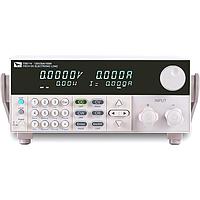
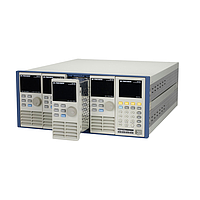
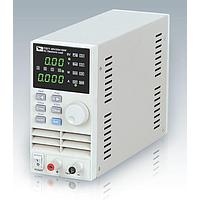
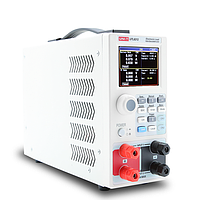
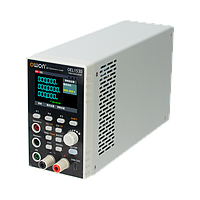
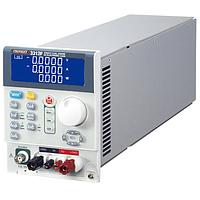
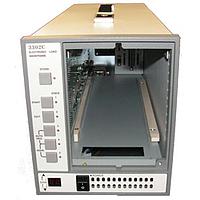
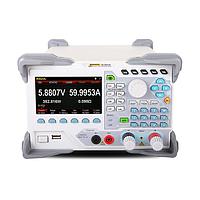
Electronics load
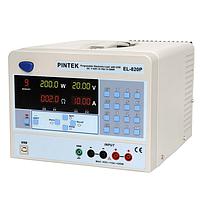
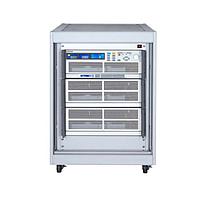
Reliable power testing depends on one capability above all: creating a controlled and repeatable load condition. That is why Electronics load equipment is widely used in laboratories, production lines, repair centers, and R&D environments where DC sources, batteries, chargers, and power conversion systems must be evaluated under realistic operating conditions.
Compared with fixed resistive methods, an electronic load gives engineers far more control over how a device under test behaves. It can help verify output stability, response to changing demand, protection behavior, and overall efficiency. This category brings together instruments used for structured DC load testing across a wide voltage, current, and power range.
Why electronic loads matter in test and validation
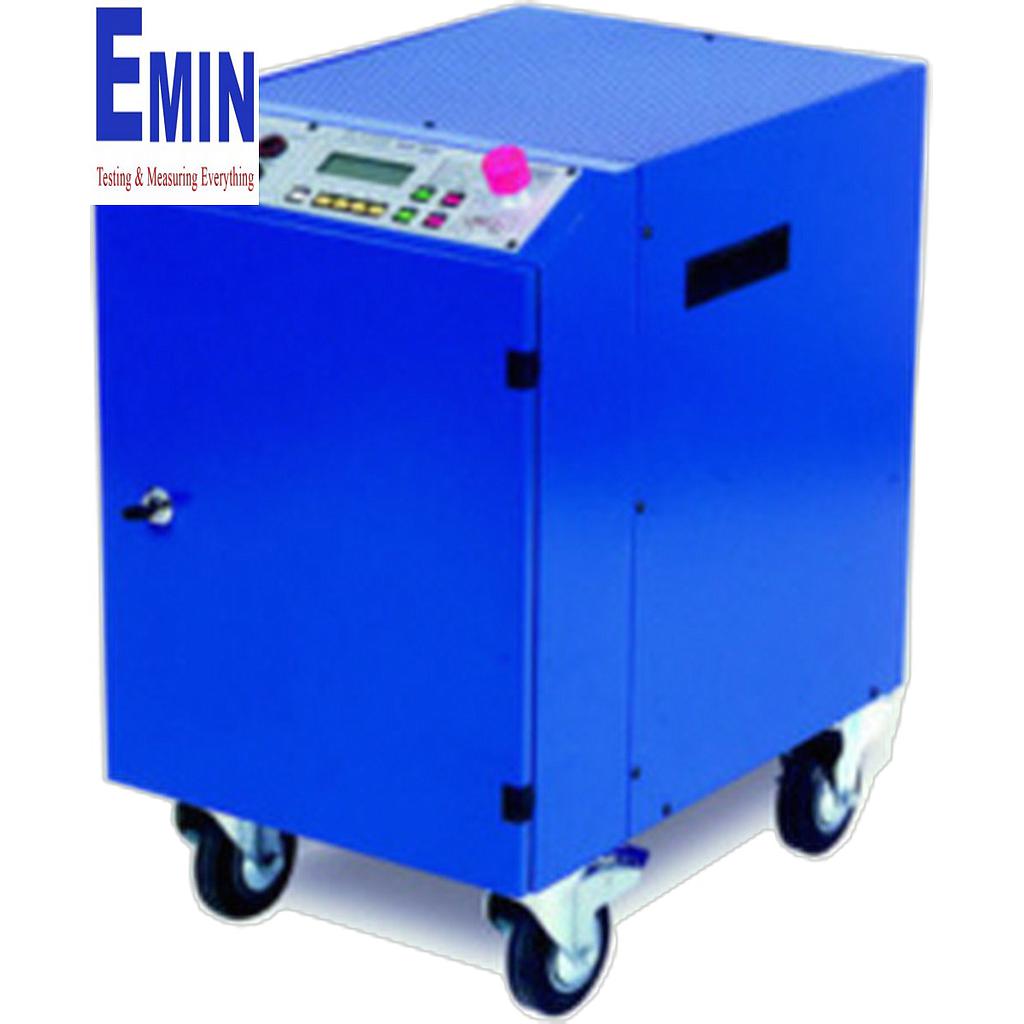
An electronic load is designed to absorb power from a source under test in a controlled way. In practical terms, this allows engineers to simulate how a power supply, battery pack, fuel cell, or DC output stage behaves when real demand is applied, without relying on passive resistor banks or improvised test setups.
This matters in applications such as power supply development, battery discharge testing, charger verification, renewable energy systems, UPS validation, and industrial DC bus analysis. When the load can be programmed precisely, teams can repeat tests consistently and compare results over time, which is especially important in manufacturing and qualification workflows.
Common operating modes and what they are used for
Most programmable electronic loads are selected because they support several key control methods. The most common are Constant Current (CC), Constant Voltage (CV), Constant Power (CP), and Constant Resistance (CR). Each mode is useful for a different test objective.
CC mode is often used to check current delivery and output regulation. CV mode can be useful in charger and battery-related scenarios. CP mode helps evaluate how a source behaves when the demanded power remains fixed even as voltage changes. CR mode is relevant when you want the load to behave more like a resistive device and observe startup or limiting behavior.
For more advanced source-and-load test workflows, some users also work alongside SMU semiconductor test equipment when precise sourcing and measurement need to be combined in a broader validation process.
How to choose the right electronic load
The first step is matching the load to the electrical range of the device under test. Voltage, current, and total power must all be considered together, not separately. A unit intended for high-voltage DC testing may support up to 1500 V or 2000 V, while lower-voltage models may focus on much higher current handling for battery, converter, or busbar applications.
Dynamic behavior is also important. Some projects need steady-state testing only, while others require transient load steps to examine response and stability. In addition, teams should consider programmability, automation support, and whether the load will be used on the bench, in a rack, or as part of a larger automated test system.
Measurement workflow matters too. Engineers frequently pair these systems with a digital multimeter for independent verification of voltage, current, or resistance during setup, calibration checks, or troubleshooting.
Typical product range in this category
The products highlighted in this category show how broad the application range can be. Several models from EA Elektro-Automatik illustrate this well, from high-voltage programmable DC loads to very high-current versions intended for lower-voltage systems.
For example, the EA-ELR 12000-20 is positioned for demanding high-voltage DC testing up to 2000 V, while the EA-ELR 11500-30 and EA-ELR 11000-40 cover other combinations of voltage and current at 15000 W. On the lower-voltage, higher-current side, models such as the EA-ELR 10360-120, EA-ELR 10200-210, and EA-ELR 10080-510 are better aligned with applications where current draw is the dominant requirement.
This range is useful because real test environments vary significantly. A solar DC string, battery module, industrial power supply, and EV-related subsystem may all require different voltage-current combinations, even when the overall test objective is simply to validate output behavior under load.
Regenerative and programmable testing considerations
In many modern labs, programmable electronic loads are expected to do more than absorb power statically. Engineers often need scripted test sequences, repeatable ramps, controlled discharge profiles, and integration with software-driven validation systems. That is particularly relevant in production testing, where consistency and throughput directly affect quality control.
Another important consideration is energy handling. In higher-power environments, regenerative architectures may be preferred because they can improve energy efficiency in test systems by returning absorbed power rather than dissipating it entirely as heat. Even where a specific test setup does not require regeneration, understanding the difference helps narrow the right type of load for long-duration or high-power applications.
Where isolation, grounding, and leakage behavior are part of the broader electrical assessment, teams may also refer to tools such as an earth resistance and resistivity tester in related maintenance or infrastructure checks.
Applications across industry
Electronic loads are used anywhere DC power must be verified under controlled demand. Common examples include AC/DC power supplies, DC/DC converters, industrial chargers, telecom power systems, batteries, photovoltaic systems, and backup power equipment. The same category is also relevant in service environments where technicians need to confirm whether a repaired power unit remains stable at different operating points.
In R&D, the focus is often on characterization: efficiency mapping, thermal behavior, protection thresholds, and response to load changes. In production, the focus is usually speed and repeatability. In after-sales service, the focus shifts toward fault isolation and pass/fail verification. A well-matched electronic load supports all three use cases with less setup time and better consistency.
Leading manufacturers available for electronic load sourcing
This category includes recognized test and measurement brands used across industrial and laboratory environments. Depending on project requirements, buyers may compare solutions from Ametek, CHROMA, HIOKI, KEITHLEY, KEYSIGHT, BKPRECISION, EA Elektro-Automatik, GW INSTEK, KIKUSUI, and Sorensen.
Brand selection usually depends on the balance between power range, interface options, programmability, application fit, and existing test infrastructure. Rather than choosing by brand alone, it is more effective to start from the DUT voltage, current, discharge profile, and automation requirement, then shortlist the appropriate platform.
Choosing with confidence
The right electronic load helps turn a basic power check into a meaningful validation process. By matching control mode, electrical range, and system integration requirements, engineers can test more safely, capture more useful data, and build repeatable procedures for development or production.
Whether the priority is high-voltage DC load testing, high-current battery discharge, or programmable evaluation of power supplies and converters, this category provides a practical starting point for selecting the most suitable solution for the job.
Get exclusive volume discounts, bulk pricing updates, and new product alerts delivered directly to your inbox.
By subscribing, you agree to our Terms of Service and Privacy Policy.
Direct access to our certified experts