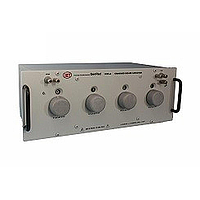
Capacitor
Stable power, clean signal behavior, and reliable electronic operation all depend on selecting the right capacitor technology for the job. In industrial electronics, automation hardware, power supplies, control boards, and embedded systems, capacitors are used for filtering, energy storage, decoupling, timing, and noise suppression across a wide range of circuit conditions.
This category brings together capacitor solutions used in practical B2B design, maintenance, and production environments. Whether the requirement is compact board-level capacitance, higher-voltage electrolytic support in power stages, or parts suited to temperature and ripple-current demands, the right choice starts with understanding application conditions rather than focusing on a part number alone.
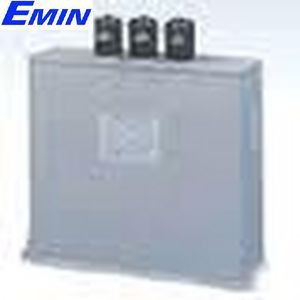
Where capacitors are used in industrial and automation systems
Capacitors appear in almost every layer of modern electrical and electronic equipment. They help smooth DC rails, stabilize voltage in switching circuits, support startup and transient load conditions, and reduce unwanted electrical noise that can affect logic, sensors, and communication interfaces.
In automation environments, this matters not only inside power conversion stages but also around controllers, communication modules, display boards, and auxiliary circuits. Systems connected to SCADA components or industrial monitoring architectures often rely on well-matched passive components to maintain signal integrity and operating stability over time.
Choosing the right capacitor type for the application
Capacitor selection should begin with the electrical function required in the circuit. For example, aluminum electrolytic types are commonly chosen where relatively high capacitance is needed in a compact format, especially in power filtering and bulk energy storage. Other technologies may be more suitable for precision timing, high-frequency response, safety compliance, or variable tuning functions.
When comparing options, buyers typically look at rated voltage, capacitance value, operating temperature range, expected service life, package style, and ripple-current capability. These factors should be assessed together, because a part that fits physically may still be unsuitable if thermal stress, frequency behavior, or endurance do not match the real operating environment.
Aluminum electrolytic capacitors in practical design
A large share of demand in this category comes from aluminum-based solutions used in power electronics and general-purpose boards. These components are widely used in AC-DC conversion, DC link smoothing, auxiliary power stages, industrial control boards, and embedded electronics where higher capacitance density is needed.
Examples from Chemi-Con illustrate this range well. Parts such as the Chemi-Con EMZF6R3ARA331MF90G and EMZF6R3ARA221MF90G are miniature aluminum electrolytic capacitors suited to compact board layouts, while models such as the Chemi-Con ESMG401ETD220MK25S or EMKB401ADA4R7MJA0G represent higher-voltage electrolytic use cases often associated with power sections and filtering stages.
Some product variants in this category also indicate application-specific characteristics such as chip-type construction, endurance ratings, broader temperature capability, or automotive-oriented qualification. In practice, these details can influence long-term reliability when equipment operates continuously, faces thermal cycling, or is installed in space-constrained assemblies.
What specifications matter most during procurement
For engineering and sourcing teams, the most important product data usually goes beyond capacitance alone. Ripple current, endurance life, ESR or impedance behavior, temperature limits, and mounting style all affect how the component performs once deployed in a real circuit.
For example, compact miniature aluminum electrolytics may be appropriate for dense PCB designs, but the decision still depends on expected load profile and thermal conditions. A higher-voltage part such as the Chemi-Con EMKB401ADA2R2MHA0G, EMKB401ADA3R3MJA0G, or EMKB401ADA4R7MJA0G may fit certain power designs, yet engineers still need to check available space, target lifetime, and electrical stress margins before standardizing a component.
Where elevated temperature or demanding reliability is a concern, endurance ratings and maximum operating temperature become especially important. This is one reason buyers often compare several capacitor families within the same category instead of treating all electrolytic parts as interchangeable.
Manufacturer considerations and portfolio breadth
Brand selection can be important in B2B purchasing, especially when consistency, lifecycle planning, and production continuity matter. This category includes recognized names used across industrial electronics, including Chemi-Con, EPCOS, Bourns, Eaton, and other established component suppliers relevant to broader electrical and automation sourcing.
Even when a project eventually narrows down to one approved source, reviewing manufacturer ecosystems can help identify alternatives for different circuit roles. For buyers who also work across control hardware and panel-level systems, related product areas such as air circuit breakers or broader supplier portfolios can provide useful context for consolidated procurement and BOM management.
How capacitors support reliability in automation equipment
In automation and industrial electronics, capacitor failure can lead to unstable power rails, startup issues, increased ripple, communication noise, or shortened equipment life. That is why capacitor choice should be tied to expected duty cycle, ambient heat, board density, and maintenance strategy rather than price alone.
Applications connected to control, monitoring, or distributed industrial systems often place passive components under continuous stress. In these cases, choosing a capacitor with appropriate temperature range, lifetime expectation, and electrical margin helps reduce unplanned service events and supports more predictable operation in the field. This is particularly relevant in systems linked with logging or supervisory infrastructure such as data logger solutions for automation systems.
Typical buying scenarios in this category
Some customers come to this category with a precise replacement part in mind, especially when maintaining existing boards or servicing industrial equipment. Others are working from circuit requirements and need to compare capacitor families by construction, voltage class, endurance, and form factor before locking in a design.
For new product development, it is common to shortlist several options for prototype validation. A compact part such as the Chemi-Con EMZA100ARA221MF80G may be considered when board area is limited, while a model like the Chemi-Con EMHS800ARA680MJA0G may be more relevant when operating conditions call for higher temperature capability and stronger ripple-current handling. The right choice depends on the circuit role, not simply on nominal capacitance.
Finding the right fit for your application
This capacitor category is intended to support both design engineers and industrial buyers looking for dependable options across electronic and automation use cases. Reviewing the electrical role of the component, environmental demands, and package constraints is the most effective way to narrow the selection and avoid overspecification or premature failure.
If your project spans multiple areas of industrial electronics, it may also be helpful to explore related supplier pages such as Panasonic product categories alongside the capacitor range shown here. A careful match between component characteristics and application conditions will usually deliver better long-term performance than choosing on value alone.
Get exclusive volume discounts, bulk pricing updates, and new product alerts delivered directly to your inbox.
By subscribing, you agree to our Terms of Service and Privacy Policy.
Direct access to our certified experts